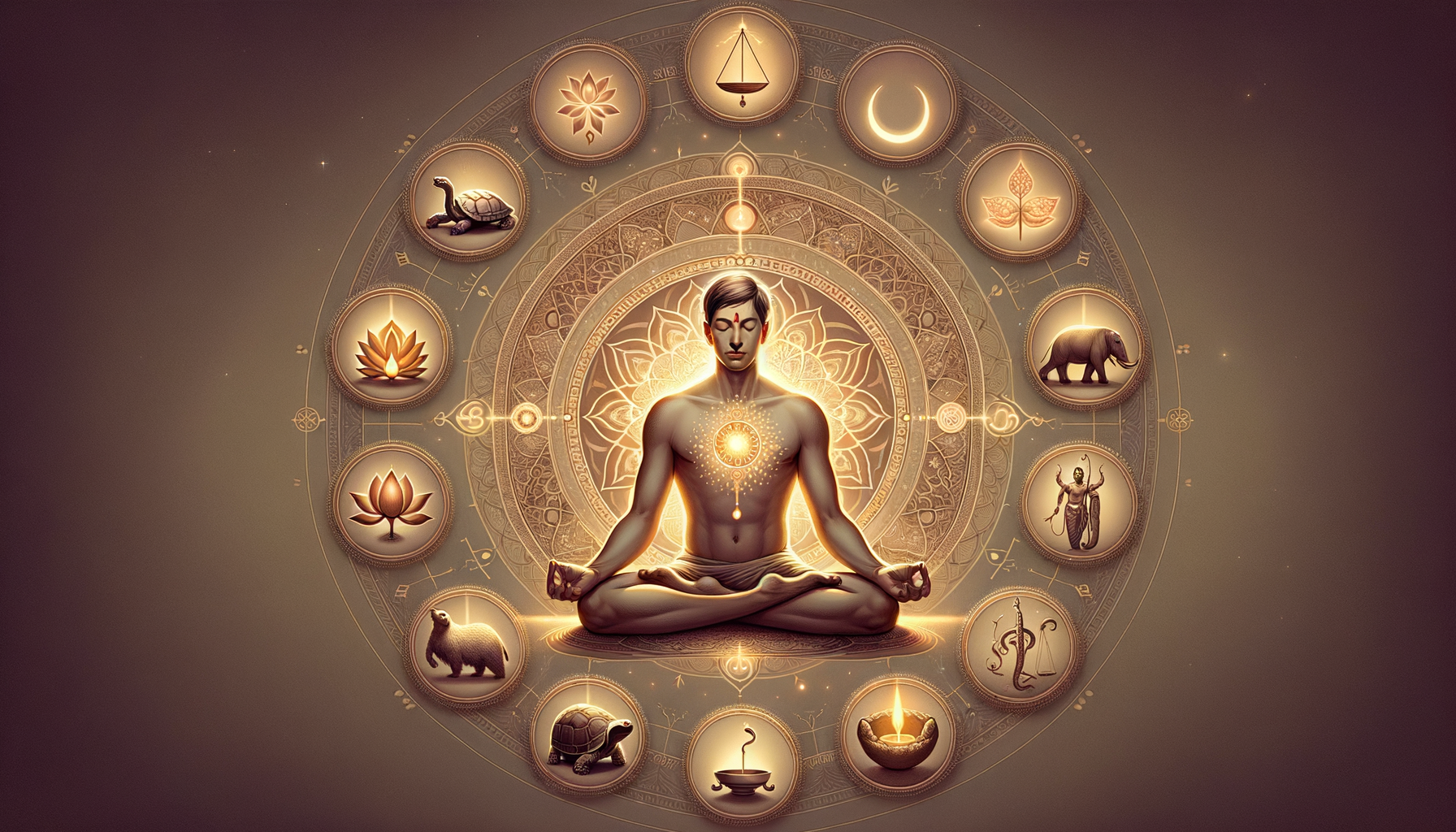
The Dashavatara—ten principal manifestations of Vishnu in Hinduism—can be read as a sophisticated map of inner states of consciousness. Rather than mere historical episodes, these archetypes signal capacities the mind and heart can cultivate: preservation of wisdom, steadying resilience, courageous care, ethical action, and liberating insight. This interpretive lens, grounded in Vedic wisdom, the Upanishads, and the Bhagavad Gita, encourages an experiential approach to spirituality that integrates meditation, mindfulness, Yoga, and dharma-centered living.
This plural, inward reading aligns with the broader dharmic family—Buddhism, Jainism, and Sikhism—where inner transformation is pursued through mindfulness, ahiṁsā, self-discipline, simran, and seva. Unity in spiritual diversity is affirmed: different forms, one intent; diverse methods, shared ethics. Practitioners across traditions frequently describe a sense of belonging, clarity, and compassion when the archetypal meanings of the avatars are contemplated and practiced in daily life.
Matsya (the Fish) — recovering primordial wisdom. As an inner state, Matsya signifies retrieving what is easily lost in chaos: attention and memory of the good. Practical invocation includes brief breath awareness before tasks, reflective journaling at day’s end, and compassionately returning to one’s chosen mantra (such as Om Namo Narayanaya) whenever the mind disperses. Many experience Matsya as a felt sense of safety and guidance amid uncertainty.
Kurma (the Tortoise) — stabilizing through restraint. Kurma expresses pratyahara, the dignified withdrawal of the senses to restore inner balance. It can be invoked by pausing before responding to provocation, scheduling short periods of silent mindfulness, and adopting simple posture practices to lengthen the spine and steady the breath. This state often brings emotional regulation and a grounded calm that supports ethical clarity.
Varaha (the Boar) — lifting what is precious from the depths. Varaha embodies the courage to raise the “earth” of one’s innate dignity from the mud of lethargy or despair. Invocation includes grounding exercises (mindful walking barefoot on natural ground), seva for community well-being, and intentional acts of self-respect. Many report renewed vitality and purpose when the Varaha impulse to rescue the valuable is honored.
Narasimha (the Man-Lion) — fierce protection of dharma and healthy boundaries. As an inner state, Narasimha refines strength into benevolence. It can be invoked through assertive yet compassionate communication, ethical non-violence paired with truth-telling, and safe somatic practices such as lion’s breath to metabolize anger. The result is protective love—power in service of justice without cruelty.
Vamana (the Dwarf) — humility, proportion, and measured steps. Vamana teaches that transformation proceeds through small, consistent vows. Invocation includes micro-habits (two minutes of meditation daily, one act of kindness), gratitude reflections, and careful speech. This state cultivates modesty and steadiness, allowing growth without hubris.
Parashurama — disciplined pruning of adharma within. As an inner metaphor, the axe of Parashurama cuts through self-deception, harmful habits, and untruth. Invocation includes ethical inventories, releasing one non-beneficial habit at a time, and aligning commitments with ahiṁsā. Practitioners describe a lightness and integrity as inner contradictions are patiently reduced.
Rama — unwavering dharma, relational fidelity, and noble conduct. Rama symbolizes steadfastness guided by values. Invocation includes honoring promises, aligning daily choices with sathya (truth), and practicing dignified service at home and in community. This state strengthens trust, coherence, and the quiet joy of duty fulfilled.
Krishna — luminous wisdom, playful devotion, and compassionate engagement. Krishna invites a synthesis of jñāna, bhakti, and karma yoga. Invocation includes contemplative study (Bhagavad Gita passages), kirtan or silent japa, and relational empathy in dialogue. The result is skill-in-action: detachment without indifference, involvement without entanglement.
Buddha — mindful presence and boundless compassion. In several Vaishnava lists, Buddha appears as an avatar, underscoring shared dharmic roots. Invocation includes mindfulness of breath, metta-karuṇā practices, and gentle pauses throughout the day to interrupt reactivity. This state softens the heart, clarifies perception, and deepens ahiṁsā in thought, word, and deed.
Kalki — the catalytic force of ethical renewal. Kalki symbolizes the courageous resolve to end cycles of ignorance and restore balance. Invocation includes disciplined routines, truth-centered decision-making, and purposeful engagement with technology and media guided by dharma. Many experience Kalki inwardly as moral clarity blended with forward-looking responsibility.
Integrating the ten avatars — an inner ecology. These archetypes function like complementary faculties rather than isolated moods. A practical approach layers Matsya’s remembering, Kurma’s restraint, Varaha’s courage, Narasimha’s boundaries, Vamana’s small steps, Parashurama’s pruning, Rama’s fidelity, Krishna’s synthesis, Buddha’s compassion, and Kalki’s ethical resolve. Together they form a whole-person practice.
Daily sadhana framework. A balanced routine might include: brief pranayama and mindfulness (Matsya–Kurma), a grounding walk and a single act of seva (Varaha), assertive but kind check-ins in relationships (Narasimha), one micro-habit change (Vamana), a short ethical inventory (Parashurama), a values-based commitment (Rama), a few verses from the Bhagavad Gita with reflection or japa (Krishna), metta meditation (Buddha), and a clear intention for responsible action in the digital and civic sphere (Kalki).
Dharmic consonance across traditions. The inner meanings of the avatars resonate with Buddhist mindfulness and compassion, Jain ahiṁsā and disciplined vows (vrata), and Sikh simran and seva, demonstrating a shared civilizational ethos. This unity in spiritual diversity strengthens communal harmony and honors each path’s distinctive practices while affirming a common pursuit of truth and well-being.
Psychological and ethical benefits. Cultivating these inner states is associated with improved emotional regulation, clarity of purpose, prosocial behavior, and resilience. The approach complements Yoga, meditation, and mindfulness research that highlights gains in attention, empathy, and stress recovery, while remaining rooted in Hindu philosophy and scriptures.
In this reading, the Dashavatara becomes a living pedagogy: a way to remember inner divinity, refine conduct, and contribute to a compassionate society. Engaging these archetypes respectfully and consistently allows practitioners to feel guided, connected, and empowered—qualities that sustain both personal growth and collective harmony.
Inspired by this post on Hindu Blog.