
Six Years of Solo Meditation Retreat: Powerful Lessons for Dharma Practice
Maureen Smith’s reflections on six annual one-month solo retreats offer a valuable case study in sustained meditation, retreat discipline, and the gradual integration of inner practice with ordinary life. Her experience is rooted in a contemporary Buddhist setting at Clear Sky Center, yet the lessons speak broadly to the shared contemplative heritage of dharmic traditions, including Hinduism, Buddhism, Jainism, and Sikhism. Across these traditions, disciplined practice, ethical steadiness, reverence for teachers, community support, and self-examination have long been understood as essential conditions for spiritual growth.
The original interview, published in May 2023, centered on a simple but demanding question: what happens when a practitioner repeatedly steps away from ordinary responsibilities for a full month of retreat? The answer is neither romantic escapism nor merely a report of calm states. It is a sober account of training, fatigue, trust, humility, embodied learning, and the slow refinement of perception. The experience suggests that extended retreat is not an isolated spiritual performance but a disciplined laboratory in which the mind, body, habits, fears, and aspirations become visible.
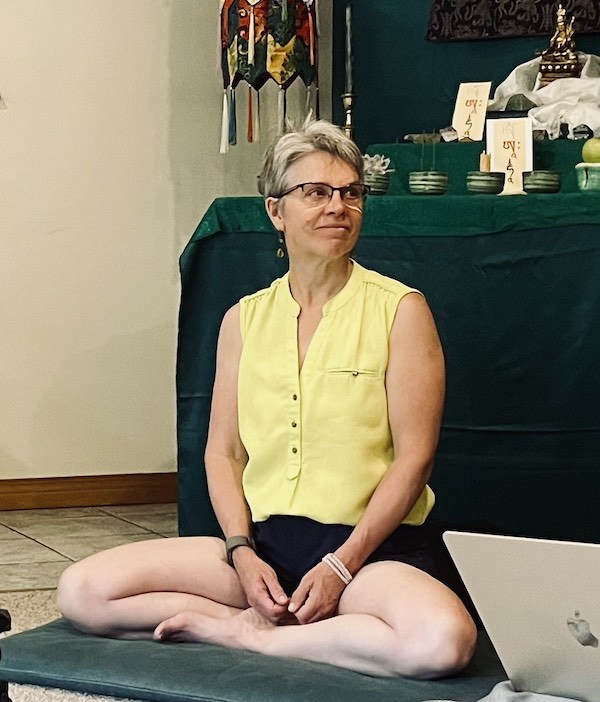
Smith had completed her sixth year of one-month solo retreats in Clear Sky’s meditation cabins. These cabins functioned not only as physical shelters but also as containers for dhyana, attention, silence, and disciplined inquiry. She expressed deep gratitude to her teachers, especially Sensei, for demonstrating that it is possible to step away from external life for a month each year. That statement is significant because it reframes retreat as a practical possibility rather than a distant ideal reserved for monastics or unusually privileged seekers.
In modern life, the idea of withdrawing for a month can appear unreasonable. Work, family, digital communication, social expectations, and financial obligations create the impression that constant availability is unavoidable. Yet Smith’s testimony challenges that assumption. Her account proposes that deliberate retreat, when responsibly prepared, can be deeply rewarding and essential for real health. This does not imply neglecting duties; rather, it points to the dharmic principle that wise action in the world depends on periodic renewal, self-knowledge, and disciplined contact with the deeper layers of consciousness.
One of the most important features of her six-year journey is its gradual evolution. The retreat experience did not remain static. Each year brought a different relationship to season, solitude, body, practice, confidence, and return. She described experimenting with different seasons and observing the dance between the inner and outer worlds. This observation has technical importance for meditation practice. Retreat does not occur in a vacuum. Weather, light, temperature, terrain, bodily rhythms, and emotional memory all influence the field of practice.
Such sensitivity to season has parallels across dharmic disciplines. In yoga practice, Ayurveda, Buddhist retreat culture, Jain austerity, and Sikh remembrance of the Divine through disciplined daily living, the practitioner is not treated as an abstract mind separate from environment. Body, breath, attention, food, sleep, weather, community, and moral intention all shape the quality of spiritual practice. Smith’s remarks therefore point toward an integrated view of meditation: the mind is trained through posture and attention, but also through preparation, simplicity, rhythm, and relationship to place.
Her confidence in solo retreat emerged from more than twenty years of group retreats with teachers and sangha. She began participating in month-long teacher-led group retreats in 2006. This chronology matters. Solo practice did not appear as an isolated experiment detached from guidance. It developed after long exposure to communal retreat, teaching, instruction, and shared discipline. In dharmic practice, independence is rarely the starting point. It is usually the fruit of training, humility, and repeated correction.
The role of the teacher and sangha is therefore central. Smith’s increased ability to practice alone was not a rejection of community but an expression of what community had cultivated. A mature practitioner can sit alone precisely because the training has been stabilized through instruction, accountability, and shared practice. This is one of the strongest practical lessons for aspirants considering an extended meditation retreat: solitude should be built on preparation, not fantasy.

Her account also describes a narrowing gap between retreat and everyday life. Earlier in practice, the difference between retreat and the world may feel dramatic. Retreat can appear pure, controlled, and meaningful, while ordinary life can seem noisy, distracted, and fragmented. Over time, however, Smith found that the difference became less pronounced. The logistics and mental states involved in moving into and out of retreat became smoother and more easeful.
This is a major marker of spiritual integration. Meditation practice is not fully mature when peace can be found only in special conditions. A retreat environment is valuable because it reduces distraction and intensifies training, but the deeper purpose is to transform one’s way of being. When the transition between cabin and society becomes less abrupt, practice has begun to permeate perception. The dharmic aim is not to escape the world but to see and inhabit it with greater clarity, compassion, steadiness, and freedom.
Smith’s playful summaries of each retreat year reveal the developmental arc with unusual honesty. The first year could be summarized as: “What…?” The second year brought recognition: “Ok, this is hard work.” The third year emphasized perseverance: “Just do the practice. No matter what, just do the practice.” The fourth year deepened into trust: “Do the practice. Trust the practice.” The fifth year opened into philosophical wonder: “Hmmmm. Kind of odd, this thing we call reality.” The sixth year returned to a disarming instruction: “Huh. What the… Relax.”
This sequence is more than humorous. It accurately maps a common contemplative progression. At first, practice disorients the practitioner. Then it exposes difficulty. Next comes discipline. Discipline gradually matures into trust. Trust then opens perception to the strangeness and fluidity of reality. Finally, the practitioner discovers that effort must be balanced by relaxation. In meditation, excessive strain can become another form of egoic control. Genuine steadiness requires both commitment and surrender.

The phrase “just do the practice” carries particular weight. In many spiritual paths, aspirants initially seek experiences: peace, visions, insight, emotional release, or dramatic transformation. Yet long retreat often teaches a less glamorous lesson. The practitioner sits, walks, studies, rests, notices, returns, and begins again. The discipline is repetitive because the mind’s conditioning is repetitive. Practice becomes powerful not through novelty but through continuity.
At the same time, the later instruction to relax prevents discipline from hardening into rigidity. In Buddhist meditation, yoga, and other dharmic forms of mind training, right effort is not brute force. It is balanced energy. Too little effort produces dullness and drift; too much effort produces tension, pride, and aversion. Smith’s sixth-year summary suggests that after years of sustained retreat work, relaxation itself becomes a profound practice. It is not passivity but intelligent release.
Her description of meditation as a trusted and reliable friend is one of the most emotionally resonant parts of the interview. Earlier, meditation had felt like something visited occasionally, perhaps like a family reunion that could be painful or awkward at first. Over time, it became constant, familiar, and intimate. The body could settle into long periods of sitting meditation with much less resistance. This shift illustrates how meditation moves from being an activity one performs to a relationship one inhabits.
That relational language is important. Many technical explanations of meditation focus on attention, concentration, mindfulness, posture, breath, or insight. These are necessary, but they do not fully describe the lived transformation that occurs when practice becomes trustworthy. A practitioner who returns to meditation repeatedly begins to discover that silence is not empty in the negative sense. It can become supportive, clarifying, and intimate. The cushion becomes less like an examination seat and more like a place of honest meeting.

Smith also described meditation through vivid images: a sweet lover, a warm spring morning after rain, a drink of water on a hot dusty day, and the clear eyes of a wise being marked by laughter, fierce energy, and unbounded depth. These metaphors are not merely decorative. They indicate that mature practice can engage the whole person: affection, sensory experience, vitality, reverence, and awe. Meditation is sometimes mistakenly presented as dry self-control. Her account shows that it can become deeply alive.
The bodily dimension of her account deserves attention. She noted that the body began to settle into long sitting with much less resistance. This is a practical and technical point. Meditation is not simply mental observation. It includes the gradual training of the nervous system, posture, breathing, endurance, and embodied receptivity. Early resistance may appear as restlessness, pain, sleepiness, agitation, doubt, or impatience. With repeated practice, the body learns that stillness is not a threat. It begins to cooperate.
Her advice for those considering extended retreat is direct: undertake it, but prepare carefully. She emphasized that life is precious and passes quickly, and she reported never regretting the time spent in extended retreat. This advice should be understood within its practical context. Retreat is not an impulsive act of withdrawal. It requires arrangements for personal affairs, clear communication with loved ones, preparation of supplies, and consultation with teachers well in advance.
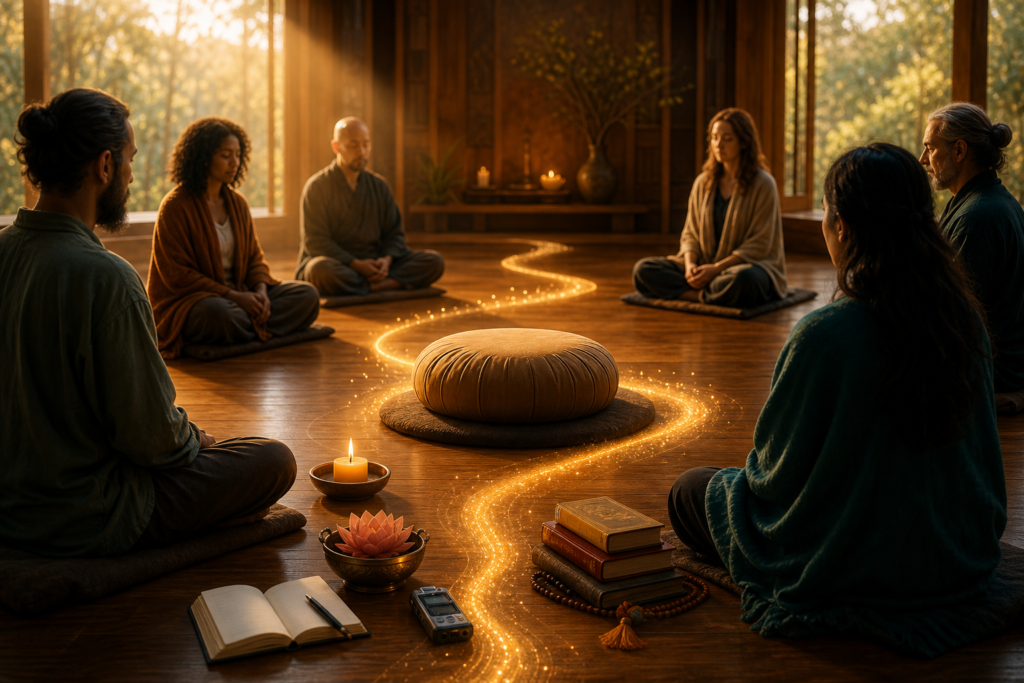
The practical details are instructive. Personal effects should be organized early. Packing should begin well before departure and be revised as the retreat approaches. Practitioners should ask teachers whether a specific practice is recommended and should gather the necessary materials. Toiletries, a torch or flashlight, a timepiece, and meditation materials may be needed. In Smith’s setting, food, water, bedding, cushions, linens, and washing facilities were supported by the retreat center, but every retreat environment has its own conditions and should be studied carefully beforehand.
She also advised planning for limited or no contact with loved ones until a couple of days after retreat ends. This is psychologically wise. A deep retreat may make the mind sensitive, open, or temporarily disoriented. Immediate re-entry into communication, decision-making, and relational obligations can overwhelm the integration process. A short buffer after retreat allows insights to settle and reduces the shock of returning to ordinary speed.
Another realistic point concerns fatigue. Smith observed that practitioners may be tired and may sleep a great deal during the first few days. This should not be interpreted as failure. In many cases, the body arrives carrying accumulated stress, sleep debt, emotional strain, and nervous system exhaustion. Early retreat sleep can be part of regeneration. Modern spiritual culture sometimes glorifies intensity, but wise practice respects the body’s need to recover before deeper attention can stabilize.
This observation has particular relevance for contemporary practitioners. Many people approach meditation while already overworked, overstimulated, and digitally saturated. The first layer of retreat may not be visionary insight but simple rest. That rest is not secondary. It is foundational. A tired body struggles to sustain attention. A dysregulated nervous system interprets stillness as discomfort. Regeneration is therefore not separate from dharma practice; it is often the first expression of it.
Smith’s long retreat history also helps clarify the difference between occasional mindfulness and serious retreat work. Mindfulness in daily life can reduce stress, improve emotional regulation, and support ethical awareness. Extended retreat, however, intensifies the process. It removes many ordinary distractions and places the practitioner in sustained contact with the patterns that usually remain hidden beneath activity. This is why extended meditation can be both healing and challenging.
The phrase “retreat work” is therefore precise. Retreat is not simply a break. It is work in the sense of disciplined transformation. It asks the practitioner to meet boredom, longing, memory, physical discomfort, self-judgment, doubt, and subtle forms of avoidance. It also opens the possibility of joy, simplicity, insight, gratitude, and inner strength. The practitioner learns that the mind is not an enemy to be crushed but a field to be understood, trained, and liberated.
For dharmic communities, Smith’s account offers a constructive model of unity without erasing difference. The specific setting is Buddhist, and the language includes teachers, sangha, meditation cabins, and retreat discipline. Yet the underlying values resonate across Hindu yoga, Jain tapas and self-restraint, Sikh remembrance and disciplined devotion, and broader Indian spiritual traditions. Each tradition has distinct metaphysics, practices, scriptures, and lineages, but all recognize that human beings require disciplined attention, ethical refinement, humility, and guidance to move beyond habitual confusion.
This shared ground is especially important in a time when spiritual practice is often fragmented into consumer choices. Extended retreat reminds practitioners that dharma is not merely an idea, identity, or aesthetic. It is lived discipline. It asks what is being done with attention, speech, body, desire, fear, and time. It invites the practitioner to examine whether outer life reflects inner values. Such examination is relevant to householders, renunciants, professionals, teachers, students, and elders alike.
There is also a social dimension to individual retreat. A practitioner who becomes steadier, less reactive, and more compassionate returns to community differently. The benefit is not confined to private experience. Families, workplaces, sanghas, and civic spaces are shaped by the quality of attention people bring into them. When meditation matures into patience and clarity, it becomes a quiet form of service. In this sense, retreat can strengthen community rather than withdraw from it permanently.
Smith’s professional background adds further context. She has served as Clear Sky Center’s Retreat and Land Manager, has taught and guided at Clear Sky and with Alive Mindfully, and has worked as a counsellor and Imago therapist in Cranbrook, British Columbia. This combination of retreat practice, teaching, land stewardship, and therapeutic work suggests an integrated life in which meditation is not separated from care, relationship, practical responsibility, and service.
Her reflections ultimately present meditation as a long friendship rather than a short technique. Six one-month retreats did not produce a simplistic story of constant bliss. They produced confidence, humor, discipline, respect for preparation, deeper trust in practice, and a subtler relationship with reality. The repeated movement into solitude and back into ordinary life created a more fluid boundary between formal meditation and daily conduct.
The central lesson is both demanding and encouraging. Serious meditation practice requires time, preparation, guidance, and perseverance. It may initially feel confusing, difficult, or awkward. Yet with continuity, it can become intimate, reliable, and transformative. The body softens. The mind learns to return. The practitioner becomes less dependent on special conditions and more capable of carrying dharma into ordinary life.
For anyone considering an extended meditation retreat, Smith’s experience offers a balanced framework: seek guidance, prepare early, simplify obligations, respect the body, expect fatigue, trust repetition, and allow integration time afterward. The deeper invitation is not merely to attend a retreat but to cultivate a life in which meditation, dharma, self-discipline, and compassion become increasingly inseparable.
Inspired by this post on Planet Dharma.




Leave a Reply
You must be logged in to post a comment.