

Six months after the passing of Qapel, also known as Achariya Doug Duncan, his students’ recorded remembrances offer more than private grief. They form a careful portrait of a spiritual teacher whose influence was carried through direct encounter, disciplined practice, humor, candor, and the demanding intimacy of teacher-student training. In the language of dharmic traditions, such remembrance is not merely biographical. It is a form of reflection on lineage, transmission, gratitude, and responsibility.
Qapel, who lived from July 14, 1949, to October 5, 2024, was associated with Planet Dharma and Clear Sky Meditation Center, where he taught alongside Sensei Catherine Pawasarat. Public biographical materials describe him as a lineage holder in the Namgyal tradition, a student of Venerable Namgyal Rinpoche from 1974 until Namgyal Rinpoche’s passing in 2003, and a teacher whose work drew from Buddhist practice, contemplative discipline, psychology, science, intercultural experience, and modern forms of spiritual training. That background matters because the student stories gathered after his death are not simply affectionate anecdotes. They are accounts of how a living teacher shaped perception, conduct, and inner work over time.
The phrase “root teacher” carries technical significance in Buddhist and wider dharmic contexts. It does not simply mean a favorite lecturer, inspirational figure, or charismatic public speaker. It refers to a teacher through whom a student encounters the path in a decisive way: a guide who exposes patterns of confusion, clarifies practice, transmits confidence in awakening, and becomes a living reference point for the discipline of liberation. In Hindu, Buddhist, Jain, and Sikh traditions, the teacher-student relationship has taken different theological and institutional forms, yet it often rests on a shared principle: wisdom becomes transformative when it is embodied, tested, and received through disciplined relationship.
The remembrances described in this episode show that Qapel’s influence was experienced through many registers. Some students remembered the first meeting, the charged moment when a spiritual search became concrete through an encounter with someone who seemed unusually clear. Others recalled a teaching that cut through confusion with such force that it reorganized how they understood their life. Still others remembered ordinary, playful, silly, or tender moments. Those apparently minor memories are important. A teacher’s legacy is rarely preserved only in doctrines. It is also preserved in tone of voice, timing, laughter, sharpness, silence, and the way a person made the path feel possible in the middle of daily life.
From an academic perspective, these student accounts can be read as oral testimony within a contemporary dharmic community. Such testimony performs several functions. It preserves historical memory after a teacher’s death. It helps a community metabolize grief. It identifies the qualities students considered central to the teacher’s life. It also transmits norms: what counted as sincere practice, what kinds of difficulty were understood as fruitful, and how students interpreted transformation. In this sense, remembrance becomes a pedagogical act. The community is not only saying what happened; it is clarifying what should continue.
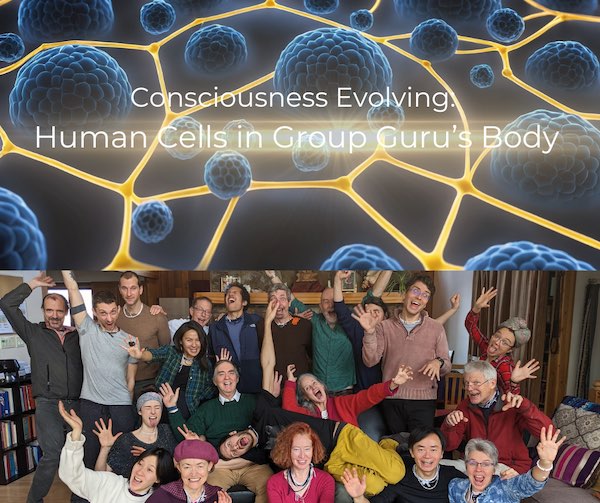
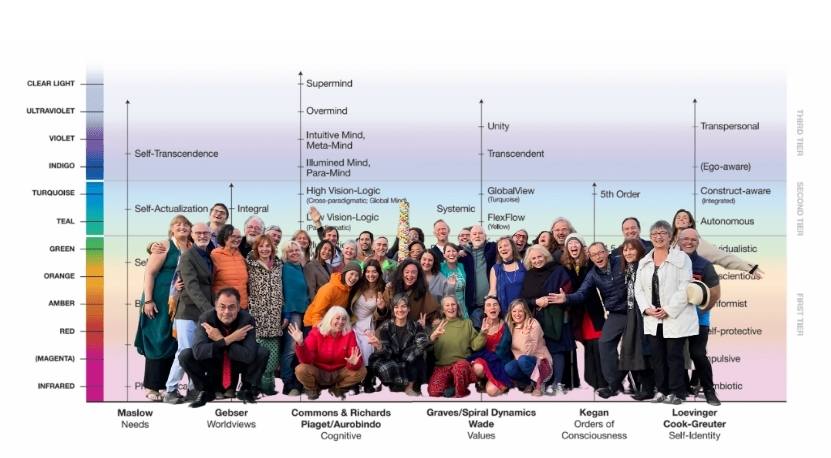
One recurring theme in accounts of Qapel’s teaching is the integration of ancient dharma with modern psychological and social realities. Planet Dharma materials describe the training environment around Qapel and Sensei as one that included meditation, study, karma yoga, shadow integration, and conscious community. These categories point toward a technically sophisticated approach to practice. Meditation stabilizes attention and reveals the mind’s patterns. Study gives language, structure, and philosophical orientation. Karma yoga brings practice into action, service, work, and relationship. Shadow integration addresses unconscious or disowned aspects of personality that can distort spiritual aspiration. Conscious community tests whether insight can survive contact with other people.
This framework helps explain why students often remember transformative moments with a mixture of gratitude and intensity. Serious spiritual training is rarely limited to comfort. A teacher may encourage, but may also confront. A compassionate teacher may be warm, but compassion in dharmic traditions is not reducible to sentimental approval. It can appear as precision, interruption, instruction, or a refusal to let a student remain captive to self-deception. When students describe Qapel as dynamic, skillful, and compassionate, the combination suggests a teacher whose method moved across registers: philosophical, psychological, practical, relational, humorous, and devotional.
The inclusion of funny and lighthearted stories is especially revealing. Hagiographic memory can sometimes flatten a teacher into solemn perfection, but living dharma traditions are richer than that. A teacher who laughs, jokes, startles, teases, or behaves with unexpected playfulness can help dissolve rigid spiritual self-images. Humor may function as an epistemic tool: it breaks fixation, exposes inflated seriousness, and reminds students that awakening is not a performance of piety. In many dharmic lineages, from Zen and Vajrayana Buddhism to bhakti traditions and Sikh stories of the Gurus, humor and directness often serve as vehicles for insight.
At the same time, the grief underlying these recordings should not be minimized. Six months after a teacher’s death, a community may still be moving between shock, tenderness, disorientation, and renewed dedication. The loss of a root teacher can raise practical and spiritual questions: how teachings are preserved, how authority is held, how students continue training, and how devotion avoids becoming nostalgia. A mature tribute does not freeze the teacher in the past. It asks how the qualities embodied by the teacher can be practiced now, in speech, service, meditation, study, and ethical responsibility.
Qapel’s legacy also invites reflection on the broader unity of dharmic traditions. Though his primary teaching context was Buddhist, many of the concerns attributed to his work resonate across Sanatana Dharma, Jain dharma, Sikh teachings, and other contemplative streams rooted in disciplined transformation. The emphasis on overcoming suffering, refining conduct, serving beyond ego, recognizing interdependence, and training the mind belongs to a shared civilizational vocabulary. The names, metaphysics, and practices differ, but the ethical seriousness is familiar: human life is precious, the mind can be trained, self-centeredness can be reduced, and wisdom must become conduct.
The teacher-student bond, often called the guru-shishya relationship in Indic contexts, is central to this unity. In Hindu traditions, the guru may guide the student through mantra, scripture, yoga, devotion, and knowledge. In Buddhist lineages, the teacher may transmit meditation methods, point out patterns of attachment, and guide the student through stages of insight. In Jain traditions, the acharya and sadhu-sadhvi lineages preserve discipline, non-violence, austerity, and philosophical clarity. In Sikh tradition, the Guru is ultimately enshrined in Guru Granth Sahib and lived through sangat, seva, and remembrance of the Divine. Across these differences, the principle remains: truth is not merely consumed as information; it is received, practiced, tested, and embodied.
The students’ memories therefore should be read as part of a wider spiritual anthropology. A human being changes not only by adopting beliefs but by entering environments that reveal habitual patterns. A teacher may become a mirror, a catalyst, or a disciplined interruption in the student’s ordinary momentum. The student arrives with aspiration, fear, doubt, pride, grief, and longing. The teacher offers method, challenge, and perspective. Over time, the relationship can produce a different kind of self-understanding: less defensive, more service-oriented, more capable of sustained attention, and more willing to take responsibility for one’s state of mind.
Karma yoga is particularly relevant to this interpretation. In many dharmic settings, karma yoga is understood as action performed without attachment to personal reward. In the modern training context associated with Qapel and Sensei, it appears as a way of transforming ordinary work into practice. This is technically important because it prevents spirituality from being confined to meditation sessions, retreats, or philosophical discussion. Work, service, conflict, repetition, and responsibility become laboratories for observing ego, preference, control, anxiety, and resistance. The path is no longer separate from life; life becomes the field of practice.
Such an approach is especially relevant for contemporary practitioners who live outside monastic institutions. Modern householders, professionals, parents, students, and community members often cannot separate spiritual discipline from the pressures of ordinary life. A teacher who can translate dharma into modern conditions offers a bridge between inherited wisdom and present realities. Qapel’s students appear to have valued precisely this capacity: the ability to make awakening practical without reducing it to self-help, and to make traditional training accessible without stripping it of rigor.
The stories also point toward the role of community after a teacher’s passing. In many traditions, the death of a teacher can become a test of whether the teaching has been truly internalized. If the community collapses into personality worship, the living dharma narrows. If the community rejects grief in the name of detachment, it becomes emotionally brittle. A healthier response holds both reverence and practice. Students remember the teacher, mourn the human loss, preserve the teachings, support one another, and continue the work of transformation. This balance reflects spiritual maturity.
There is also a methodological caution. Student memories are powerful, but they are not neutral data. They are shaped by devotion, grief, personal history, and the needs of a community in transition. Academic listening honors their emotional truth while also recognizing their genre. These recordings are tributes, not detached institutional histories. Their value lies in showing how Qapel was experienced by those who trained with him: as a teacher whose presence was formative, whose guidance could be catalytic, and whose humanity was inseparable from his pedagogy.
That humanity may be the most moving element. Spiritual teachers are often remembered through elevated titles, but students frequently carry more intimate fragments: a look that made evasion impossible, a sentence that returned during crisis, a moment of laughter after a difficult teaching, a gesture of kindness, or a challenge that later proved merciful. These memories matter because they show how wisdom becomes relational. The path is not transmitted only through abstract doctrine. It is transmitted through embodied contact, through the teacher’s way of meeting life, and through the student’s willingness to be changed.
Qapel’s remembrance therefore becomes a study in spiritual legacy. Legacy is not only what a teacher said or built. It is what students now practice because of that teacher. It is the courage to continue meditation when enthusiasm fades, the humility to receive correction, the discipline to serve, the honesty to face shadow, and the compassion to carry insight into community. A teacher’s death makes legacy visible because it asks whether the teaching can live without the physical presence of the one who embodied it.
For readers rooted in Hinduism, Buddhism, Jainism, Sikhism, or any dharmic path, the episode offers a universal lesson: the most precious teachers are not merely admired; they alter the direction of life. They refine the student’s understanding of suffering and freedom. They reveal the difference between spiritual preference and spiritual commitment. They make discipline more humane and humanity more disciplined. They leave behind not only memories, but a standard of practice.
In that sense, the students’ stories about Qapel are not only about loss. They are about continuity. They show how grief can become gratitude, how gratitude can become responsibility, and how responsibility can become living dharma. The teacher is remembered through words, but the deeper tribute is enacted through conduct. The question that remains is not only who Qapel was, but what his students and the wider community will continue to embody because they encountered him.
Inspired by this post on Planet Dharma.







Leave a Reply
You must be logged in to post a comment.