Dhanurmasam holds preeminent significance across Sri Vaishnava temples, and in 2025 it commenced on December 16 at 1.23 PM. In alignment with this tradition, from December 17 onwards at the Tirumala temple, Tiruppavai Parayanam replaced the daily Suprabhata Seva (Suprabhatam), reaffirming the devotional focus of the season and the living continuity of Sanatana Dharma.
Composed by Andal Sri Godai, Tiruppavai comprises thirty pasurams that encapsulate the essence of Bhakti Traditiondevotional surrender, communal discipline, and contemplative remembrance of Sri Vishnu. During Margazhi Masam, these hymns guide devotees through Pavai Nombu, elevating dawn worship from a routine ritual to a transformative experience grounded in humility, service, and collective aspiration.
At Tirumala, the substitution of Tiruppavai for Suprabhatam is not merely a liturgical change but a theological emphasis: the season invites devotees to awaken the heart through Andal’s poetry. The recitation at daybreak shapes a serene atmosphere where the rhythms of chant attune the mind to devotion, reinforcing the temple’s role as a sanctuary of learning, remembrance, and shared reverence.
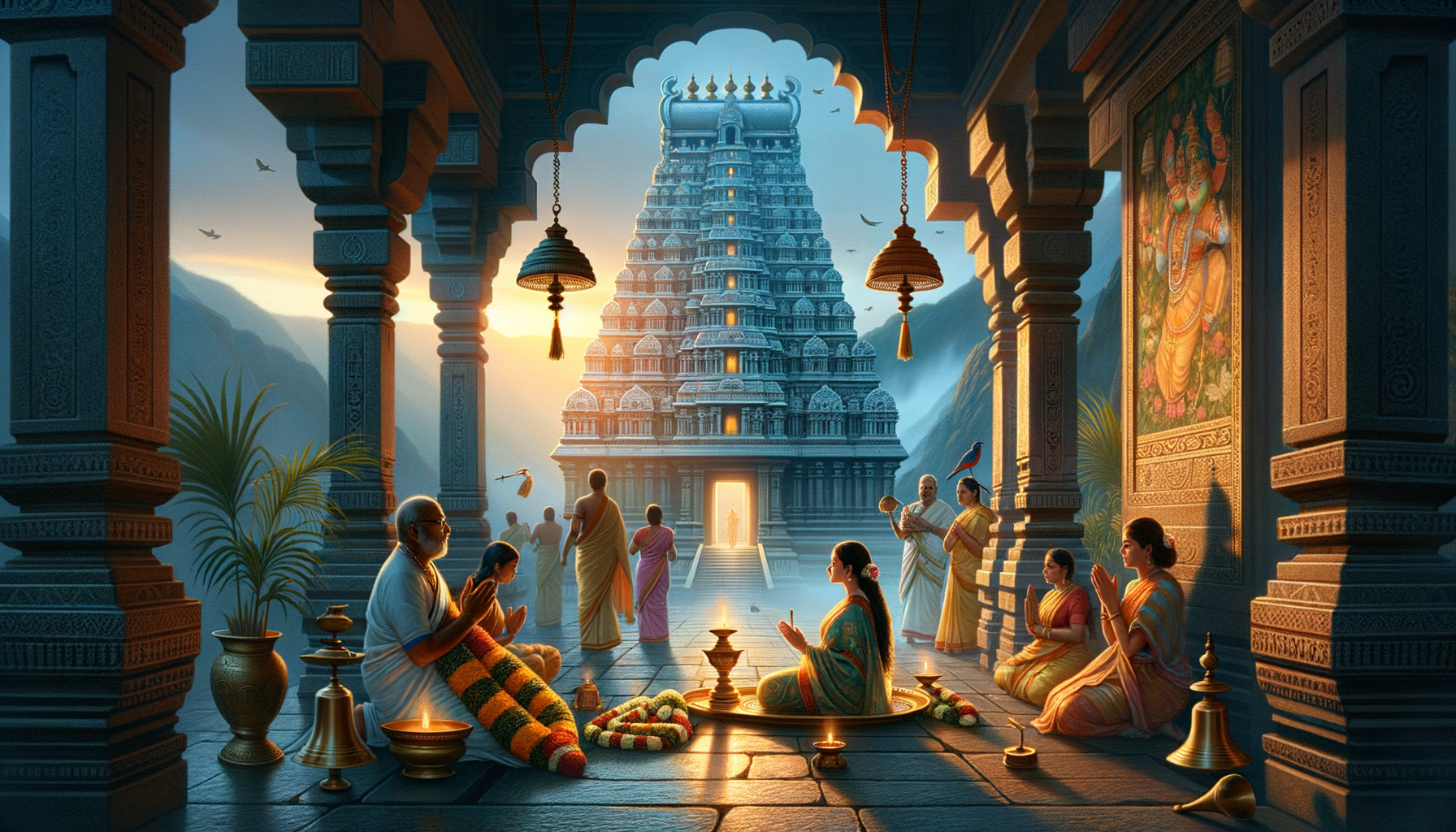
The morning schedule during Dhanurmasam includes Tomala and Archana in Ekantam. Tomalaoffering floral garlands to the Lordsymbolizes the fragrance of pure intention, while Archanasystematic name-recitationcultivates focused remembrance. Performed in Ekantam (private observance), these services foreground inwardness and quiet dignity, prioritizing contemplation over spectacle and aligning with the season’s emphasis on inner refinement.
Devotees consistently describe a palpable stillness in the pre-dawn hours as Tiruppavai Parayanam unfolds. For many households, daily recitation during Margazhi Masam complements the temple rituals, creating continuity between domestic worship and the sanctum’s discipline. This shared cadence of devotion strengthens community bonds, fosters intergenerational transmission of spiritual values, and deepens engagement with the living heritage of Temples.
The practice also resonates with a broader dharmic ethos. Dawn hymns and reflective chants are honored across Hindu, Buddhist, Jain, and Sikh traditionswhether through meditative morning recitations, pratikraman-inspired introspection, or Gurbani at daybreak. Such parallels illuminate a common thread of disciplined remembrance and compassion, reinforcing unity in spiritual diversity without erasing the distinct beauty of each path.
For the 2025 observance window beginning December 16, Tiruppavai Parayanam at Tirumala guides devotees through the Dhanurmasam period with focused austerity and joy. By foregrounding Andal Sri Godai’s hymns, the Tirumala Tirupati Devasthanam (TTD) re-centers the season on service (seva), humility, and the quiet strength of collective remembrancevalues that remain universally relevant across the dharmic family.
In essence, the replacement of Suprabhatam by Tiruppavai during Dhanurmasam, together with Tomala and Archana in Ekantam, offers a finely balanced synthesis of devotion, discipline, and beauty. It invites practitioners to experience dawn as a gateway to insight, to participate in a shared cultural inheritance, and to recognize the unifying currents that flow through India’s sacred traditions.
Inspired by this post on Hindu Pad.