In Odisha’s sacred landscape, particularly around Puri, a luminous synthesis of Vaishnava and Shakta devotion continues to flourish. Within this living tradition, the presence of Lord Jagannath is often experienced as resonant with the fierce yet compassionate energy of Dakshina Kali. Rather than opposing currents, these streams of bhakti flow together, presenting a coherent vision in which devotion to the Supreme and reverence for the Divine Mother are understood as complementary and mutually illuminating.
Puri Srimandir provides clear ritual evidence of this integration. The inner shrine of Goddess Bimala (Vimala), revered as the temple’s Shakti, receives the offering of Mahaprasad before it is distributed to devotees. This liturgical sequence affirms a Shakta foundation within a predominantly Vaishnava temple ecology, indicating that the temple’s sanctity is safeguarded by the union of Vishnu-tattva and Shakti-tattva. Scholars and pilgrims alike recognize in this practice a mature Vaishnava–Shakta synthesis that has shaped Odisha’s spiritual life for centuries.
Symbolically, Jagannath’s distinctive iconography invites a profound comparison with Kali’s transcendental power. The all-encompassing, circular eyes evoke a limitless, compassionate gaze, while the abstract, aniconic form signals a reality beyond ordinary representation. For many devotees, Kali’s dakshinasouth-facingaspect signifies immediacy, benevolence, and the nearness of grace; Jagannath’s approachable darshan is often felt in similar terms, as a convergence of awe (raudra) and mercy (karuna). In devotional imagination, the shared themes of time (kala), protection, and liberation bind these forms into a single spectrum of the Divine.
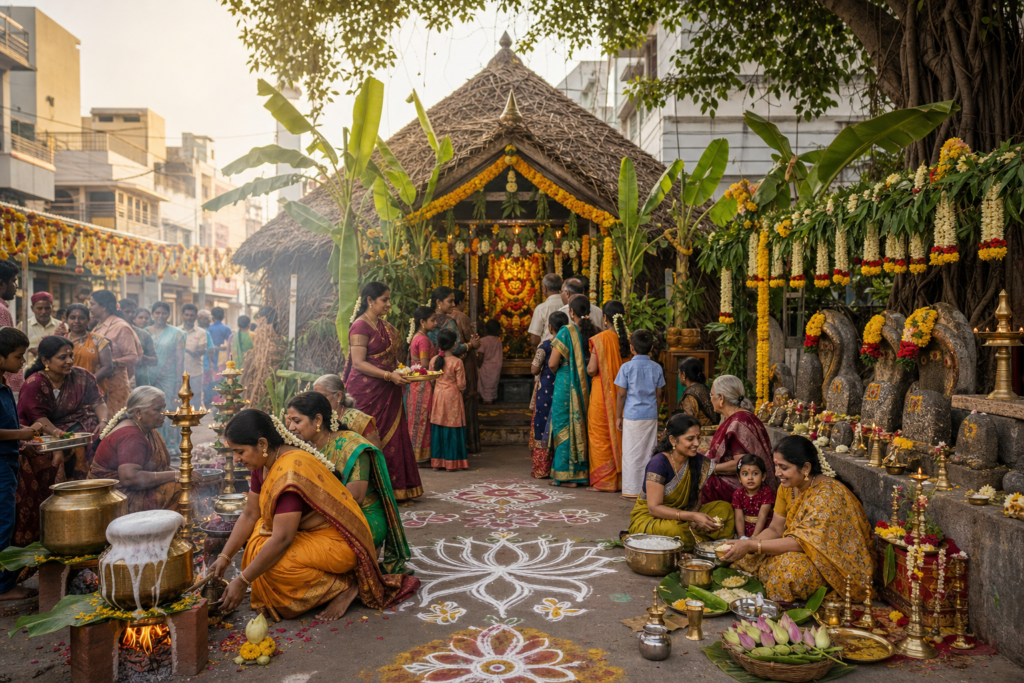
Festivals and local practices make this convergence tangible. Ratha Yatra, with its surge of collective energy and movement, is frequently interpreted as Shakti in dynamic expressiondevotion set into motion for the uplift of all beings. Across Odisha during Kali Puja and Diwali, many households maintain shrines to both Jagannath and Kali, reflecting a daily piety that does not separate the Lord’s sovereignty from the Mother’s protection. In Odia artsespecially patachitrashared motifs recur, further reinforcing theological kinship in visual form.
Lived experience deepens this understanding. Pilgrims commonly describe a heart-level recognition when standing before Jagannath’s vast gaze: an assurance that the same compassionate power that mothers the world as Kali also welcomes the seeker as Jagannath. Residents of Puri often recount festival nights when the city seems to breathe with a single rhythm of devotion, as reverence for the Lord and the Mother merge into one continuous act of remembrance.
Philosophically, the synthesis can be framed through the complementarity of Purusha and Prakriti. Jagannath, celebrated as Purushottama, signifies the Supreme Person, while Kali embodies Prakriti, the boundless creative power. Within Vedantic and Tantric idioms, this unity is neither theoretical nor polemical; it is devotional and experiential. The Ishta principle in Hindu traditions legitimizes diverse approaches to the same truth, enabling practitioners to see Jagannath and Dakshina Kali not as competing deities but as harmonized pathways to the One.
This harmony resonates with the wider dharmic family. The compassion (karuna) emphasized in Buddhism, the non-violence (ahimsa) central to Jainism, and the seva (selfless service) cherished in Sikhism find natural allies in Odisha’s model of religious pluralism. The Jagannath–Kali convergence thus provides a concrete, culturally rooted example of unity in spiritual diversity, nurturing mutual respect across dharmic traditions and strengthening social cohesion in contemporary India.
Odia literature, kirtan traditions, and the inclusive culture of Mahaprasad amplify this message of unity. The temple kitchen, among the largest in the world, stands as an emblem of shared sacred nourishment, bridging communities through prasada that has been sanctified by both Vaishnava and Shakta sanctums. In this way, culinary ritual becomes theological practicefeeding the body while affirming an integrated vision of the sacred.
Understanding Jagannath as evoking the compassionate fierceness of Dakshina Kali enriches both scholarship and devotion. It refines the reading of Odia ritual life, clarifies the symbolism animating Puri Srimandir, and offers a hopeful template for inter-sect harmony. Ultimately, Odisha’s Vaishnava–Shakta synthesis invites seekers to encounter a single Divine Reality expressed through many formsan inheritance that strengthens unity within Hindu traditions and across the broader dharmic world.
Inspired by this post on Hindu Blog.