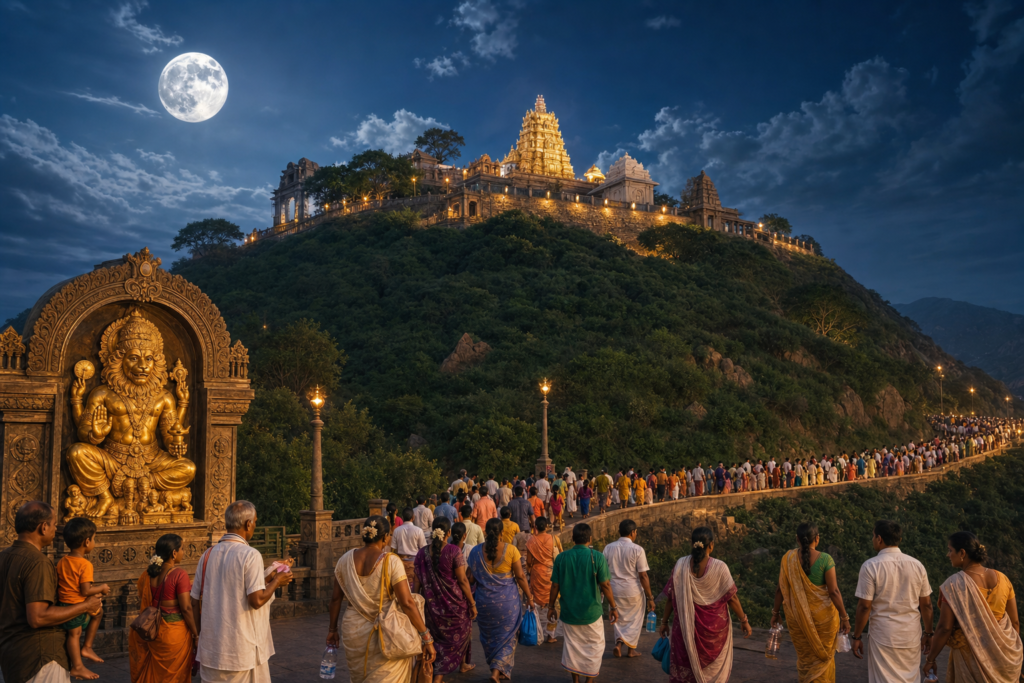
Kukke Subramanya Temple stands in Subrahmanya town of Sullia taluk, Dakshina Kannada district, Karnataka, on the verdant edge of the Western Ghats along the Kumaradhara River. Revered across southern and coastal India for Subrahmanya’s protective grace and for time-honored Naga-related rites, the kshetra attracts pilgrims seeking spiritual solace, architectural heritage, and ecological sanctity. Within this sacred campus, a constellation of sub-shrines (upadevata sannidhis) complements the principal sanctum, each adding depth to the temple’s living traditions and ritual landscape.
This guide documents and interprets the key sub-shrines associated with the Kukke Subramanya kshetra, with particular attention to architectural typology, ritual function, and visitor experience. It emphasizes accuracy and clarity while preserving the traditional terminology integral to coastal Karnataka’s temple culture. Where arrangements or access vary over time, verification at the temple’s information counters or official noticeboards is advised.
The temple’s sthala-purana, preserved in the Skanda Purana and regional oral memory, recounts how Vasuki, the Naga chief, sought refuge in these forests and was protected by Subrahmanya. The very name “Kukke” evokes the wicker basket (kukke) connected to the legend of concealment and divine safeguarding. The kshetra’s Garuda-stambha before the main sanctum symbolizes a powerful metaphysical boundary that reaffirms the compassionate protection offered to devotees who come seeking relief from afflictions classically described as sarpa-dosha.
Sub-shrines at Kukke Subramanya work in tandem with the main sanctum to structure a contemplative circumambulatory route. Architecturally modest yet ritually rich, these sannidhis embody Tulunadu’s temple grammar: compact, timber-forward, and adapted to high rainfall, with careful sequencing from entrance to balipeetha, dhwajastambha, and primary and ancillary sancta. Together they sustain the daily cycle of nitya-seva and the festival calendar that culminates in community-centered celebrations.
Among the documented sub-shrines, the KukkeLinga Temple is frequently noted in devotees’ itineraries. KukkeLinga Temple Vimana Type – NO; Sanctorum Shape – Square Shape; Speciality – Purathana is located indoors of Kukke Shri Subrahmanya. As the specification indicates, the sanctum employs a square garbhagriha plan without a towering vimana, consonant with local construction where sloped, tiled superstructures and timber frames mitigate monsoon stress. Ritual practice centers on Shaiva abhishekas and lamp offerings, harmoniously integrated with the kshetra’s overarching Subrahmanya-oriented worship.
Adi Subrahmanya, situated a short walk from the main sanctum within the broader temple environs, is central to the kshetra’s Naga-veneration stream. Here, the presence of naga-stones and a sanctified valmika (anthill) embodies the primordial Subrahmanya in intimate proximity to Vasuki. Pilgrims commonly visit Adi Subrahmanya either before or after darshan at the main temple, especially when performing Sarpa Samskara or Ashlesha Bali, aligning their circuit with long-standing procedural norms advised by temple priests.
A Ganesha sannidhi anchors the ritual threshold near the entrance, as is customary across coastal Karnataka temples. The presence of Ganapati serves a crucial preparatory function: devotees pause for preliminary prayers that cultivate clarity and auspicious beginnings before entering deeper into the Subrahmanya fold. While understated in scale relative to the main sanctum, this sub-shrine frames the devotional journey with the archetypal remover-of-obstacles motif.
Within the temple campus and immediate cultural precinct, Shaiva presence is further reflected in a compact Ishvara or Uma-Maheshwara shrine. Such sannidhis typically feature a linga aligned to the east, with Nandi en face, fostering integrative worship where Shaiva and Kaumara (Subrahmanya) currents meet. The arrangement illustrates a wider coastal pattern: complementary deities placed to support the principal deity’s kshetra-dharma without diluting the site’s unique identity.
Adjacent to the main complex, Sri Samputa Narasimha within the Sri Subrahmanya Matha forms a distinctive node in the kshetra’s ritual ecosystem. Associated with the Dvaita lineage and the memory of Sri Madhvacharya, the Samputa Narasimha icon enshrined here is renowned for its compact, casket-like symbolism (samputa), emphasizing protection, doctrinal continuity, and the Vaishnava current that coexists seamlessly with Subrahmanya worship. Though administered independently, the Matha’s shrine is part of the wider sacred geography that pilgrims often include in their visit.
Natural sanctities complement the built shrines. Biladvara, a small cave cherished in local memory, and the forested paths around Subrahmanya recall the kshetra’s pre-classical roots and the Naga association with earth, water, and canopy ecosystems. These spaces invite silent contemplation, underscoring that Kukke Subramanya’s sacredness is as much environmental as it is architectural.
Water-bodies, especially the Kumaradhara River, function as tirthas for pre-darshan snana (ritual bathing) when permissible and safe. Seasonal currents and local advisories should guide decisions about entering the water. Even without immersion, mindful engagement along the riverbankprayer, mantra-japa, or quiet reflectionretains the tirtha’s purificatory ethos while respecting riparian ecology.
Ritual practice at Kukke Subramanya is renowned for Sarpa Samskara and Ashlesha Bali, rites performed with scriptural sanction to atone for transgressions symbolically connected to the Naga principle, including inadvertent harm to serpents or disruption of their habitat. These ceremonies, typically requiring advance booking and priestly guidance, integrate darshan at sub-shrines such as Adi Subrahmanya and KukkeLinga, creating a cohesive spiritual arc from invocation to resolution.
Temple etiquette follows coastal Karnataka norms. Dress is modest and traditional; men are required to remove shirts and vests before approaching the inner sanctum. Photography restrictions, queue discipline, and the handling of offerings are observed as per temple notices. Milk or food offerings are never to be placed in natural serpent habitats; all puja dravya should be routed through authorized counters to prevent ecological harm and to maintain ritual integrity.
Architecturally, Kukke Subramanya exemplifies Tulunadu’s monsoon-adapted temple craft. The typical sequence comprises mahadwara, balipeetha, dhwajastambha, and layered mandapas leading to a square garbhagriha (sanctorum). Timber columns, wooden joinery, and pitched, tiled roofs are practical responses to climate, while the modest external silhouette preserves an inward-facing contemplative geometry. This inwardness complements the kshetra’s emphasis on transformation through disciplined rite and remembrance.
The square plan of the sanctum reflects canonical norms derived from vastu and agamic literature, mapping sacred space onto a stable cosmic diagram (mandala). In the KukkeLinga sub-shrine, the conjunction of a “Sanctorum Shape – Square Shape” and “Vimana Type – NO” corresponds to a regional idiom where the sanctum’s gravitas is preserved without a heavy masonry superstructure. Such choices allow sensitive load distribution on timber and laterite while ensuring longevity in a high-precipitation zone.
The festival calendar activates this architectural matrix with light, sound, and procession. Subrahmanya Shashti (Skanda Shashti) is celebrated with particular devotion, and seasonal deepotsava and ratha-related observances draw large congregations. Sub-shrines serve as ritual stations during processions, linking ancillary deities into the temple’s communal liturgy. The cumulative effect is a choreography of space and devotion that reaffirms collective belonging.
Visitor flow commonly begins with Ganapati darshan, proceeds to the Garuda-stambha area for mental preparation, and culminates in the main sanctum. Thereafter, many undertake a measured circuit that includes Adi Subrahmanya, KukkeLinga, and other sub-shrines according to the day’s rites. Those performing Sarpa Samskara or Ashlesha Bali follow priestly instructions that stipulate sequencing and mantras to preserve ritually coherent outcomes.
Accessibility is straightforward. The nearest railhead is Subrahmanya Road (SBHR) on the Mangaluru–Bengaluru line, with road transport available to the temple (approximately 12–15 km). Mangaluru International Airport serves as the primary air gateway. The approach roads traverse scenic Western Ghats foothills; seasonal rains may affect travel time, so prudent planning is recommended during the monsoon.
As a living dharmic kshetra, Kukke Subramanya offers a powerful template for unity across Hindu, Buddhist, and Jain sensibilities. The Naga motif that animates this temple resonates widely: Buddhist narratives recall Mucilinda sheltering the meditating Buddha, while Jain traditions venerate Tirthankara Parshvanatha under a many-hooded serpent. The shared reverence for life, non-harm, and ecological care forms a common ground that pilgrims across dharmic paths can recognize and celebrate.
This unity extends to ethical engagement with nature. In a landscape where sacred groves, riverine corridors, and serpent habitats intersect, ritual practice and conservation are mutually reinforcing. Responsible offerings, avoidance of plastic, adherence to designated pathways, and support for habitat-friendly customs honor both the deity and the living world that the deity safeguards in local memory.
In sum, the sub-shrines of Kukke Subramanyaexemplified by the Purathana KukkeLinga Temple and complemented by Adi Subrahmanya, Sri Samputa Narasimha, and other sannidhiscompose a coherent sacred ecology. Their architectural restraint, ritual depth, and environmental ethic make the kshetra a pedagogical space where visitors can learn, feel, and act in ways that integrate devotion, knowledge, and care. This balanced synthesis is why Kukke Subramanya remains one of Karnataka’s most instructive and transformative temple experiences.
Practical note: temple timings, access policies, and ritual bookings are periodically updated; devotees are encouraged to consult on-site notices for the latest guidance. The integrity of the experience rests on mindful participationobserving dress codes, ritual sequencing, and ecological prudence that befit a kshetra of such antiquity and continuing relevance.
Inspired by this post on Hindu Pad.