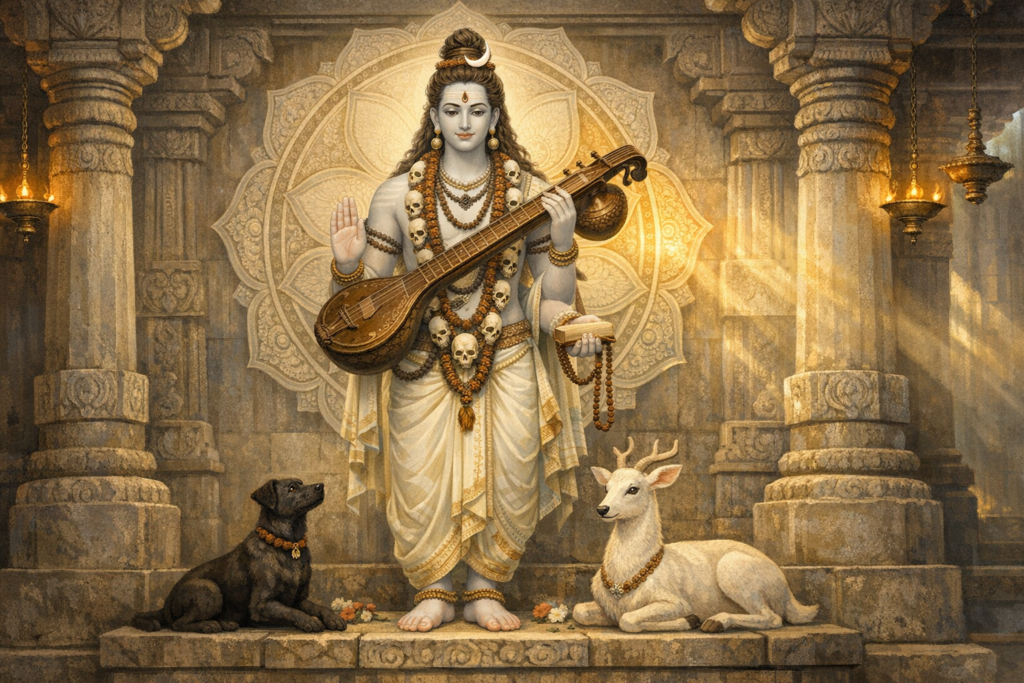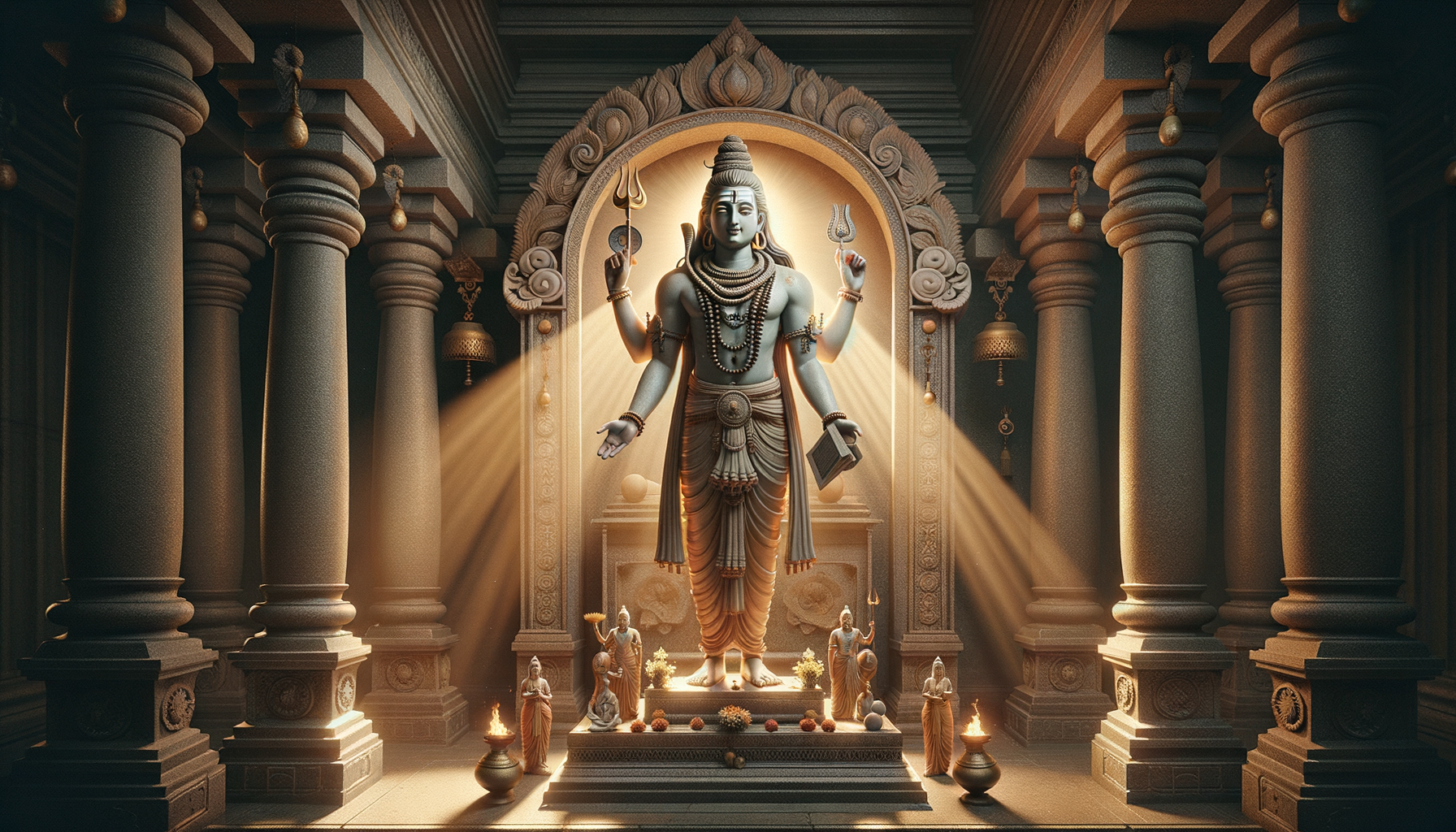
Within South Indian temple iconography, Lord Dakshinamurthy—Shiva as the supreme teacher—is most often portrayed in a calm, seated posture beneath a banyan tree. At the Thiruvaikavur Vilwavaneswarar Temple in Tamil Nadu, however, devotees encounter a striking exception: a rare standing Dakshinamurthy that expands the visual and spiritual vocabulary of this revered Guru of Wisdom.
Situated in the Thanjavur region, the shrine presents a south-facing (dakshina) form of Shiva, aligning with traditional canons while offering a distinctive stance. This rare standing Dakshinamurthy has become a point of interest for pilgrims, art historians, and seekers alike, who recognize its significance for Tamil Nadu’s living heritage and South Indian temple iconography.
In most temples, Dakshinamurthy is depicted seated in contemplative stillness, imparting knowledge through silence and gesture, often accompanied by sages at his feet. The standing form at Thiruvaikavur diverges from that widespread convention. By elevating the Guru to an upright posture, the image suggests movement within wisdom—an active, ever-present guidance that meets devotees where they are.
Symbolically, the standing posture can be read as an embodiment of knowledge in action—teaching that not only rests in meditation but also walks with the world. The icon communicates a dynamic transmission of insight, implying that learning, discernment, and compassion are not static attainments but continuous practices along life’s journey.
Visitors often describe the darshan here as both grounding and invigorating. The serene sanctum preserves the contemplative depth associated with Dakshinamurthy while the elevated stance evokes an immediate sense of presence. Many report that the encounter encourages clarity, humility, and renewed dedication to study and ethical living—qualities central to dharmic spiritual growth.
The ideal of the Guru resonates across the dharmic traditions of Hinduism, Buddhism, Jainism, and Sikhism. As a shared symbol of wisdom and compassionate guidance, this standing Dakshinamurthy at Thiruvaikavur invites an inclusive reflection: the pursuit of truth is nourished when communities honor both stillness and action, contemplation and service. In that sense, the image becomes a unifying emblem for seekers across these traditions.
Beyond its spiritual message, the icon enriches the study of Tamil Nadu’s temple heritage and South Indian sculptural conventions. Its rarity encourages careful documentation, preservation, and scholarship, ensuring that future generations can encounter and interpret this nuanced expression of Shiva as the supreme teacher.
For those exploring the Thanjavur region, the Thiruvaikavur Vilwavaneswarar Temple offers an opportunity to experience a distinctive form of Dakshinamurthy within a living place of worship. The encounter underscores a timeless lesson: wisdom is both a quiet center and a guiding force—rooted in tradition, yet responsive to the traveler’s path.
Inspired by this post on Hindu Blog.