
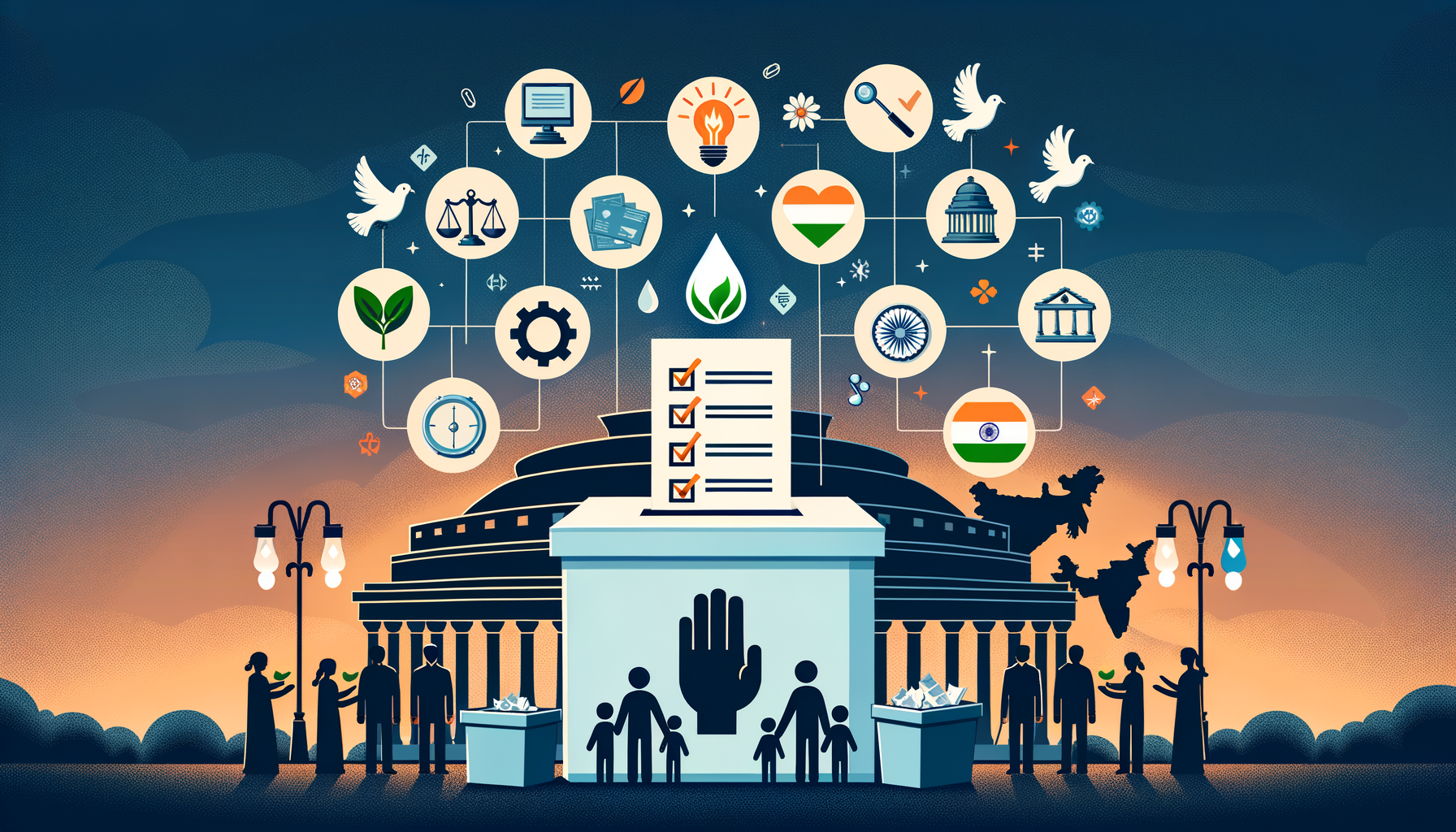
Many voters ask how to choose the better candidate to serve as MLA or MP when every contender appears similar. A doubt in a Satsang of Sri Sri Ravishankar captured this anxiety: when options look indistinguishable, discerning who will truly serve the people becomes challenging. A structured, values-based method rooted in dharma and evidence can bring clarity to this decision.
A dharma-centered approachshared across Hinduism, Buddhism, Jainism, and Sikhismprioritizes satya (truth), ahimsa (non-violence), karuṇā (compassion), and seva (public service). In democratic practice, these principles translate into transparency, accountability, ethical conduct, and inclusive governance. Selecting a representative aligned with these ideals strengthens social harmony and the rule of law.
Character and integrity form the foundation. Candidates should demonstrate a clean legal record, consistent and fully declared assets, and a verifiable history of standing against corruption and hate speech. Public disclosures, conflict-of-interest clarity, and a willingness to submit to independent scrutiny indicate trustworthiness. In Vidhan Sabha and Lok Sabha contexts, personal conduct often predicts legislative ethics.
Evidence of service and performance matters more than slogans. Look for measurable contributions to the constituency: improvements in local infrastructure, education, healthcare, and livelihoods; attendance and participation in the legislature; quality questions asked; and oversight of public expenditure. A record of constructive collaboration across parties signals commitment to public welfare over partisanship.
Policy competence is essential. Strong candidates articulate practical solutions on jobs, agriculture, MSMEs, urban planning, water security, public health, education quality, and environmental sustainability. They align proposals with constitutional values and demonstrate familiarity with budget constraints, implementation pathways, and measurable outcomes. A credible manifesto connects long-term vision with near-term deliverables.
Social cohesion is non-negotiable. The preferable candidate supports interfaith and inter-community harmony, protects minority rights, and rejects divisive rhetoric. Alignment with the spirit of unity among dharmic traditionsHinduism, Buddhism, Jainism, and Sikhismsuggests a capacity to represent diverse citizens fairly. Commitment to peaceful conflict resolution, women’s safety, and youth empowerment reflects inclusive leadership.
Accessibility and accountability distinguish true public servants. Look for open office hours, responsive grievance mechanisms, transparent digital communication, and periodic public report cards. A candidate who consults domain experts, engages local panchayats and municipal bodies, and respects citizen feedback is better placed to deliver good governance.
Financial ethics influence policy integrity. Prioritize candidates who disclose campaign finance sources, avoid illicit funding, and commit to clean procurement and audits. Sensible welfare that targets the most vulnerable, coupled with fiscal prudence, signals long-term responsibility rather than short-term populism.
Due diligence empowers voters. Review affidavits, past election performance, legislative data, social audit findings, and independent media reports. Attend town halls, compare manifestos, and verify claims through official portals and community networks. Triangulating multiple sources helps overcome misinformation during Elections.
A practical decision framework can help: weigh integrity, service record, policy competence, inclusivity, accessibility, and financial ethics. Assign relative importance based on local priorities, then score each candidate consistently. This approach replaces guesswork with a transparent, replicable method.
On voting day, choose evidence over identity markers and narratives of fear. A better MLA or MP is one whose conduct reflects dharma, whose proposals are realistic, and whose track record shows steady, people-first governance. Such choices strengthen Democracy, deepen trust in institutions, and advance Unity in Diversity for the entire constituency.
Inspired by this post on Hindu Pad.
