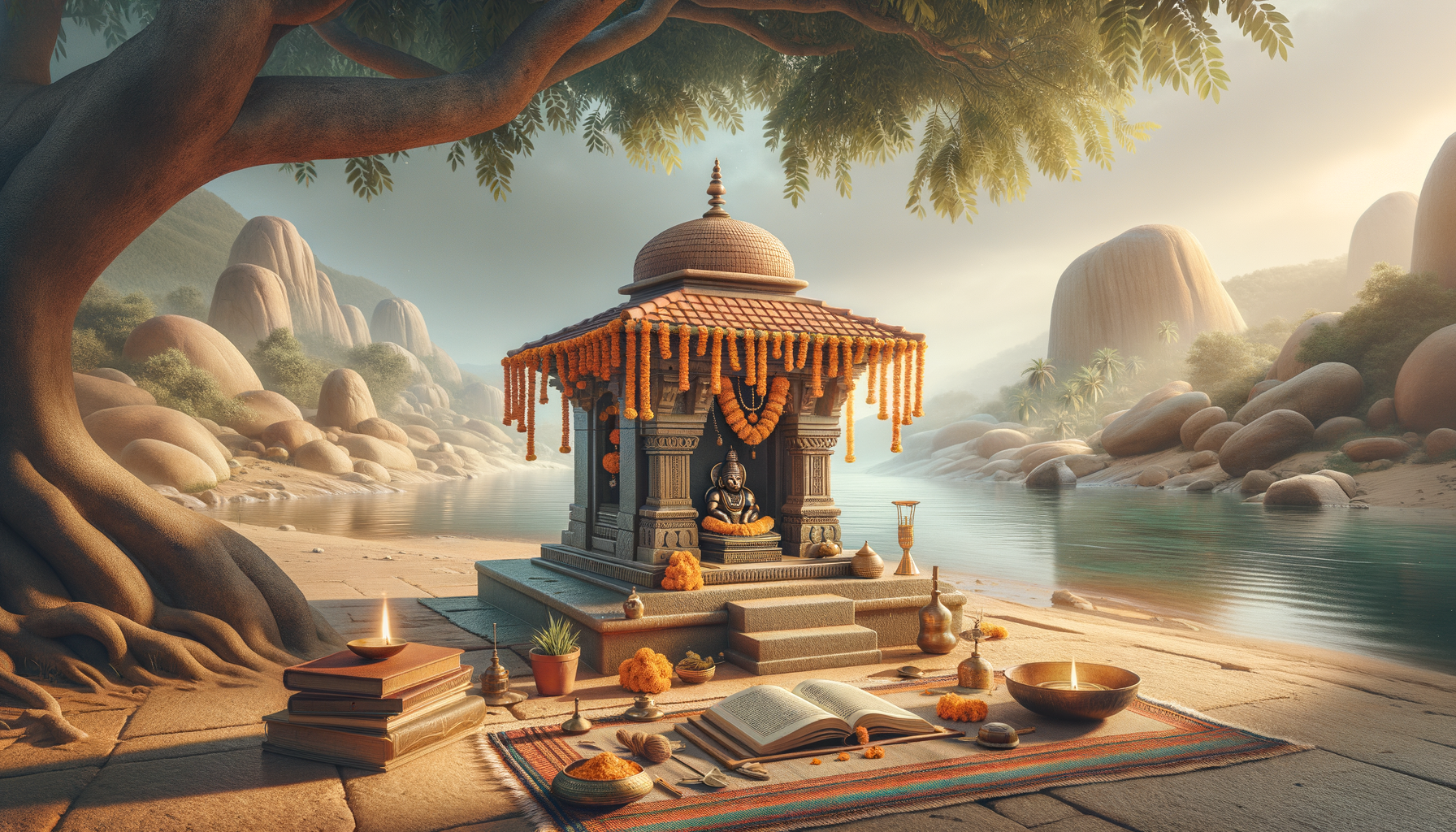
Bichale Raghavendra Swamy Mutt, situated a few kilometres from Mantralayam on the serene banks of the Tungabhadra River, is revered as the “Third Mantralayam.” This sacred site holds enduring significance for devotees of Guru Raghavendra Swamy, as tradition records that he spent several years here in close association with his foremost disciple, Appanacharya. The ashrama’s quiet landscape and riverine setting amplify its spiritual aura, making it a natural extension of the Mantralayam pilgrimage circuit.
Historically, Bichale is associated with study, contemplation, and transmission of the Madhva tradition’s teachings. Accounts preserved in local memory emphasize the close guru–shishya bond between Guru Raghavendra and Appanacharya, underscoring the importance of disciplined study, devotion, and service. While the details of specific compositions are varied across sources, the site is widely linked to the teaching and recitation of revered stotras and commentaries, reflecting the intellectual and devotional vitality of the period.
Visitors often describe a distinctive stillness at Bichale that encourages reflective practicereading stotras, engaging in quiet japa, or simply sitting by the Tungabhadra’s edge in mindful contemplation. The atmosphere supports a measured rhythm of worship and learning, and many pilgrims combine a visit to Mantralayam with time at Bichale to deepen their understanding of Guru Raghavendra’s life and message. This continuity of experience strengthens the idea of the Mutt as a living centre of devotion, knowledge, and ethical practice.
As a pilgrimage destination, the Mutt invites respectful conduct: simple offerings, attentive listening to local guidance, and care for the site’s natural and cultural environment. The journey is best approached as a study in humility and gratitudequalities that align with the guru–shishya parampara and resonate with the broader ethos of Sanatana Dharma. The proximity to Mantralayam enables seekers to experience the spiritual geography of the region in a single itinerary, with Bichale adding depth and context to the larger narrative.
Aligned with the unity of dharmic traditions, the Mutt’s message of devotion (bhakti), disciplined inquiry (svadhyaya), and compassionate living speaks to aspirants across Hinduism, Buddhism, Jainism, and Sikhism. The site thus serves not only as a landmark in the legacy of Guru Raghavendra Swamy but also as a shared space for cultivating inner harmony, ethical reflection, and communal respect. In this way, Bichale becomes more than a historical stop; it stands as a gentle invitation to collective understanding and spiritual fellowship.
For those exploring the heritage of Mantralayam and the wider Madhva tradition, Bichale Raghavendra Swamy Mutt offers a balanced blend of history, devotion, and contemplative practice. Keywords such as Mantralayam, Bichale, Appanacharya, Tungabhadra River, Madhva tradition, and Hindu pilgrimage naturally converge here, guiding seekers to a site where sacred memory and lived practice continue to inform one another.
Inspired by this post on Hindu Pad.