
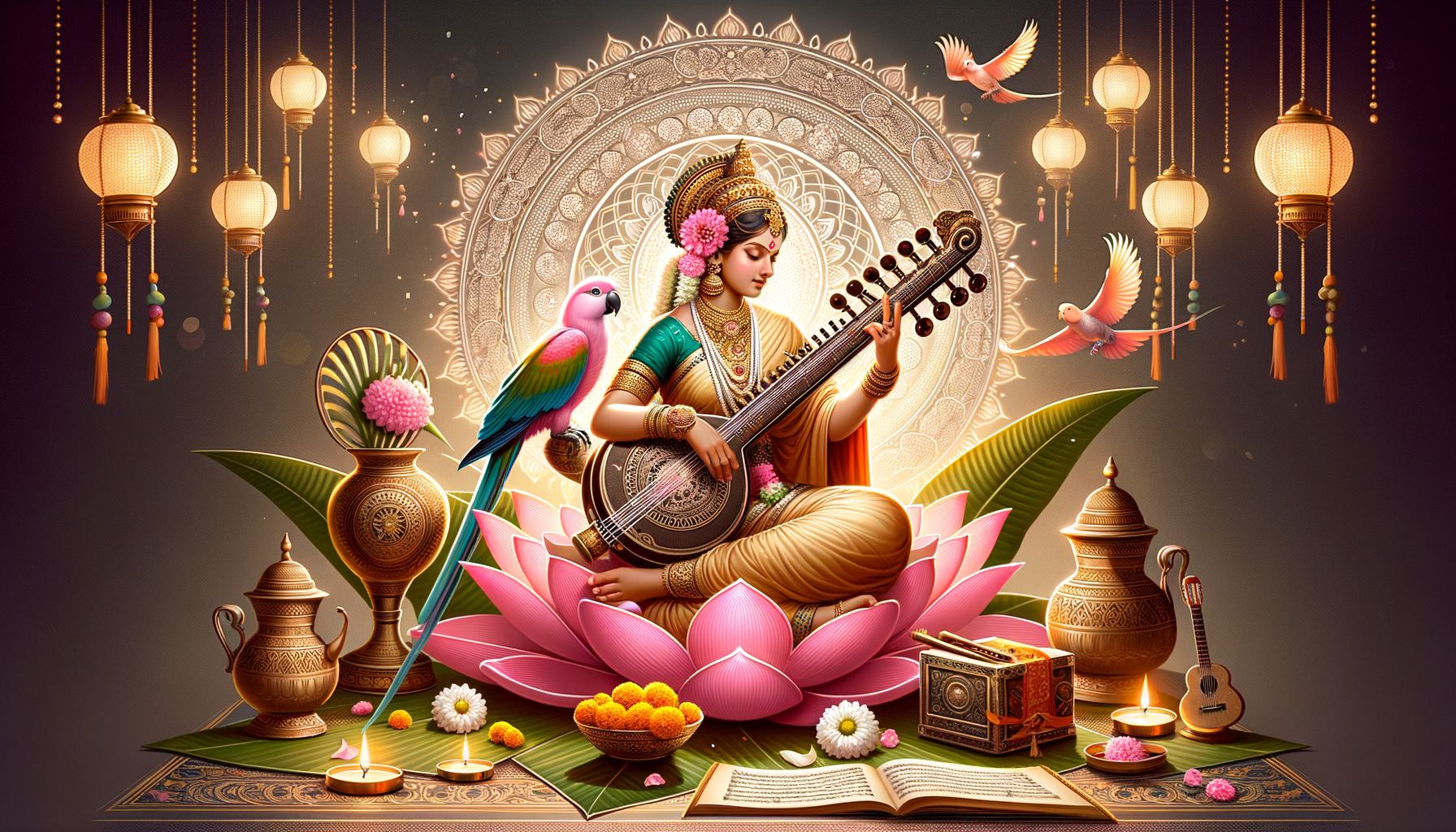
Rāja Mātaṅgīrevered as Rāja Śyāmalā and Mantrīṇīstands in the Śrī Vidyā tradition as the tantric mantrī of Lalitā Tripurasundarī, presiding over mantras, speech, arts, and creative knowledge. Textual references situate this role within the Lalitopākhyāna of the Brahmāṇḍa Purāṇa, where her sovereignty over śabda (sound) and vāg (speech) is emphasized as both metaphysical principle and practical discipline.
According to several ritual lineages, Rāja Mātaṅgī is venerated on the 9th day of Śyāmala Navarātri in the Magh Month. This observance highlights refinement of communication, the cultivation of artistic excellence, and the ethical use of knowledgevalues that resonate widely in contemporary spiritual practice. Many households mark the day with simple pūjā, music, study, and quiet contemplation, aligning personal intention with compassionate and skillful speech.
As Rāja Śyāmalā, Mantrīṇī embodies creative intelligence guided by discernment. Her worship is associated with clarity in learning, eloquence in expression, and harmony in the performing arts. Practitioners often note that the 9th day’s focus on sound and meaning invites a balanced approach to both internal contemplation and outward communication, benefiting students, teachers, artists, and professionals equally.
The symbolism of Rāja Mātaṅgī centers on the transformative power of language. In devotional and contemplative settings, sound becomes a bridge between insight and action: mantra recitation refines attention, music elevates emotion into devotion, and study anchors inspiration in knowledge. These practices align with the ethical aspiration to speak truthfully, kindly, and constructively, thereby strengthening both personal character and community well-being.
Observances commonly include lighting a lamp, offering flowers or green leaves, chanting stotra or nāma, and engaging in learning or music as sacred activity. Families may dedicate time to reading from the Puranas, discussing ideals of right speech, or undertaking creative service for the community. While specific rituals vary by sampradāya, honoring the guidance of elders and local pūjā-vidhi ensures continuity with tradition and respect for lineage.
This 9th day focus naturally supports unity across dharmic traditions. Buddhism’s emphasis on right speech, Jainism’s commitment to ahiṃsā and satya, and Sikhism’s devotion to śabda, kīrtan, and sevā echo the very principles Rāja Mātaṅgī represents in Hinduism. Recognizing these shared values nurtures mutual respect and inter-dharmic harmony, reinforcing a common pursuit of wisdom, compassion, and responsible use of knowledge.
In the present age of accelerated communication, the teachings associated with Rāja Mātaṅgī offer timely guidance: let words uplift, let arts heal, and let knowledge serve. By dedicating the 9th day of Śyāmala Navarātri (Magh) to mindful speech and creative integrity, communities renew a living tradition that unites devotion, learning, and service.
Inspired by this post on Hindu Pad.










