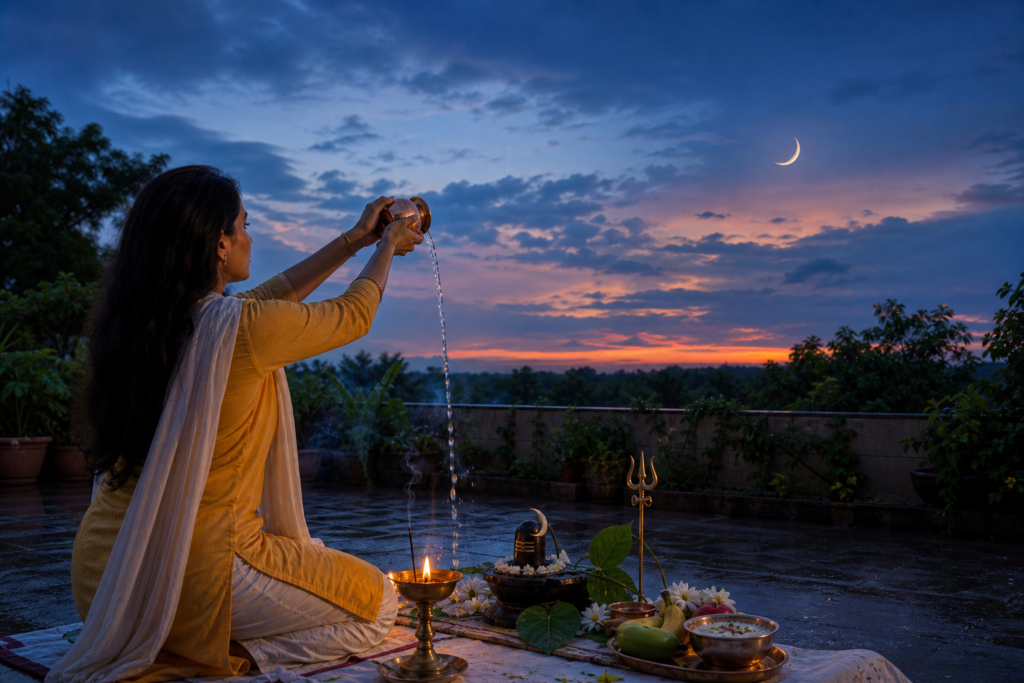
Amavasya Tharpanam in November 2025 falls on 19 November (Sarva Amavasya, Wednesday). In regional calendars, this No Moon day is known as Margashirsha Amavasya in North Indian Hindi calendars, Kartik Amavasya in Amavasyant Panchang regions, and Karthigai Amavasai in Tamil calendars. Across traditions, the day is revered for performing Tharpanaman expression of gratitude to ancestors and a reaffirmation of dharmic values through mindfulness, devotion, and service.
Many households experience this observance as a time of quiet reflection and shared remembrance. Preparations often include arranging water, til (sesame seeds), darbha grass, and a clean vessel, while the mind turns inward with a sense of humility and reverence. Practitioners frequently describe a grounded calm as lamps are lit and a purposeful rhythm develops through mantra and offeringan atmosphere that supports sincerity and focus.
For this observance, the dated Sankalpam reference is recited to anchor intention and time: “19 November 2025 Sarva Amavasya (Wednesday) Viswavasu nama samvathsare, dakshinayane, sharad rithou, vruschika mase, Krishna pakshe, adhya chathurdasyam/Amavasyam punya thidhou, budha vasara”. Retaining this phrasing preserves the traditional temporal markerssamvatsara, ayana, ritu, masa, paksha, tithi, and vasaraso the rite is situated precisely.
A clear, simple structure supports practice: (1) Begin with a calm posture and brief purification through water and breath; (2) State the Sankalpam, including date, place, and intention; (3) Offer Tharpanam with water and til while maintaining steady recitation; (4) Observe a moment of silence, concluding with peace prayers for all beings; (5) Close with gratitude. Where a learned guide or family tradition specifies local panchang details, those may be included according to custom.
This Amavasya’s regional names reflect India’s calendrical diversity while pointing to a shared spiritual center. Whether referred to as Margashirsha Amavasya, Kartik Amavasya, or Karthigai Amavasai, the essence remains the same: remembrance (shraddha), ethical living, and continuity with ancestral wisdom. The observance as Sarva Amavasya further underlines its wide relevance and accessibility.
The spirit of Tharpanam resonates across dharmic traditions. In Hindu practice it manifests as offerings and mantras; in Buddhist, Jain, and Sikh contexts, remembrance often appears as mindful gratitude, compassionate dedication of merit, ahimsa-guided reflection, and seva. Different forms, one foundationhonoring lineage, cultivating inner clarity, and strengthening social harmony. Framed this way, the rite becomes a shared cultural moment that affirms unity in spiritual diversity.
Practical considerations support a thoughtful experience: choose a clean, quiet space; keep offerings simple and eco-conscious; pronounce the Sankalpam steadily without haste; if unfamiliar with certain terms, maintain sincerity and clarity of intent; and, where family traditions differ, honor the lineage’s method with respect. Those living away from their native region may follow local sunrise-based timings or consult community guidance to align practice with the spirit of the day.
Observed with care, Amavasya Tharpanam transforms remembrance into living values. The rite encourages gratitude for those who came before, inspires compassion for those living now, and nurtures responsibility toward those yet to comean inward discipline that naturally extends outward as harmony, service, and shared well-being across communities.
Inspired by this post on Hindu Pad.