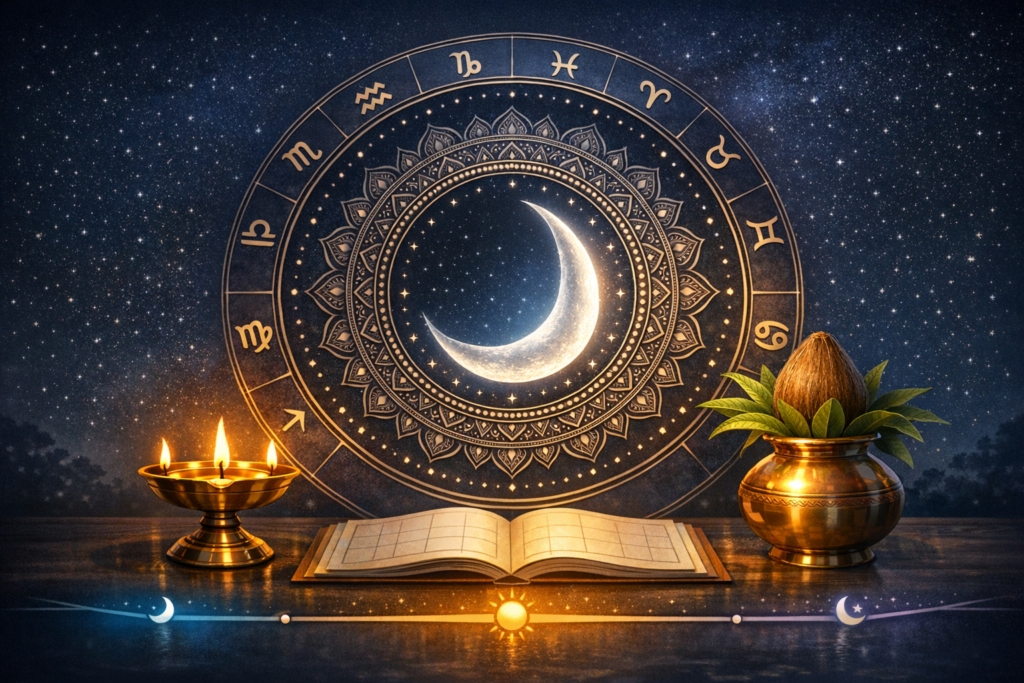
Amavasya in October 2025 falls on 21 October. Recognized as the no-moon day in the Hindu lunar calendar, this observance is widely revered for spiritual reflection and ritual purity. In Telugu, Kannada, Marathi, and Gujarati calendars, it is known as Ashwayuja Amavasya, while in the North Indian purnimanta tradition it is Kartik Amavasya. This day also coincides with Deepavali Amavasya, lending it special cultural and devotional significance across regions.
Across calendrical traditions, this Amavasya marks a transition point in the lunar month. In several counts, Ashwin Amavasya is observed as the last day of the Ashwin month, aligning the cycle toward Kartik. Such variations reflect the diversity and scholarly precision of regional Panchang systems while preserving a shared spiritual rhythm.
The cultural expressions associated with this date are both diverse and unifying. Many households perform Lakshmi Puja during Deepavali Amavasya, seeking prosperity with disciplined devotion. In West Bengal, Assam, and Odisha, Kali Puja is observed on the same night, emphasizing the transformative power of the Divine. Jain communities commemorate the liberation (Nirvana) of Bhagavan Mahavira around this new moon, and Sikh traditions mark Bandi Chhor Divas in close alignment with Diwali, celebrating freedom and spiritual resilience. These convergences across dharmic paths illustrate a profound unity in aspiration—inner light over darkness, wisdom over ignorance, and compassion over fear.
For precise Amavasya tithi timings—start and end—consult a reliable regional Panchang or Hindu calendar, as the boundaries of the lunar day vary by location and time zone. For festival worship on this date, Pradosh Kaal and a fixed Lagna muhurta are customarily preferred; local authorities and temple schedules provide the most accurate guidance.
Common observances on this Amavasya include deepa lighting to symbolize inner illumination, simple sattvic meals, dana (charitable giving), and mindful silence or meditation. Many also perform Pitru-related observances such as tarpanam, expressing gratitude to ancestors and fostering continuity with family lineages. These practices embody the core values of the Hindu way of life—discipline, reverence, and service—while remaining inclusive of diverse household traditions.
The no-moon night invites quiet contemplation. Families gathering to light lamps often experience a felt sense of belonging that transcends ritual form. Whether through Lakshmi Puja, Kali Puja, recitation of mantras, or silent meditation, the shared focus on inner clarity and ethical living resonates across Hindu, Buddhist, Jain, and Sikh communities who align their cultural calendars with the lunar cycle. Such harmony underscores the living ideal of unity in spiritual diversity.
For travel or intercity observances, verify local tithi intervals and temple schedules in advance to align worship with the appropriate muhurta. Businesses and community groups that undertake Chopda Pujan or similar ledger sanctification customs during Deepavali Amavasya benefit from coordinated planning based on regional Panchang calculations. With thoughtful preparation, observances remain both authentic and inclusive.
Inspired by this post on Hindu Pad.