ब्राह्मणो ब्रह्मवर्चसी जायताम।। अर्थात:– ब्राह्मण ब्रह्म (ईश्वर) तेज से युक्त हो।
ॐ यज्ञोपवीतं परमं पवित्रं, प्रजापतेयर्त्सहजं पुरस्तात्। आयुष्यमग्र्यं प्रतिमुञ्च शुभ्रं, यज्ञोपवीतं बलमस्तु तेजः॥ अर्थात:– जनेऊ को उपवीत, यज्ञसूत्र, व्रतबन्ध, बलबन्ध, मोनीबन्ध और ब्रह्मसूत्र भी कहते हैं। जनेऊ धारण करने की परम्परा बहुत ही प्राचीन है।
Janeyu, widely known as Yagnopaveetham or the sacred thread, stands at the intersection of spiritual symbolism and disciplined practice within the Vedic tradition. The verses above, preserved in hymnic usage and household memory, convey two inseparable ideas: the cultivation of brahmavarcas (spiritual brilliance grounded in knowledge and virtue) and the consecrating act of donning the yajnopavita with the mantra “ॐ यज्ञोपवीतं परमं पवित्रं…”. Together they frame Janeyu not merely as an ornament but as a lived vowan ethical and contemplative discipline anchored in the Vedas, the Grihya Sutras, and the Dharmasastra corpus.
From a scriptural standpoint, Yagnopaveetham is integrally tied to the Upanayana samskara, the initiation into brahmacharya (a life of study, self-restraint, and service). Grihya Sutras such as those attributed to Apastamba, Ashvalayana, and Gobhila, along with the Dharmasutras, detail the materials, the wearing orientations, the mantras, and the conduct expected thereafter. While classical timelines mention different recommended ages in earlier society, contemporary practice emphasizes intent and preparedness over rigid chronology, aligning the ceremony with the learner’s readiness for svadhyaya (self-study) and responsibility.
The sacred thread itself is a precise ritual technology. A standard yajnopavita consists of three strands, spun and joined with a central knot known as the brahma-granthi. Several hermeneutic traditions associate the three strands with the three debts (ṛṇa) acknowledged in the VedasDeva-ṛṇa (to the divine), Rishi-ṛṇa (to the seers and teachers), and Pitṛ-ṛṇa (to ancestors). Other schools read them as the three gunas (sattva, rajas, tamas), the three sacred rivers (Ganga, Yamuna, Sarasvati), or the triad of primary puruṣārthas (dharma, artha, kāma), with moksha as the culminating aim. These layered readings reveal why the thread is called उपवीत, यज्ञसूत्र, and ब्रह्मसूत्रterms that signal both form and function.
Classical manuals also discuss materials as symbolic pedagogycotton (karpāsa), linen/flax (kṣauma), and wool (āvika) represent regional availability and ritual intentionwith cotton today being most common. The number of threads may increase in life’s subsequent stages (for example, after marriage in certain lineages), expressing the enlargement of duty (dharma) and the widening circle of care within household and society.
Wearing orientation is a key technical detail with practical and symbolic value. Upavīta (draped from the left shoulder across the torso under the right arm) is used for most auspicious rites and daily worship, aligning the thread close to the heart while keeping the right hand free for ritual offering (ahuti). Prācīnāvīta (from the right shoulder to the left) is reserved for rites for ancestors (pitṛ-kārya), subtly marking the ritual’s direction and intent. Nivīta (worn around the neck like a loop) is prescribed in certain contexts such as specific homa preparations or when keeping the body unobstructed by the cross-chest line. These orientations, meticulously preserved in the Grihya Sutra tradition, express the Vedic attention to embodied mindfulness.
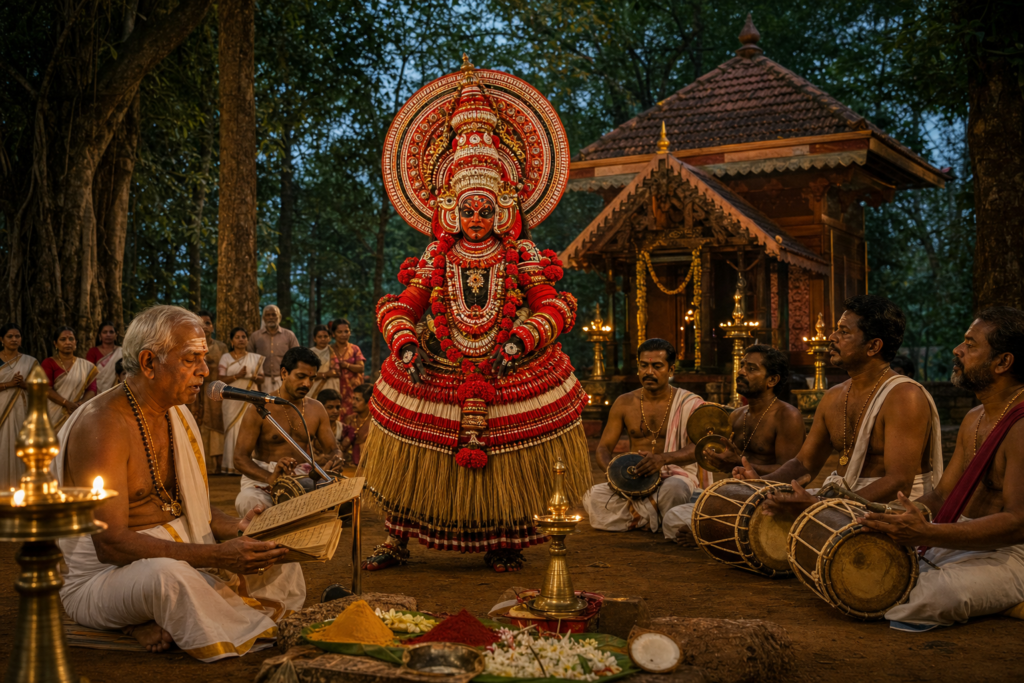
The Upanayana samskara culminates in brahmopadeśa, the conferral of the Gayatri mantra and the daily discipline that follows. Sandhyavandanamperformed at dawn, noon, and duskintegrates mantra recitation (including Gayatri), pranayama (regulated breathing), nyasa (mindful placement), and contemplative attention to light (arghya to the Sun). This daily sādhana is where Yagnopaveetham becomes a living method: the thread reminds the practitioner, moment by moment, of the vow to pursue satya (truthfulness), ahimsa (non-harm), dama (self-restraint), and svadhyaya (study). The ritual science here is sophisticatedcombining breath, mantra, posture, gaze, and intentionto cultivate steadiness and clarity.
Mantras surrounding the sacred thread operate as dedicatory seals. The widely recited “ॐ यज्ञोपवीतं परमं पवित्रं…” acknowledges the thread’s origin in Prajapati’s order and invokes longevity (āyuṣya), purity (śubhra), strength (bala), and brilliance (tejas). Complementary purificatory mantras (such as “Apo hiṣṭhā mayobhuvaḥ…” from the Vedic repertoire) are used for sanctification of water and the self, ensuring that contact with the thread remains an act of conscious consecration rather than habit.
Regional practice illustrates the ritual’s cultural breadth. In Tamil Nadu it is known as Poonool or Upanayanam; in Andhra–Telangana as Poonal; in Maharashtra as Munja or Vratabandha; across parts of North India as Janeyu or Janoi; and in Nepal as Bratabandha among several communities. Despite linguistic and procedural variations, core featuresyajnopavita preparation, homa, brahmopadeśa, and the embrace of daily disciplineremain consistent, reflecting a pan-Indic continuity anchored in the Vedic and Grihya Sutra frameworks.
The ethical program that follows Upanayana is as important as the rite itself. Classical injunctions encourage disciplined study, service to the teacher and family, truthfulness, compassion, and mindful austerity (tapas). Household memories often recall how the first Sandhyavandanam after initiation becomes a turning point: time is structured around prayer, study, and service, and the thread’s constant presence becomes a tactile prompt toward inner alignment.
In contemporary contexts, questions naturally arise: Who may wear Yagnopaveetham, and how should the tradition be understood today? The historic framing of Upanayana in Dharmasastra literature is descriptive of past social organization, yet the Vedic heart of the rite points to universal inner educationethics, discipline, study, and reverence for knowledge. Many lineages and communities now emphasize these universal aims, welcoming sincere aspirants to adopt the discipline under appropriate guidance. This orientation strengthens the dharmic family’s shared valuesknowledge, non-harm, compassion, and truthover boundary-making.
Parallels across dharmic traditions make the unifying intent clear. In Hinduism, Upanayana marks entry into study; in Buddhism and Jainism, deeksha and upasampadā mark ethical-renunciant commitments; in Sikhism, Amrit Sanchar affirms a disciplined, truthful life. The visible tokens differthread, robe, kara, or khalsa signsbut the shared center is unmistakable: a life of integrity, service, and remembrance of the Highest. Framed this way, Janeyu (Yagnopaveetham) becomes a bridge, not a barrierone expression among many of a pan-dharmic movement toward inner refinement and social responsibility.
Maintenance and renewal of the sacred thread preserve ritual integrity. Annual upakarma observances (often aligned with Śrāvaṇa or Bhadrapada, varying by Vedic recension) include mantra recitation, prāyaścitta (atonement), and replacement of the thread. This cyclical renewal mirrors the pedagogic rhythm of study: review, correct, recommit. In practical terms, cleanliness protocolsremoving a worn or broken thread with respect, sanctifying water before contact, and ensuring correct orientation during bathing (often nivīta)keep the rite aligned with its core ideals.
Symbolism extends into life stages. Certain srauta and smārta traditions add a second yajnopavita at marriage, expressing augmented duties as a householder (gṛhastha). The thread thus travels with the practitioner through key thresholdsinitiation, education, marriage, and servicequietly reminding that svadharma (right duty) evolves but remains anchored in the same ethical ground.
From the vantage of Vedic hermeneutics and lived practice, the answer to “जनेऊ क्यों पहनते हैं” is both simple and profound: it trains attention. The sacred thread educates the hand, the breath, the tongue, and the mind to move in harmony with dharma. Its strands braid together study and service, contemplation and action, ancestry and posterity. And by recognizing analogous initiatory paths across Buddhism, Jainism, and Sikhism, communities can honor the shared aspiration they all affirminner clarity expressed as compassion in the world.
In sum, Janeyu (Yagnopaveetham) is best understood as a living vow rather than a mere emblem. Rooted in the Vedas, elaborated by the Grihya Sutras, and renewed through daily mantras and Sandhyavandanam, it invites a lifetime of learning. When approached with humility and inclusivity, it nourishes both personal transformation and unity in spiritual diversityprecisely the dharmic ideal envisioned by the seers.
Inspired by this post on Hindu Pad.