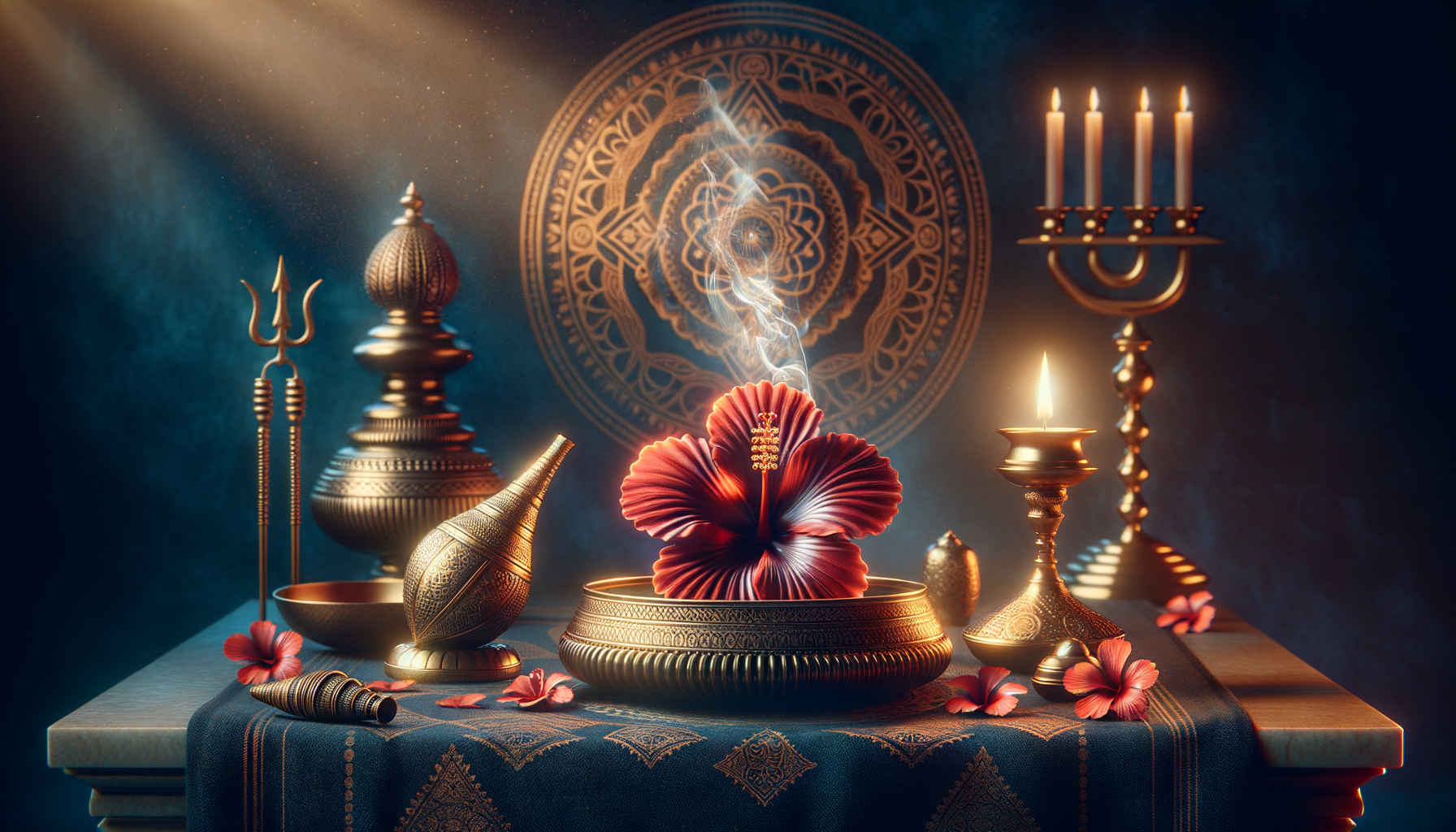
The enduring use of the crimson hibiscus in Goddess Kali Puja is rooted in scripture, symbolism, and lived tradition. Across Bengal and beyond, the red japa pushpa (hibiscus) is offered to Kali as a visible bridge between mythic memory and present devotion, a practice that scholars and practitioners alike recognize for its clarity of meaning and emotional resonance.
Classical sources such as the Devi Saptashati (Devi Mahatmya of the Markandeya Purana) recount the pivotal battle against the demon Raktabija. In that episode, every drop of the demon’s blood that touched the earth reproduced another of his forms. To counter this, the Goddess manifested a fierce aspectknown as Kali or as the form that drinks the bloodto lap up each drop before it fell, ensuring the demon’s defeat. This narrative has long shaped how devotees understand Kali’s power: protective, transformative, and unflinching in the face of chaos.
The hibiscus, with its vivid scarlet, naturally evokes the battle’s central imageblood as a force to be contained and transmuted. In offering the flower rather than literal blood, communities symbolically sublimate violence into reverence. The delicate softness of the petals becomes an ethical and aesthetic answer to fierceness, affirming that devotion can honor the same cosmic truth through beauty and restraint.
Traditional readings often note that the hibiscus’s striking red hue resonates with Kali’s iconography, including the extended tongue that prevents Raktabija’s blood from reaching the earth. In Shakta practice, this chromatic alignment is not incidental: color is treated as a language of worship. The hibiscus thus aligns form, color, and meaning with Kali’s shaktiher dynamic energy that dissolves disorder and preserves cosmic balance.
Many practitioners also observe the flower’s elemental symbolism. The basic five-petaled form is read through the lens of panchabhuta (the five great elements) or as a reminder of the standard sequence of offerings, panchopachara. While variants of the flower exist, this heuristic helps ritual participants internalize the progression from sensory engagement to contemplative insight, moving worship from the outer to the inner.
In ritual life, the hibiscus appears prominently during Kali Puja on the new moon night of Kartik, coinciding with Diwali in many regions. In Bengal, garlands and single blossoms are offered while reciting mantras drawn from the Shakta tradition. The sensory experiencesight of the crimson bloom, scent of incense, sound of conch and bellconverges to cultivate one-pointed attention, a quality valued across dharmic paths.
Contemporary observance increasingly emphasizes non-violent, symbolic offerings. This shift aligns with the wider ethical current of ahimsa present across Hinduism, Buddhism, Jainism, and Sikhism, where flowers signify purity of intent, gratitude, and the transience of the material world. The hibiscus, when offered to Kali, therefore becomes a shared language of devotion that upholds compassion while honoring a fierce form of the Divine Feminine.
For many devotees, placing a hibiscus on Kali’s altar evokes both humility and strength. The gesture acknowledges the presence of challengesinternal and externaland seeks the courage to transform them. Scholars note that this act integrates mythic memory with ethical praxis: a ritualized remembrance of the Raktabija episode that guides conduct toward restraint, clarity, and responsibility.
The tradition’s endurance is not merely historical; it remains experientially compelling. Communities describe how the crimson bloom seems to “carry” prayer, while its color focuses the mind on vigilance against scattered energiesprecisely the lesson the Raktabija narrative imparts. In this way, a single flower gathers text, theology, and practice into one contemplative moment.
Ultimately, the hibiscus crowns Goddess Kali’s altar because it unites legend and living devotion. It embodies the protective intensity of Shakti, transforms the memory of blood into a vow of non-harm, and invites practitioners into a discipline of attention and courage. Through this offering, the fierce becomes compassionate, and the ancient becomes intimately present.
Inspired by this post on Hindu Blog.