
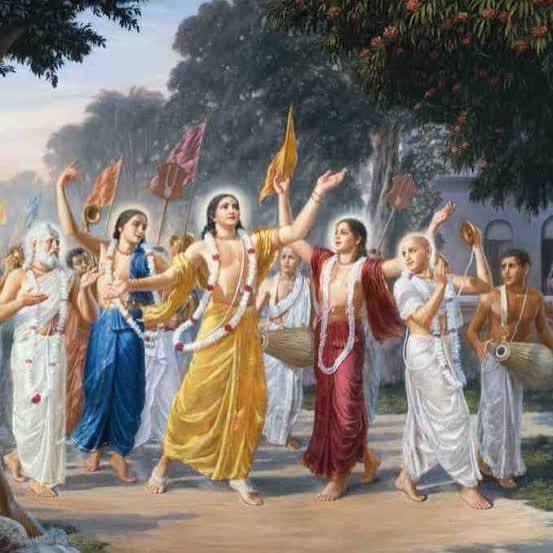
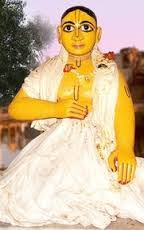
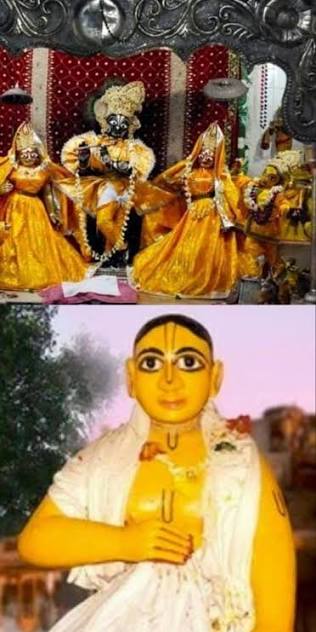
Vakresvara Pandita occupies a luminous place in the Gaudiya Vaisnava memory of Lord Caitanya Mahaprabhu’s associates. In Caitanya-caritamrta, Adi-lila 10.17, he is described as the fifth branch of the devotional tree of Lord Caitanya, a metaphor that presents the Lord’s companions as living extensions of divine grace, teaching, service, and spiritual nourishment.
The traditional account emphasizes two qualities above all: his deep affection for Lord Caitanya and his extraordinary capacity for ecstatic dance. The statement that Vakresvara Pandita could dance continuously for seventy-two hours is not merely a dramatic detail. Within bhakti literature, it signals a state in which the body becomes fully absorbed in devotion, the mind is fixed on the Divine, and artistic movement becomes a form of spiritual offering.
The technical language behind this description is significant. The verse refers to twenty-four prahara, and each prahara is understood as a period of three hours. This produces the traditional calculation of seventy-two hours. Such precision matters because it shows that the narrative is not framed as casual praise; it is preserved through a devotional vocabulary that combines poetic reverence with structured time reckoning.
In the Gaura-ganoddesa-dipika, verse 71, Vakresvara Pandita is identified with Aniruddha, one of the quadruple expansions of Visnu, alongside Vasudeva, Sankarsana, and Pradyumna. This theological identification places him within a larger Vaishnava framework in which Lord Caitanya’s companions are not treated as ordinary historical figures alone, but as participants in a sacred cosmology of divine manifestation, service, and remembrance.
This point is important for understanding Gaudiya Vaisnava theology. The tradition does not separate devotion from metaphysics. A devotee’s conduct, lineage, service, and spiritual emotion are read together. Vakresvara Pandita’s dance, therefore, is not presented as performance in the modern entertainment sense. It is a revelation of bhakti, a disciplined surrender of the body and senses to the remembrance of Lord Krishna through the mercy of Lord Caitanya.
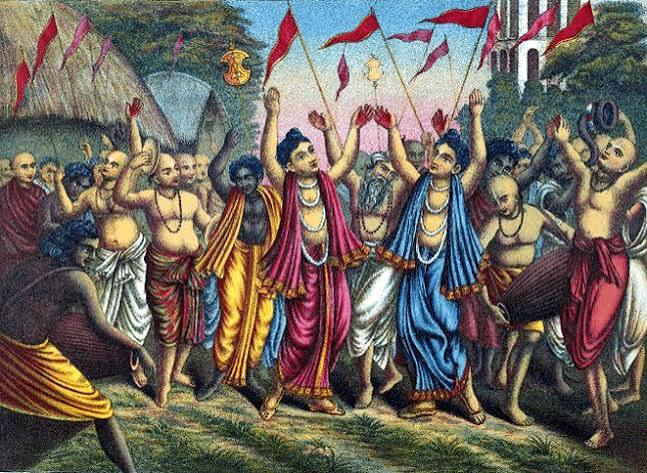
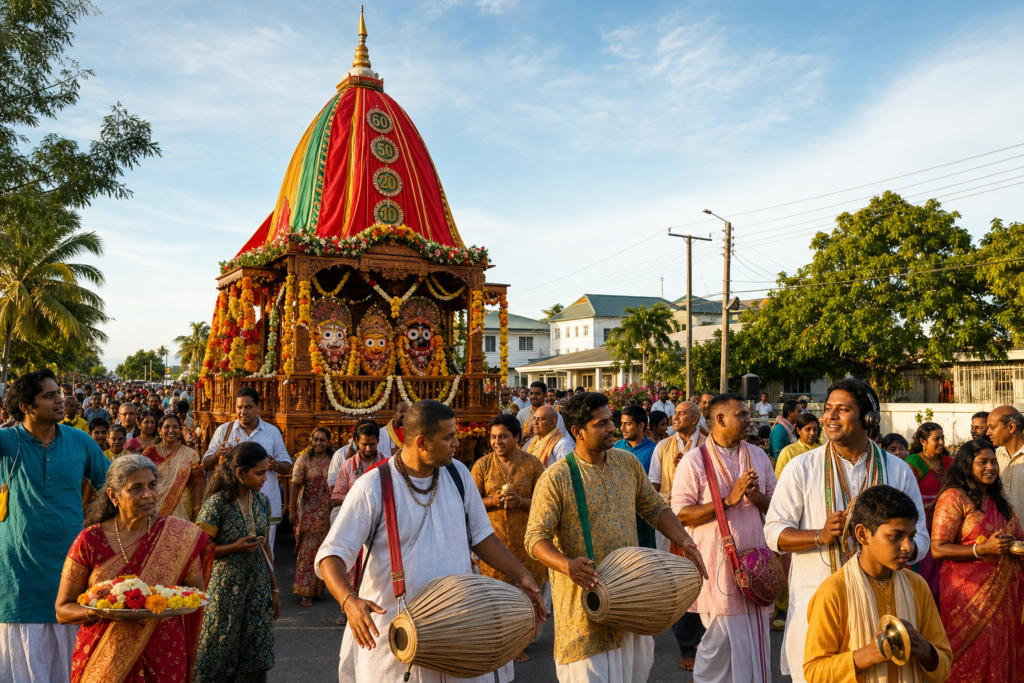
The accounts of dramatic performances in the house of Srivasa Pandita provide the historical and devotional setting for Vakresvara Pandita’s role. Srivasa Pandita’s home is remembered in the Caitanya tradition as a sacred space of kirtan, drama, music, and intimate devotional exchange. When Lord Caitanya Mahaprabhu enacted devotional dramas there, Vakresvara Pandita stood among the chief dancers, embodying the emotional intensity of the gathering.
Dance in this context functioned as theology in motion. The body did not merely accompany the chanting of the holy names; it participated in the act of worship. For practitioners and students of Hindu traditions, this helps explain why bhakti cannot be reduced to belief alone. It includes sound, rhythm, community, memory, ritual, aesthetics, and the full participation of the person.
Vakresvara Pandita’s example also widens the understanding of spiritual discipline. Ascetic seriousness is often imagined as stillness, silence, or withdrawal, but the bhakti tradition also honors sacred movement. His seventy-two-hour dance represents a paradox familiar to many devotional paths: the highest discipline may appear spontaneous, and the most spontaneous expression may rest upon profound inner absorption.
Sri Govinda dasa, an Oriya devotee of Lord Caitanya Mahaprabhu, is traditionally credited with describing the life of Vakresvara Pandita in Gaura-krsnodaya. This detail links textual memory with regional devotional culture. It also shows how the life of one saint could travel across linguistic and regional communities while retaining its place within the shared sacred world of Gaudiya Vaisnavism.
The Orissa connection is especially meaningful. Many disciples of Vakresvara Pandita lived in Orissa, and they were known as Gaudiya Vaisnavas although they were Oriyas. This is a valuable historical reminder that devotional identity often crosses regional boundaries without erasing local culture. A person could be Oriya by language and social setting, while also belonging to the Gaudiya Vaisnava spiritual lineage.
Among the disciples associated with this lineage are Sri Gopalaguru and his disciple Sri Dhyanacandra Gosvami. Their mention indicates that Vakresvara Pandita’s importance did not end with personal charisma. His legacy continued through discipleship, instruction, practice, and the transmission of devotional discipline. In dharmic traditions, the continuity of a lineage often matters as much as the brilliance of an individual saint.
This lineage-based view also supports a broader principle of unity among dharmic traditions. Hinduism, Buddhism, Jainism, and Sikhism preserve distinct philosophies and practices, yet each values disciplined transmission, reverence for realized teachers, ethical refinement, and transformative practice. Vakresvara Pandita’s life belongs specifically to Gaudiya Vaisnavism, but the reverence shown toward embodied devotion resonates across the wider dharmic landscape.
The emotional power of Vakresvara Pandita’s story lies in its portrayal of devotion as total absorption. Many people know the ordinary experience of being moved by music, prayer, or sacred atmosphere. The tradition presents Vakresvara Pandita as an exalted example of that human experience raised to a spiritual summit, where rhythm, remembrance, and surrender become inseparable.
From an academic perspective, the narrative also illustrates how hagiography functions in Hindu religious literature. It preserves memory, encodes theology, teaches ideals, and strengthens community identity. The account of seventy-two hours of dancing should be read within that devotional literary world, where extraordinary acts communicate inner spiritual reality rather than functioning only as biographical data.
At the same time, the story remains practically relevant. It invites reflection on how spiritual practice can involve the whole person. The mind studies, the voice chants, the heart remembers, the body bows or dances, and the community gathers. In this integrated model of sadhana, devotion is not an abstract doctrine but a lived discipline shaped by repetition, grace, and shared sacred culture.
Vakresvara Pandita’s appearance is therefore remembered not only as a date in a devotional calendar, but as an occasion to contemplate the relationship between bhakti and embodiment. His life suggests that the body, often treated as a distraction in spiritual life, can become an instrument of worship when guided by love, humility, and dedication.
His place in Lord Caitanya’s circle also highlights the communal nature of Gaudiya Vaisnava spirituality. Lord Caitanya’s movement was carried by kirtan, shared devotion, teaching, pilgrimage, and the service of many associates. Vakresvara Pandita’s role as a chief dancer shows that spiritual communities are sustained not only by philosophers and organizers, but also by those whose devotion gives visible form to sacred joy.
The account ultimately presents Vakresvara Pandita as a saint of movement, ecstasy, and transmission. He is remembered as dear to Lord Caitanya, identified with Aniruddha in the theological tradition, honored for his astonishing devotional dance, and connected with a living lineage in Orissa through disciples such as Sri Gopalaguru and Sri Dhyanacandra Gosvami.
For contemporary readers, his appearance offers a disciplined lesson in devotion without sectarian narrowness. It affirms the beauty of Vaishnava bhakti while also pointing toward a wider dharmic insight: spiritual life becomes powerful when knowledge, practice, humility, community, and heartfelt offering come together. Vakresvara Pandita’s dance remains a compelling symbol of that union.
Inspired by this post on Dandavats.


Leave a Reply
You must be logged in to post a comment.