
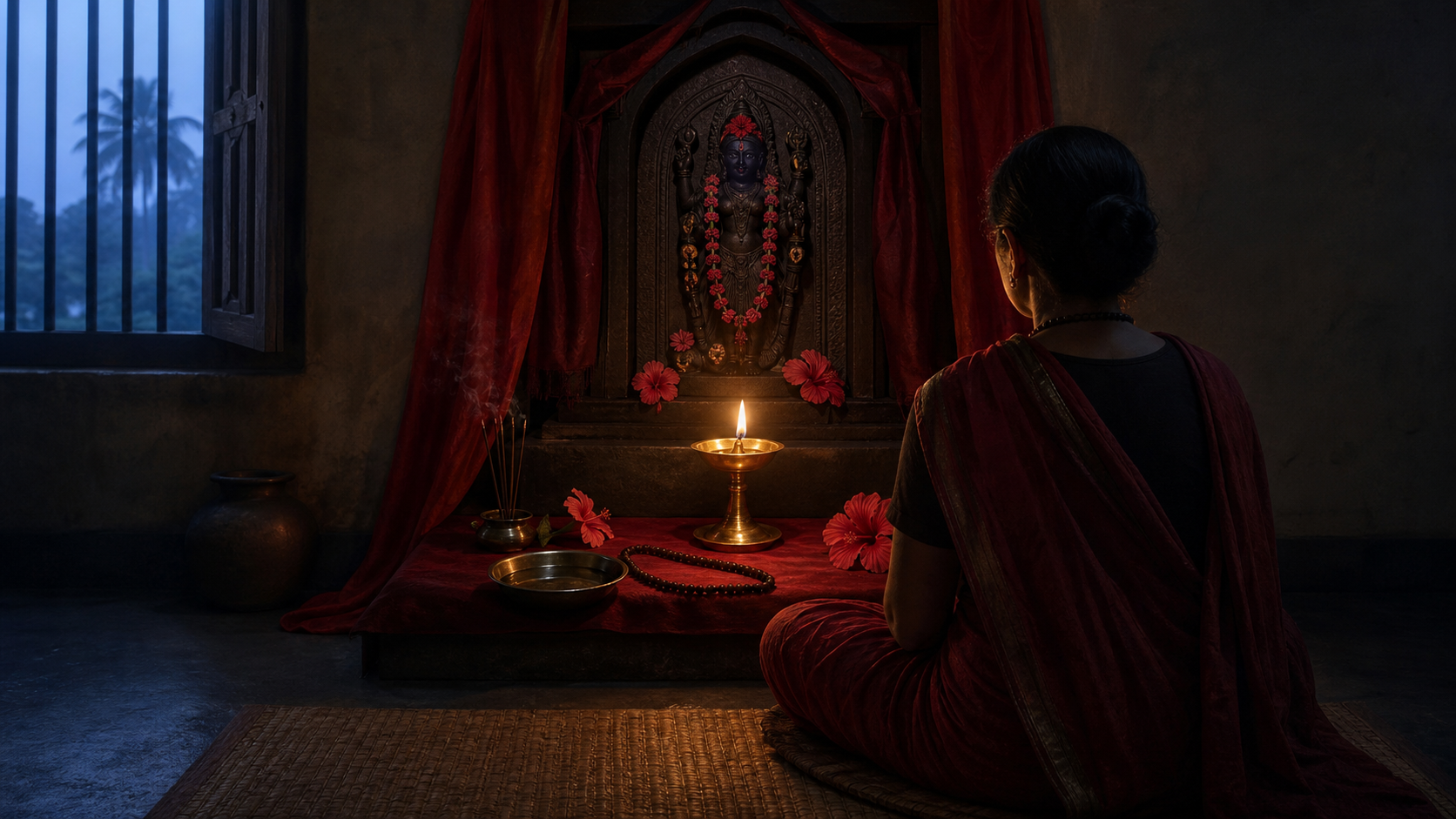
You may feel drawn to Siddha Kali because you want more than consolation. You want courage, concentrated will, spiritual protection, or a practice that produces a real change in how you meet fear. At the same time, talk of siddhis can make it difficult to separate disciplined sadhana from fantasy, ego, and promises of instant occult power.
The useful question is not whether Kali can grant extraordinary capacities. It is whether your worship is making you fit to hold any capacity without becoming vain, manipulative, or distracted from liberation. Siddha Kali worship becomes practical when you treat fearlessness, discernment, self-command, and service as attainments rather than consolation prizes.
Begin with the right question: what should siddhi accomplish?
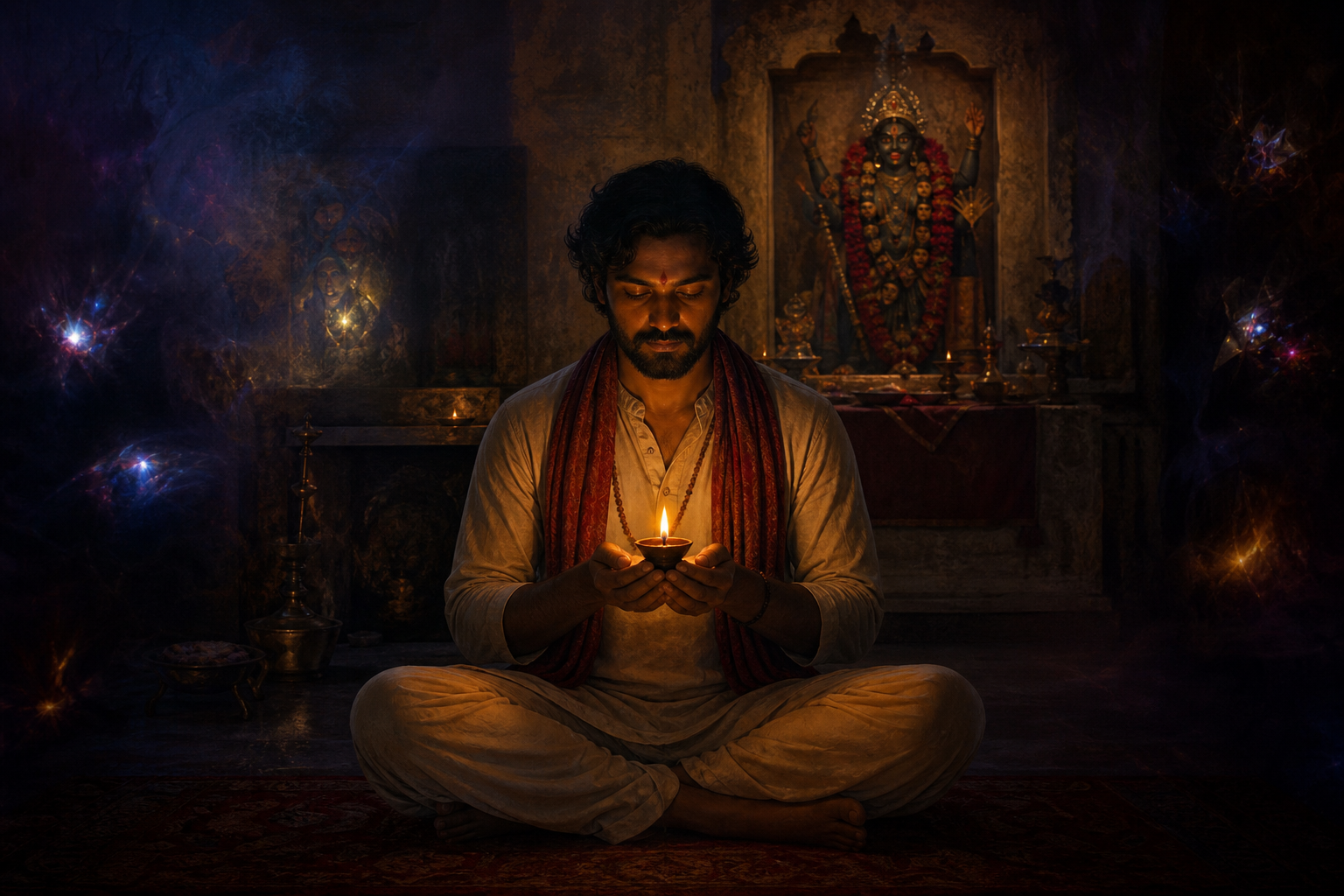
The name Siddha Kali carries two related meanings. Siddha indicates accomplishment or consummation, while Kali is the Shakti who cuts through fear, attachment, and false identification. Siddha Kali can therefore be approached as the accomplished Goddess and as the power through whom disciplined sadhana matures into its fruit. Her role is not simply to distribute unusual abilities. She governs the more demanding transition from practice to responsible attainment.
That distinction matters because siddhi has a wider meaning than supernatural power. It can mean success, perfection, mastery, or the fulfilment of a spiritual discipline. The familiar ashta-siddhis are anima, mahima, laghima, garima, prapti, prakamya, ishita, and vashita. They are traditionally associated with extraordinary capacities, but a Siddha Kali practitioner should not reduce them to a catalogue of paranormal feats. They can also direct attention toward mastery of identification, desire, prana, action, and the restless mind.
Siddha Kali stands at the meeting point between sadhana and its result. That makes the moral condition of the practitioner inseparable from the result being sought. A power that enlarges conceit, weakens truthfulness, or encourages domination is not spiritual completion. It is another bond, even when it arrives wearing sacred language.
Before asking for a siddhi, put the desired result through three questions:
- What problem would this capacity solve? Name the fear, confusion, duty, or weakness beneath the request. If you cannot name it, fascination may be driving the practice.
- Who would benefit? A wish directed only toward superiority, influence, or control already conflicts with the restraint that protects Tantric practice.
- What ordinary discipline have you avoided? Mantra cannot replace truthfulness, patient study, competent work, apology, or the courage to make a necessary decision.
This examination does not deny Shakti. It clears away the motives that make spiritual power unsafe. Sometimes the capacity you actually need is not command over external circumstances but the ability to remain truthful when fear makes deception tempting. That is already a serious siddhi.
Choose the level of practice your present adhikara supports
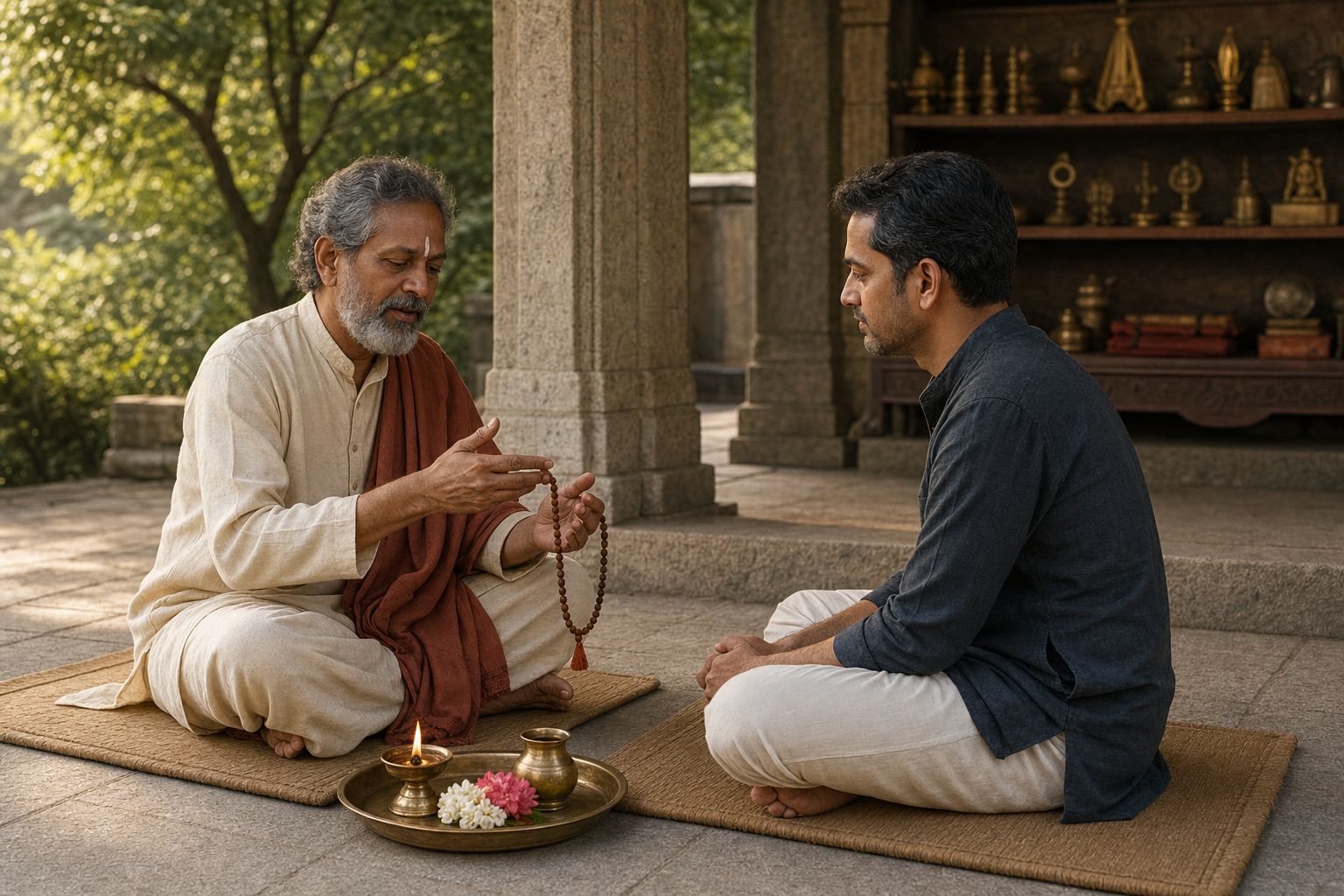
Adhikara means fitness or eligibility for a practice. It includes ethical readiness, instruction, emotional steadiness, and the ability to follow a method without casually altering it. Tantra recognizes that sincere people may stand at different stages. The pashu, vira, and divya classifications describe modes of readiness; they should not become labels for boasting or judging other devotees.
| Level of engagement | What belongs here | The boundary to respect |
|---|---|---|
| Foundational devotion | A clean worship space, a diya, flowers, dhyana, prayer, stotra, and modest mantra-japa | Do not promise yourself powers or present ordinary sensations as initiation |
| Structured discipleship | A guru-given mantra, prescribed japa, ethical observances, and a defined sequence of practice | Keep the method, count, pronunciation, and restrictions given by the lineage |
| Advanced Tantric ritual | Nyasa, bhuta-shuddhi, consecrated yantra work, mudra, pranapratistha, homa, and purashcharana | Do not assemble an esoteric rite from disconnected instructions |
The advanced vocabulary can create the illusion that complexity itself produces depth. It does not. Nyasa installs mantra-consciousness through the body; bhuta-shuddhi addresses identification with limiting elements; pranapratistha enlivens a ritual focus; and purashcharana coordinates japa with such elements as homa, tarpan, marjan, and bhojana. Panchopachara and Shodashopachara refer to worship through five and sixteen offerings respectively. These are connected ritual architectures, not decorative additions to an otherwise improvised ceremony.
Guru-diksha, adhikara, and disciplined preparation form the boundary around esoteric Siddha Kali practice. This is especially important with longer vidya-mantras, formal nyasa, yantra consecration, purashcharana, or rites whose symbolism you do not yet understand. Reading the names of ritual actions is not the same as receiving a living method.
If you are looking for a teacher, examine conduct before charisma. A responsible guru or lineage should be able to distinguish open devotional worship from initiated practice, explain why a restriction exists, place ethics before spectacle, and refuse guarantees of rapid power. Be cautious when secrecy is used to prevent reasonable questions, when fear is used to demand obedience, or when spiritual status becomes permission for coercion. Guru-bhakti does not require the abandonment of viveka.
The simplest rule is reliable: remain with foundational devotion until qualified guidance gives you a specific reason to proceed further. Restraint is not a lack of faith. In Tantra, it is part of the vessel that must hold the practice.
Build a home practice around steadiness, not spectacle
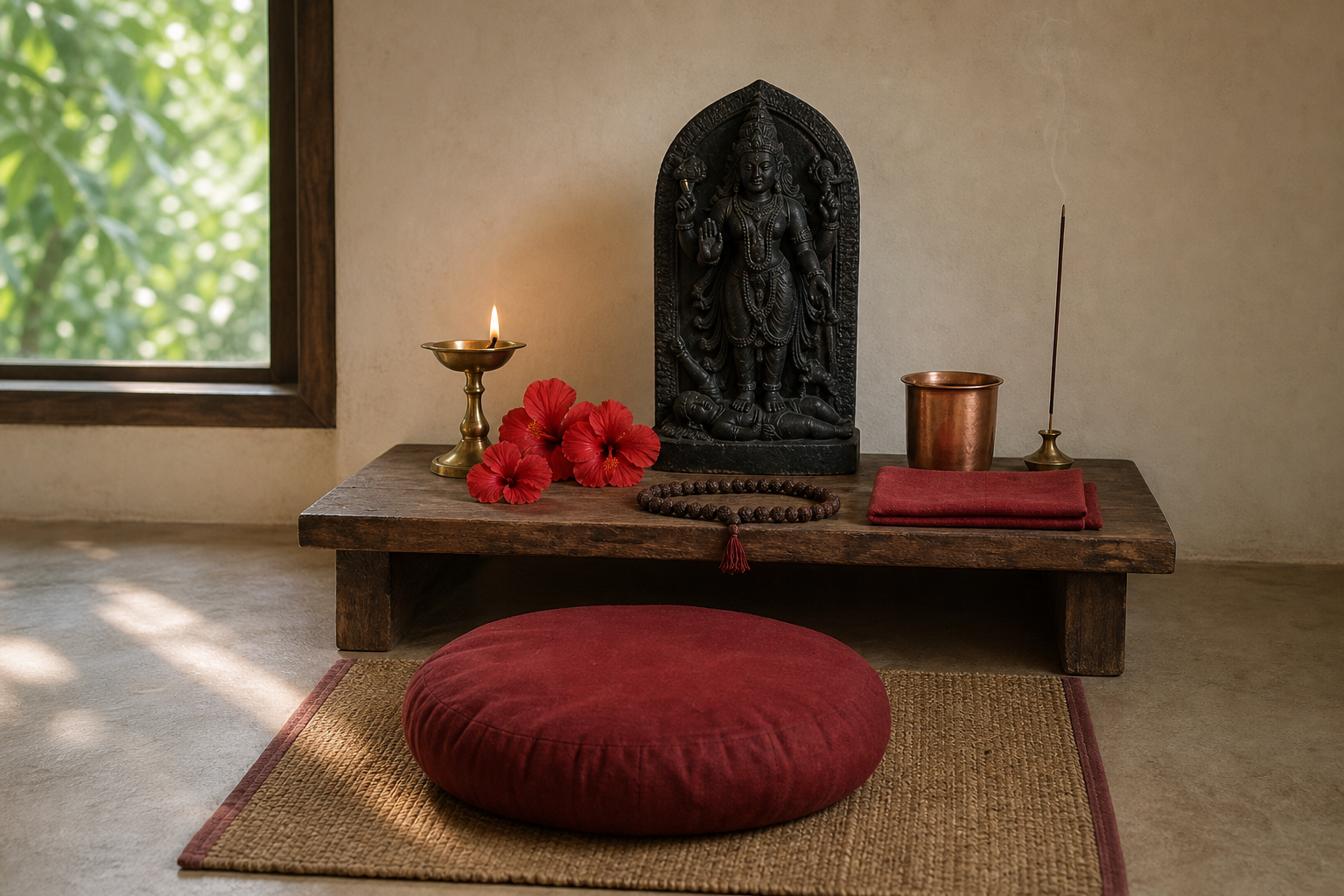
A home practice does not have to imitate an advanced ritual to be meaningful. Its purpose is to establish a repeatable meeting with the Goddess in which attention, devotion, and conduct reinforce one another. Use the following sequence as a deliberately bounded devotional practice, not as a substitute for lineage instruction.
- Prepare one consistent place. Keep it clean and uncluttered. Use an image or murti of Kali if that is already part of your devotional life. Consistency matters more than creating an elaborate display that you cannot maintain.
- State an ethical sankalpa. Dedicate the session to truthfulness, non-harming, clear judgement, and the welfare of beings. Name one concrete situation in which you need courage or restraint.
- Make a simple offering. Light a diya and offer flowers according to your household custom. Do not call a few improvised actions Panchopachara or Shodashopachara unless you have learned the corresponding procedure.
- Contemplate one feature of Kali’s form. Her dark radiance can represent what exceeds limited concepts. The sword can remind you to cut confusion with viveka. Abhaya mudra directs the mind toward fearlessness, while varada mudra expresses grace and rightful giving. Let one symbol shape the session instead of racing through every iconographic detail.
- Undertake modest japa. A frequently transmitted devotional formulation is Om Krim Siddha Kalikayai Namah. Use it only where it is acceptable within your tradition, repeat it carefully rather than hurriedly, and do not invent additions. If you have received a mantra through diksha, follow the pronunciation, count, and sequence you were given.
- Sit quietly after the repetition. Let the breath remain unforced. Notice fear, craving, irritation, or self-dramatization without treating any passing sensation as a message from the Goddess.
- Close with a behavioural commitment. Decide on one action that will carry the worship into your day: tell the truth in a difficult exchange, complete a neglected duty, refuse an unjust impulse, or help without seeking recognition.
Keep a short record of the final commitment and whether you fulfilled it. Do not use the record to catalogue visions, coincidences, or imagined rankings. Use it to see whether your practice is changing choices. A devotional routine that repeatedly produces a truthful action is more credible than a dramatic session followed by the same avoidable misconduct.
Amavasya is traditionally important in Kali worship, and Kali Puja during Ashwin or Kartik can provide a concentrated occasion for bhakti, mantra, offerings, satsanga, and communal worship. Kalaratri within Navaratri similarly turns attention toward courageous surrender to transformative Shakti. Consult the panchang and established custom of your region, temple, or lineage for the relevant observance. Sacred timing can deepen an existing discipline, but it should not become an excuse to neglect ordinary days. Consistency ripens practice more reliably than a single night of spiritual intensity.
Test every claimed siddhi against dharma
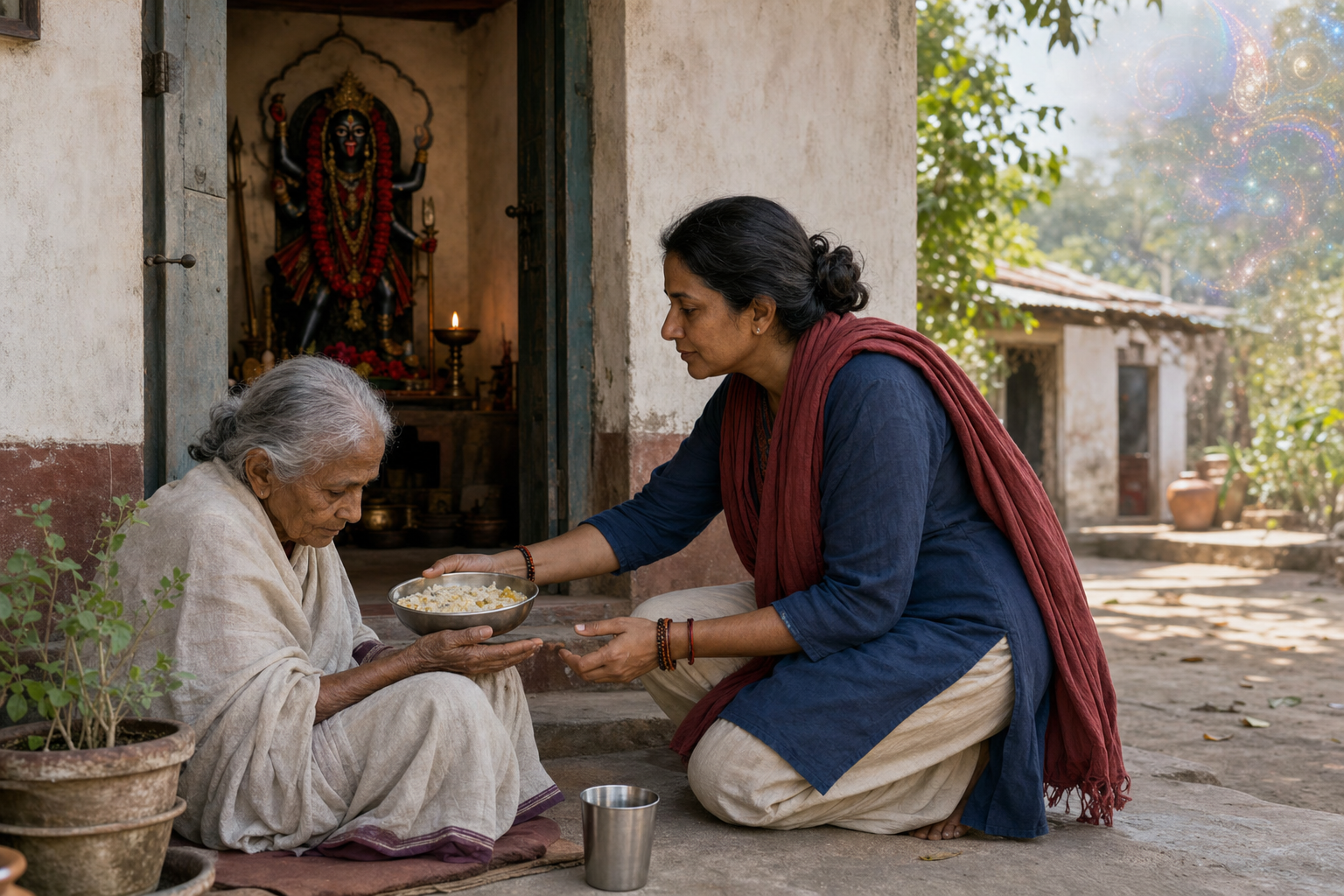
The most dangerous stage may not be failure. It may be the moment when an unusual dream, bodily sensation, coincidence, burst of confidence, or apparent influence over another person is declared a siddhi. Tantric language recognizes siddhi-abhasa, the appearance or mirage of attainment. The practical defence is not cynicism. It is repeated testing.
- The ego test: Does the experience make you quieter and more responsible, or eager to announce that you are exceptional?
- The ethics test: Does it strengthen satya and ahimsa, or provide sacred-sounding excuses for deception, intimidation, revenge, or control?
- The stability test: Can you continue ordinary duties with care, or are you becoming preoccupied with signs and secret meanings?
- The service test: Does the supposed attainment increase patience, protection, healing intention, and seva, or merely offer a new identity?
- The reality test: When a claim concerns events or other people, can it survive ordinary verification? A private impression is not permission to accuse, command, spend another person’s money, or make an irreversible decision for them.
Kali’s iconography makes this examination concrete. The sword represents the discrimination needed to cut self-deception. The kapala can be contemplated as a vessel in which karmic residues are transformed rather than projected onto others. The trishula brings will, knowledge, and action into alignment. Kali’s relation to Shiva shows dynamic Shakti held with serene consciousness. Power without that balance becomes agitation; stillness without Shakti becomes inert.
The ethical pattern extends across Dharmic traditions. Buddhist approaches place iddhis under meditative restraint rather than public display. Jain understandings of avadhi-jnana and manahparyaya-jnana remain bound to vows and austerity. Sikh teaching subordinates riddhi-siddhi to Naam, humility, and seva. Shakta practice likewise places attainment under viveka and dharma. Across these distinct paths, a capacity is judged by restraint, non-attachment, compassion, and service, not by the attention it attracts.
This gives you a clear standard when claims become confusing. No siddhi cancels moral responsibility. No vision makes coercion sacred. No mantra gives ownership of another person’s will. No experience removes the need to check facts. When an apparent attainment cannot coexist with humility and non-harming, step back from the claim and return to foundational practice.
The inward attainments deserve more attention than they usually receive. To remain steady when provoked, to recognize a selfish motive before acting on it, to speak truth without cruelty, and to meet uncertainty without surrendering to panic are forms of mastery with immediate consequences. Siddha Kali’s gift is not made smaller when siddhi is understood this way. It becomes usable.
Questions practitioners usually need answered
Can you worship Siddha Kali without undertaking advanced Tantra?
Yes. Foundational devotion can include a clean altar, diya, flowers, prayer, dhyana, stotra, and carefully bounded japa. You do not need to imitate nyasa, yantra consecration, homa, Panchamundi Asana, or purashcharana to make the worship sincere. Advanced ritual requires greater adhikara and guidance; devotional access to Kali as Mother does not depend on performing every technical element.
Can you chant Om Krim Siddha Kalikayai Namah without diksha?
This formulation is transmitted as a devotional invocation, but mantra rules vary by lineage. If your family tradition, temple, or teacher places an initiation requirement around the Kali bija or a particular pronunciation, follow that discipline. Do not assume that permission for a devotional formulation extends to longer vidyas, prescribed counts, nyasa, or a formal purashcharana.
How do you know whether Siddha Kali worship is working?
Look first for changes that can be tested in conduct: steadier attention, less avoidable fear, greater truthfulness, restraint when anger offers an excuse, and a stronger willingness to serve. Visions and unusual sensations are not required. If you become more fascinated with your status while your duties and relationships deteriorate, treat that as a warning rather than progress.
Is Amavasya necessary for the practice?
No. Amavasya and Kali Puja are significant occasions, but sacred timing supports consistency rather than replacing it. Follow your regional panchang and lineage custom for special worship, then return to a sustainable routine. A festival can intensify devotion; it cannot do the daily work of refining motive and conduct for you.
Begin at the level you can sustain honestly. Keep the worship simple, carry one commitment from the altar into your day, and measure progress where dharma becomes visible: in what you refuse to misuse, what you are no longer afraid to face, and whom your growing strength allows you to serve.