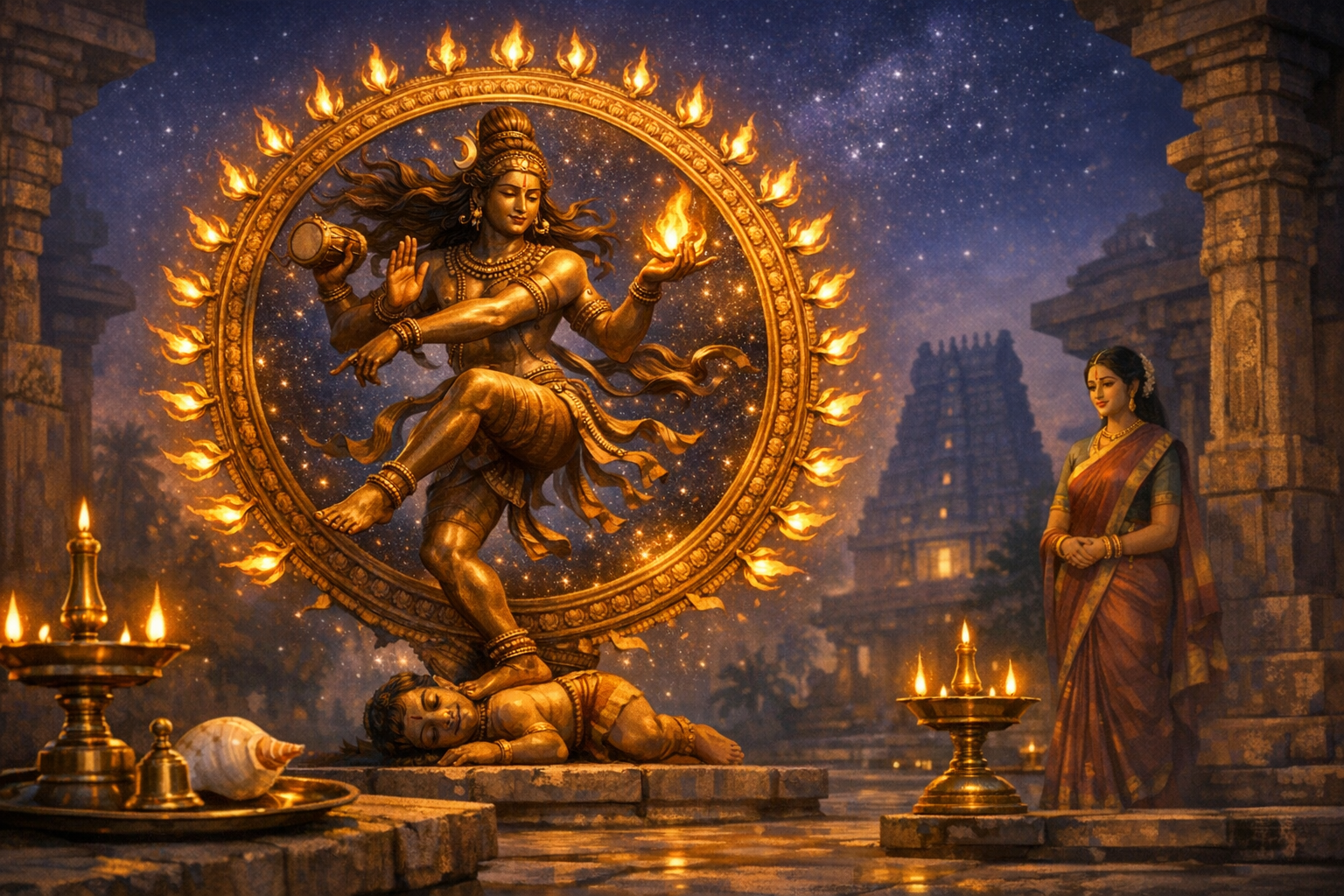
Sandhya Tandava designates a revered mode of Lord Shiva’s cosmic dance performed at twilight, the liminal juncture when day yields to night. Classical narratives describe this celestial drama unfolding before an august assembly of gods and sages, with Goddess Parvati the principal witness, underscoring the inseparable complementarity of Shiva and Shakti. In this frame, Sandhya—literally the junction—carries layered meanings: a temporal threshold, an aesthetic cadence, and a metaphysical doorway where transformation becomes palpable.
Within Hindu ritual life, sandhya marks three daily thresholds—dawn (prātaḥ), noon (madhyāhna), and dusk (sāyam). Dusk, associated with Sandhya Tandava, is especially resonant: lamps are lit, conches sound, and hymns flow as the sensory world softens into stillness. This hour synchronizes personal worship with the larger rhythm of nature, echoing the insight that ritual time aligns the microcosm (the practitioner’s inner life) and the macrocosm (the cosmos Shiva animates through dance).
In the dramaturgical lexicon grounded in the Nāṭyaśāstra, tāṇḍava denotes the vigorous, dynamic mode of dance classically attributed to Shiva, complementing the graceful lāsyā. Shaiva Āgamas and later manuals offer multiple enumerations of Shiva’s dances—often eight or sixteen—among which Sandhya Tandava appears in some traditions. Catalogs vary by region, lineage, and text, yet they share a common thesis: each tāṇḍava embodies a specific cosmological function and a distinct rasa (aesthetic mood) that devotees and performers can intuit and embody.
The iconography of Shiva Nataraja provides a precise theological grammar that maps directly onto Sandhya’s threshold symbolism. The prabhamandala (ring of fire) encircling the dancer signifies the pulsation of creation and dissolution. The damaru in the raised right hand declares primordial vibration and rhythm (spanda), while the left hand’s flame signals transformative dissolution (saṁhāra). The abhaya mudrā grants assurance, inviting approach rather than fear, and the gajahasta or extended gesture guides attention to the uplifted foot—liberation. Under the planted foot, Apasmara, the dwarf of forgetfulness, conveys that ignorance is subdued, not annihilated—the world is redeemed through conscious awareness. Twilight’s chiaroscuro becomes the natural stage on which these theological statements are felt most keenly.
Placing Parvati as witness subtly invokes the Ardhanarishvara principle—the indivisible union of consciousness (Shiva) and energy (Shakti). At dusk, when light and shadow braid, Sandhya Tandava renders balance as lived experience: steadiness within flux, clarity within transition. The witness motif thus emphasizes relationality—creation as a co-presence rather than an isolated act.
Chidambaram’s Nataraja tradition illuminates this dance with architectural and ritual precision. In the Golden Hall of Dance (Ponnambalam), the deity embodies the five cosmic acts (Pañcakṛtya)—creation (sṛṣṭi), maintenance (sthiti), dissolution (saṁhāra), concealment (tirobhāva), and grace (anugraha). The famed Chidambara Rahasya (the “secret” of the akasha-linga behind the curtain) points to space and stillness as the ultimate ground of dance. Arudra Darshan—observed in Margazhi—brings these principles to public memory: processions, hymns, and deepa-aradhana at twilight conjoin aesthetic celebration and metaphysical teaching.
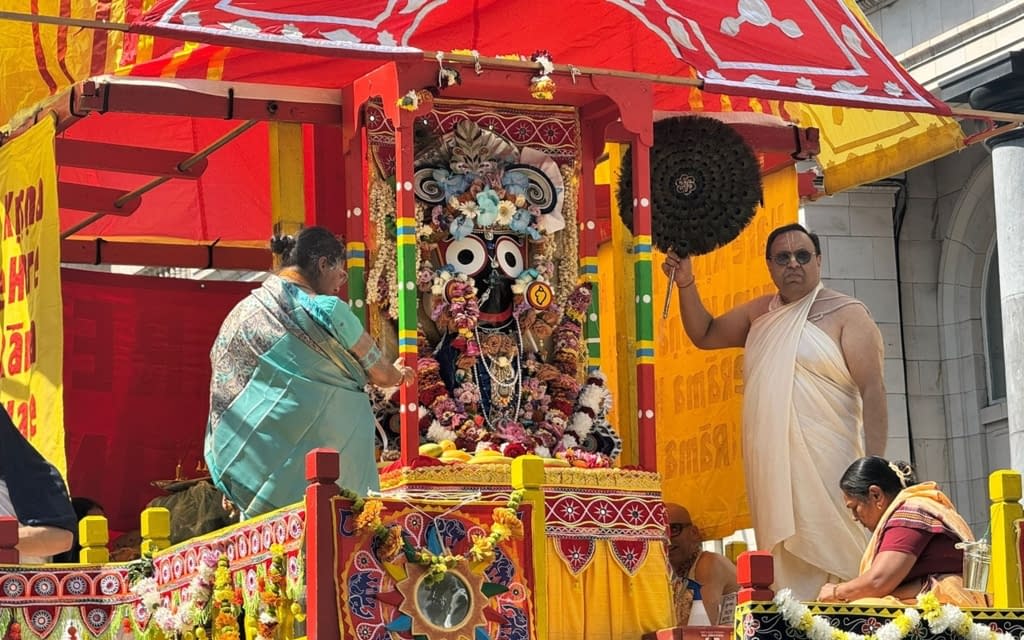
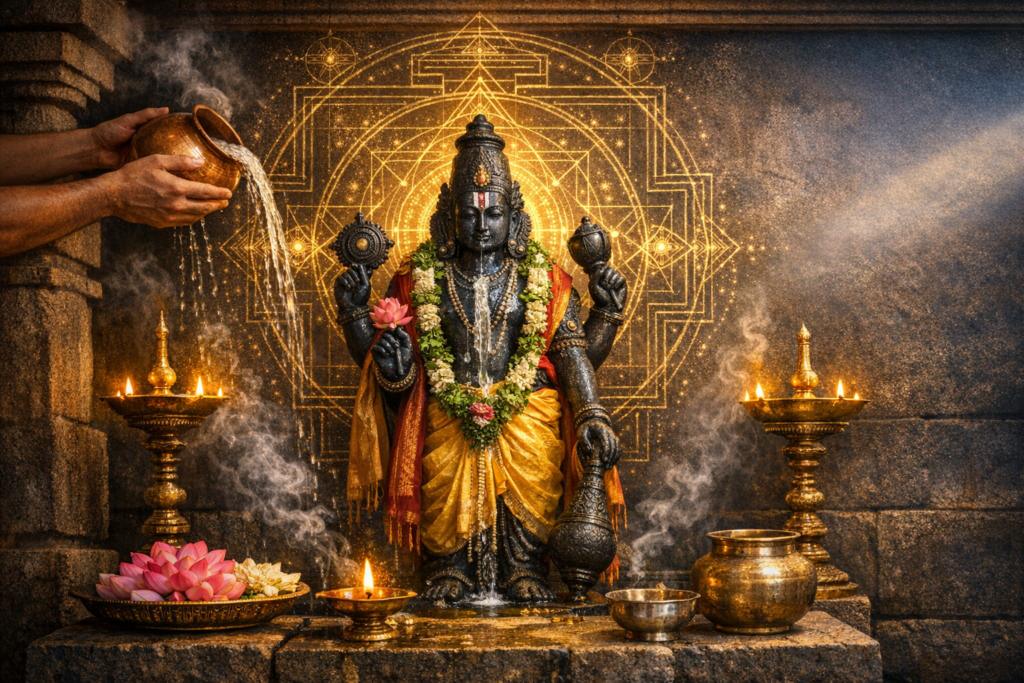
Temple liturgy at dusk across Shaiva spaces dramatizes Sandhya Tandava’s spirit through bell, flame, and song. Diparadhana at the evening hour, recitation of Tevaram hymns to Shiva, and the cadence of conch and cymbals translate the cosmology of Nataraja into communal experience. Households often mirror these gestures in miniature with a lamp, a short japa of “Namah Shivaya,” and a moment of contemplative silence—rituals that situate personal life within a wider sacred order.
Sandhya’s sanctity also resonates across dharmic traditions, reinforcing a shared cultural grammar of twilight. In Buddhism, evening chanting and puja mark closure and recollection; in Jainism, devasi pratikraman invites ethical introspection and renewal; in Sikhism, Rehraas Sahib at dusk fortifies resilience, gratitude, and remembrance of the Divine. These practices, while distinct, converge on a unifying premise: liminal hours heighten awareness, making twilight an especially potent time for ethical, contemplative, and communal reorientation.
From a philosophical standpoint, Sandhya Tandava can be read through the Shaiva idea of spanda—the subtle throb of consciousness that manifests as the world’s ceaseless rhythm. The damaru’s beat symbolizes the emergence of form and measure; the encircling flame confirms impermanence as a vehicle of grace, not threat. Dusk’s ambiguity—neither day nor night—helps practitioners sense the groundless ground in which phenomena arise and pass, pointing to freedom not as escape but as lucidity amid change.
Yogic traditions describe twilight as a time favorable for inner balance, with many lineages recommending dhyana and pranayama during sandhya. In practical terms, lowered sensory load, gentler light, and a culturally embedded pause aid attentional steadiness. Contemporary chronobiology has similarly observed that light transitions modulate circadian signaling; the ancient custom of quieting the mind at dusk may reflect long-observed embodied wisdom.
In performance lineages such as Bharatanatyam, Sandhya Tandava’s energy flows through adavus, karanas, and codified abhinaya that depict Nataraja’s grammar of movement. Kauttuvams dedicated to Nataraja, mnemonic jatis that evoke the damaru’s cadence, and choreographies that highlight the raised foot and ring of flames connect stage practice to temple theology. The Nāṭyaśāstra’s vision of dance as a bridge between rasa (aesthetic savor) and tattva (principle) becomes particularly vivid in twilight recitals, where stage-light and sinking daylight co-author the mood of transition.
Archaeology and art history preserve Sandhya Tandava’s memory across the subcontinent and beyond. Reliefs at Elephanta and Ellora, sculptural programs at Badami and Thanjavur, and the enduring presence of Shiva imagery in Southeast Asia—including Angkor Wat temple Cambodia—attest to a pan-Indic and transregional reception. Across these sites, the Nataraja motif synthesizes cosmology, devotion, and technical virtuosity into a single, instantly legible image of dancing stillness.
Ethically, the dance teaches steadiness with humility. Apasmara underfoot is not a demonized other but a reminder that forgetfulness is a human condition susceptible to correction through insight. Twilight invites the same disposition: pause, reflect, subdue reactivity, and recommit to awareness. In this sense, Sandhya Tandava supports unity—within the self and among communities—by privileging clarity over conquest and understanding over haste.
For those wishing to align household observances with this sensibility, many traditions emphasize a few simple, respectful gestures at dusk: lighting a clean lamp, maintaining a short span of silence or japa (for instance, the Panchakshari), and, where appropriate, listening to or reciting select hymns such as verses from Shiva’s Tevaram or the Śiva Mahimna Stotra. These gestures are not prescriptive rules but widely practiced ways of attuning personal rhythms to the shared cadence of sandhya.
Sandhya Tandava thus emerges as a comprehensive teaching: a theological map, an aesthetic grammar, a ritual script, and a contemplative invitation—each element illuminated by the unique power of dusk. By recognizing the shared twilight ethos across Hinduism, Buddhism, Jainism, and Sikhism, communities can find common ground in reverence for liminal time. The dance endures because it is not only seen; it is felt—whenever a lamp is lit, a breath is steadied, and awareness keeps step with the world’s quiet turning from day to night.
Inspired by this post on Hindu Blog.