Across professions, communities, and households, many individuals report a pervasive sense of overwhelm. Competing demands from work, caregiving, relationships, and health can keep the nervous system in a continual state of vigilance. When such pressures accumulate, the body and mind often default to survival strategiesshortened breathing, fragmented attention, and a sense of barely getting through the dayrather than reflective, values-aligned action.
This pattern is not a moral failure; it is physiology. Chronic activation of the stress response elevates allostatic load, the cumulative wear and tear that accrues when recovery windows are too brief or too rare. Over time, this can degrade sleep quality, impulse control, emotional balance, and creativity. It also narrows perspective, making complex problems feel binary and insoluble.
Complicating matters further is a near-constant influx of signalsnotifications, texts, breaking news, and social requeststhat fragment attention. Frequent interruptions increase cognitive switching costs, reduce working memory capacity, and correlate with lower mood and reduced task satisfaction. Even without young children or a demanding household, digital noise alone can sustain a background hum of urgency that the nervous system misreads as threat.
It is tempting to respond with more toolsnew productivity apps, clever workflows, and additional strategies. While such supports can be useful, evidence and experience suggest that a subtractive approach is often more effective: reducing inputs, simplifying commitments, and creating reliable refuges for the body and mind. In short, building more spacespace to breathe, feel, and reorient toward what truly matters.
Within the dharmic traditions of Hinduism, Buddhism, Jainism, and Sikhism, this kind of intentional space-making is foundational. Though each tradition carries its own language, lineages, and practices, they converge on the insight that stillness, ethical clarity, and compassionate awareness are trainable capacities. Whether named dhyāna, sati, samayik, or simran, the shared premise is that attention can be stabilized, the heart can be softened, and perception can be refined to meet experience with wisdom rather than reactivity.
These traditions also emphasize accessibility. One need not identify as spiritual, adopt a particular metaphysic, or possess prior meditation experience to benefit. Practices can be learned incrementally, adapted to diverse temperaments, and integrated into daily routines. The emphasis falls on lived applicationreducing suffering, cultivating resilience, and orienting to valuesrather than on ideological conformity.
Retreat environmentswhether formal or self-createdoffer a powerful context for this training. Many participants describe a consistent, embodied response upon entering a quiet, nature-rich setting: the shoulders soften, the jaw unclenches, and the breath deepens without effort. What follows is not dramatic catharsis so much as recognition: an awareness of just how long the system has been braced, both physically and emotionally.
Such shifts are explicable through contemporary models of the nervous system. Reduced sensory load, gentle social presence, and a clear structure of rest and practice increase vagal tone and support a felt sense of safety. In group settings, co-regulation amplifies these effects; shared silence, communal meals, and rhythmic activities (chanting, walking, or breathwork) synchronize internal states and reduce perceived threat. The result is a physiology more capable of curiosity, perspective-taking, and creative problem solving.
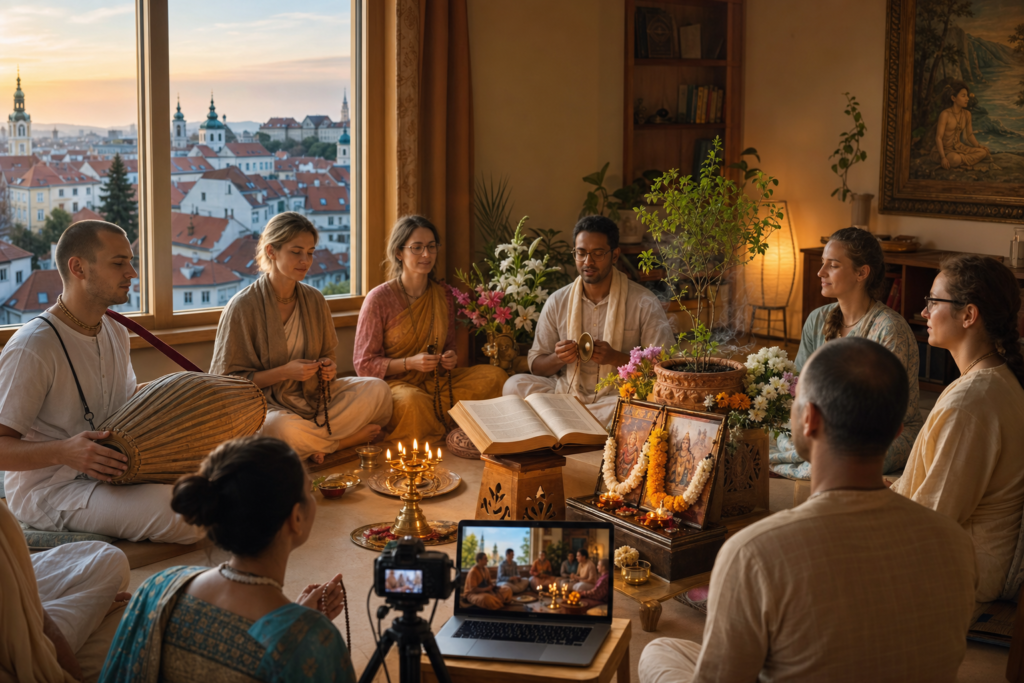
Not everyone can travel to a retreat center, and that is neither a barrier nor a deficit. The essential elementsperiods of silence, compassionate structure, nature exposure, and supportive communitycan be recreated at home or online. Short, frequent practices have outsized impact when consistently applied, and they can be scaled up or down as life circumstances change.
The remainder of this analysis distills evidence-informed practices that align with dharmic wisdom and modern science. The aim is practical: restore steadiness, improve sleep, deepen emotional resilience, and recover a sense of meaning without adding unnecessary complexity.
First, stabilize physiology through the breath. Slow, diaphragmatic breathing in the range of 5 to 6 breaths per minute (often called resonance breathing) reliably activates parasympathetic pathways and improves heart rate variability, a biomarker of adaptability. Alternate-nostril breathing (nadi shodhana) balances autonomic tone, and bhramari (humming exhalation) leverages vagus nerve innervation to calm the threat response. Two to five minutes, two or three times per day, can produce measurable gains over several weeks.
Second, orient attention gently. A brief practice of sensory orientationnaming three things seen, heard, and feltgrounds awareness in the present and disrupts rumination. This simple attentional reset resembles open-monitoring meditation in Buddhism and aligns with dharmic teachings on non-grasping awareness. It is especially useful after task switching or emotionally charged interactions.
Third, include embodied movement. Slow, mindful yoga sequences, sun salutations adapted to capacity, or a ten-minute contemplative walk attune interoception (the sense of internal bodily states). Embodied practices reduce muscular bracing, increase proprioceptive clarity, and prepare the mind for seated practice. Even brief movement snacks between meetings counteract the cognitive fatigue associated with prolonged sitting.
Fourth, train attention explicitly. Focused-attention practiceresting on the breath, a mantra, or a visual pointstrengthens selective attention and reduces distractibility. Open-monitoring practiceobserving thoughts, emotions, and sensations without identificationbuilds meta-awareness and cognitive flexibility. Alternating these modes mirrors how the brain toggles between task-positive networks and the default mode network, fostering both steadiness and insight.

Fifth, cultivate compassion as a regulatory skill. Loving-kindness (mettā/maitrī), karuṇā (compassion), and practices of forgiveness and gratitude build prosocial states that counter isolation and cynicism. Sikh simran and seva (remembrance and service) and Jain ahimsa (non-violence) root compassion in action, reinforcing belonging. Compassion practices are not sentimentality; they are trainable, measurable shifts in affect that broaden perspective and improve conflict navigation.
Sixth, journal for integration. A brief daily inquiryWhat is present? What matters now? What is one small act aligned with values?translates contemplative clarity into lived choices. Dharmic frameworks like aparigraha (non-hoarding) and satya (truthfulness) can guide reflection, revealing where unnecessary commitments or unexamined beliefs sustain overload.
Seventh, reclaim attention from devices. Disable nonessential notifications, batch communications, and reserve at least one technology-free hour per day for deep rest or meaningful connection. Studies consistently show that partial attention lowers mood and productivity; deliberate digital boundaries restore the conditions required for insight and intimacy.
Eighth, prioritize sleep and deep rest. Consistent wake time, morning light exposure, evening dimness, and light-to-moderate movement support circadian alignment. Yoga Nidra and related non-sleep deep rest protocols reduce sleep onset latency and improve subjective sleep quality. Even brief afternoon NSDR sessions can replenish mental energy without impairing nighttime sleep.
Ninth, utilize nature and art as regulators. Attentional Restoration Theory suggests that softly fascinating environmentsforests, gardens, water, open skyrestore executive function. Where access to nature is limited, music, sacred art, and contemplative reading can evoke similar states of gentle attention and awe, widening perspective.
Tenth, anchor well-being in community and service. Small, regular circlesstudy groups, kirtan or simran gatherings, or quiet reading collectivesoffer accountability and co-regulation. Service aligned with capacity transforms rumination into contribution and embodies the dharmic insight that personal liberation and collective welfare interpenetrate.
For practical adoption, a seven-day reset can be helpful. Day one emphasizes environment: simplify the physical space, reduce visual clutter, and schedule two five-minute breathing sessions. Day two introduces mindful movement and a short journaling prompt. Day three adds focused attention practice; day four integrates compassion meditation. Days five and six build sleep hygiene and a technology-free block; day seven culminates with nature exposure and light service. The cycle can then repeat with modest extensions in duration.
A home retreat need not be elaborate. A half day structured as silence, breath, movement, study, reflection, and rest can profoundly recalibrate the week. Snacks remain simple, conversations intentional, and devices parked. The intention is not withdrawal but renewal, so that re-engagement with work, family, and community arises from steadiness rather than depletion.
Measuring progress avoids the trap of vague aspiration. Practical indicators include improved sleep efficiency, reduced time to settle attention, gentler self-talk during difficulty, and an easier return to baseline after stressors. Some track heart rate variability or resting heart rate; others note qualitative shiftsmore humor, patience, or a clearer sense of priorities.
Common obstacles are predictable. Restlessness often signals underutilized energy; brief movement before sitting can help. Sleep disruptions may reflect late-evening stimulation; dimming lights and minimizing screens two hours before bed are potent levers. Emotional surfacing during quiet is normal; compassion practice and peer support create containers for processing rather than suppression.
Amid method and measurement, ethics matters. Dharmic principlesahimsa (non-violence), satya (truthfulness), aparigraha (non-clinging), anekantavada (respect for multiple viewpoints), and seva (service)protect the integrity of practice. They ensure that mindfulness, meditation, and yoga cultivate wisdom and care, not mere productivity. In plural societies, these shared values foster unity across Hindu, Buddhist, Jain, and Sikh communities while honoring their distinctives.
Ultimately, the invitation is simple and profound. When life becomes too full to feel, creating space is not indulgence; it is stewardship. By stabilizing the nervous system, quieting digital noise, deepening sleep, and drawing from the convergent wisdom of dharmic traditions, individuals remember who they are under the stress: steady, compassionate, and capable of meeting the world with clarity.
Whether adopting a daily two-minute practice or occasionally entering a longer period of silence, the gesture is the sameturning toward life with presence. From that presence emerges the rare experience modern life often obscures: the ease of simply being, with nothing to prove and much to give.
Inspired by this post on Tiny Buddha.