
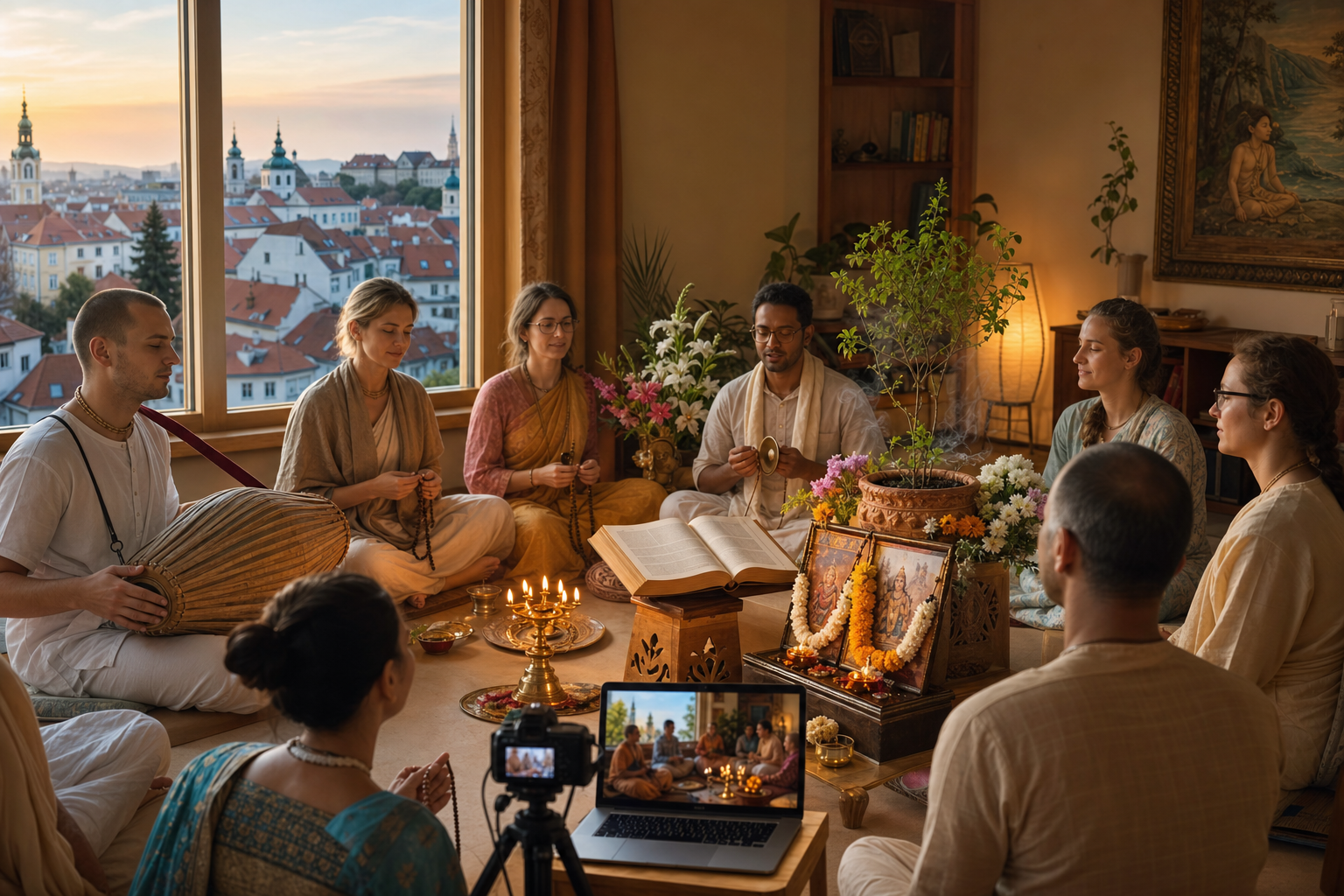
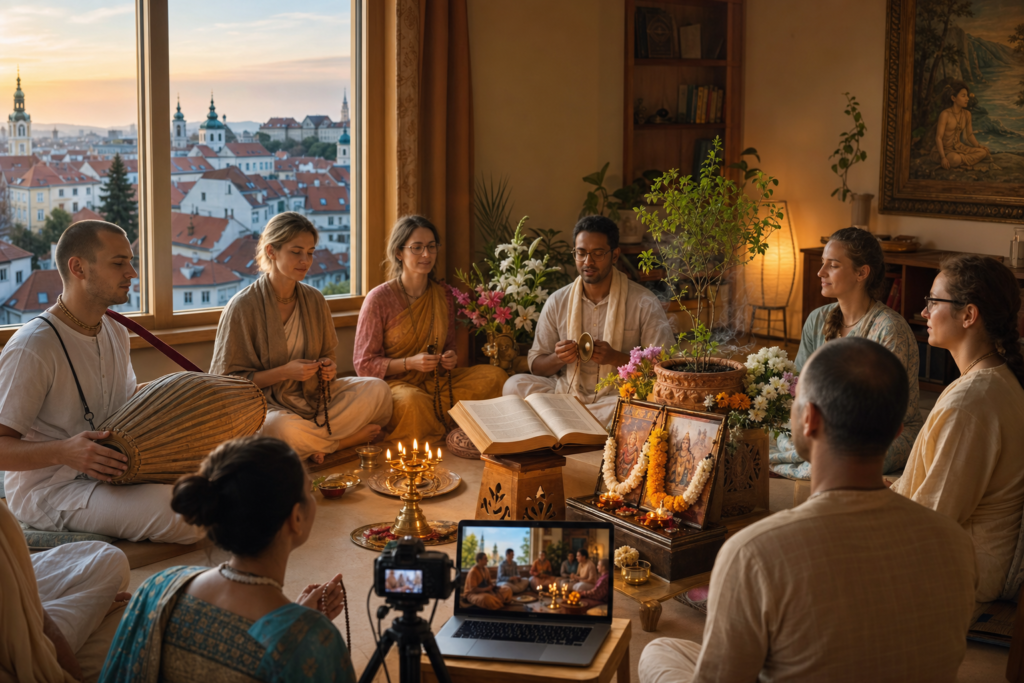
The title Jutranji ISKCON Ljubljana Live points to a morning devotional broadcast associated with ISKCON Ljubljana, the Hare Krishna community in Slovenia. The term “Jutranji” is connected with the morning, and in the context of Krishna consciousness it naturally evokes the disciplined early-hours rhythm of worship, chanting, study, and collective spiritual practice. Even when the source material contains only a video thumbnail, the subject opens a meaningful window into how Gaudiya Vaishnavism is lived in a European setting through daily devotion rather than occasional ceremony.
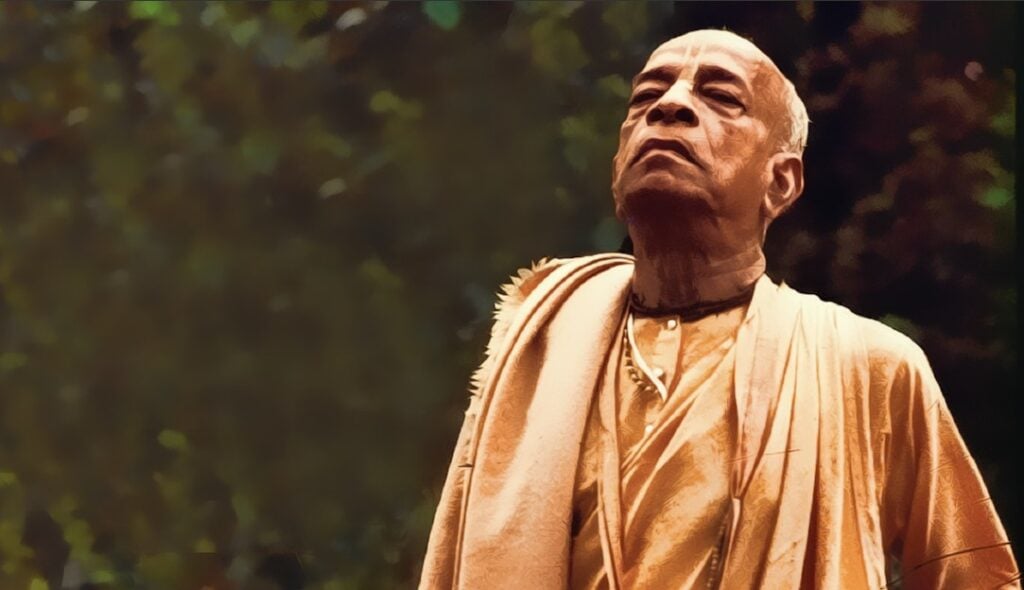
ISKCON, the International Society for Krishna Consciousness, was founded in 1966 by A. C. Bhaktivedanta Swami Prabhupada and is rooted in the Gaudiya Vaishnava tradition of bhakti, or loving devotion to Sri Krishna. Its temples and communities across the world commonly organize daily morning programs that combine kirtan, mantra meditation, arati, scriptural reflection, and community participation. ISKCON Ljubljana represents this global tradition in Slovenia, translating the familiar practices of Krishna consciousness into the cultural and linguistic life of Ljubljana while retaining the theological core of devotion, discipline, and service.
A typical ISKCON morning program is not merely a religious gathering; it is a carefully structured spiritual discipline. The day often begins before sunrise, a time traditionally regarded as especially favorable for contemplation and prayer. Devotees may participate in Mangala Arati, sing the Hare Krishna maha-mantra, honor Tulasi Devi, chant japa on beads, and hear teachings from sacred texts such as the Bhagavad Gita and Srimad Bhagavatam. These practices are not isolated rituals but parts of an integrated method for training attention, softening the heart, and orienting daily life toward dharma.
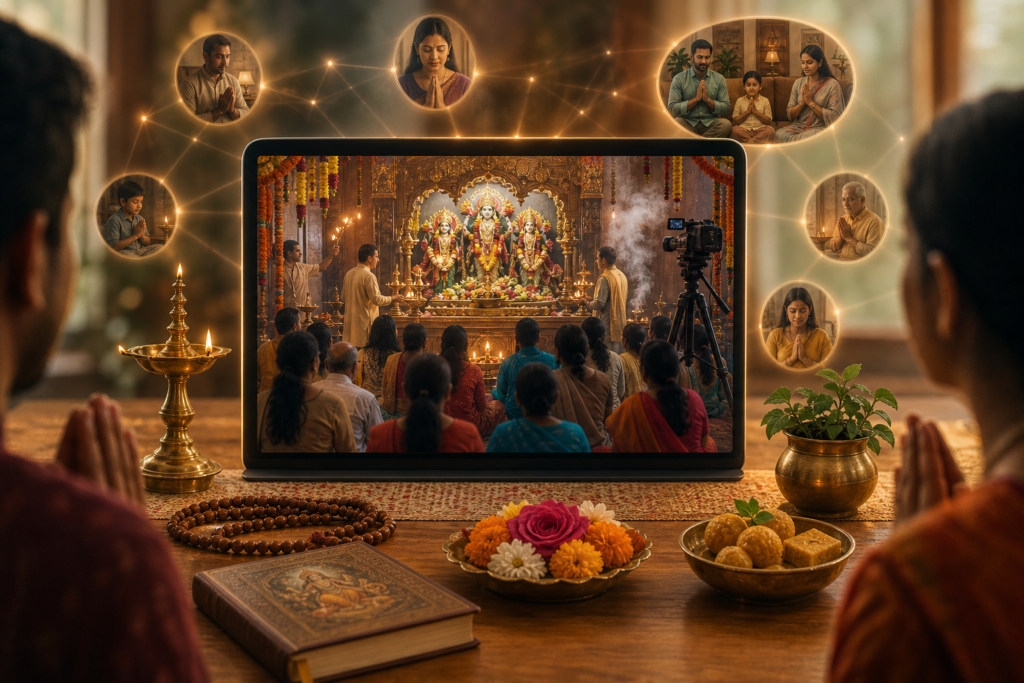
The live format gives this practice a wider social and spiritual meaning. A person watching from home, another city, or another country can still participate in the atmosphere of kirtan and darshan, even when physical attendance is not possible. This is especially important for diaspora communities, seekers new to Hindu spirituality, and devotees whose work or family duties prevent regular temple visits. The livestream becomes a bridge between temple space and domestic space, allowing sacred sound, devotional rhythm, and scriptural memory to enter ordinary life.
From an academic perspective, ISKCON Ljubljana illustrates how Hindu traditions adapt without losing their central identity. The movement preserves Sanskrit mantras, Vaishnava theology, deity worship, and guru-parampara while communicating them in local languages and modern media formats. This combination of continuity and adaptation is one reason Krishna consciousness has traveled beyond India while still remaining connected to its Indic roots. The practice is neither a museum display of ancient religion nor a purely modern invention; it is a living tradition shaped by transmission, translation, and disciplined repetition.
The emotional force of a morning program lies in its simplicity. Before the demands of the day begin, the devotee encounters sound, light, incense, prayer, and community. The repetition of the maha-mantra can feel modest from the outside, yet for practitioners it becomes a way of returning the mind to steadiness. In a world marked by distraction, anxiety, and fragmentation, the morning discipline of bhakti offers a practical form of inner organization. It does not require escape from society; it asks for a different beginning to the day.
The significance of ISKCON Ljubljana also belongs to the larger story of Hindu spirituality in Europe. Communities such as this help preserve Hindu cultural heritage while inviting respectful participation from people of many backgrounds. The focus on kirtan, prasadam, scriptural study, and seva creates a public form of spirituality that is both devotional and communal. It demonstrates that Hindu dharma can be practiced outside India without being reduced to ethnicity, and that bhakti can speak across national and linguistic boundaries.
At the same time, this subject should be understood within the broader unity of dharmic traditions. Hinduism, Buddhism, Jainism, and Sikhism each preserve distinct teachings, disciplines, and historical lineages, yet they share civilizational concerns with self-discipline, ethical living, liberation, compassion, and the refinement of consciousness. A Vaishnava morning livestream from Ljubljana can therefore be appreciated not only as an ISKCON event but also as part of a wider dharmic effort to keep sacred practice visible, accessible, and meaningful in modern life.
The image associated with the source appears to function as a video thumbnail rather than a full article. That makes it important to avoid overclaiming specific details about the particular broadcast. What can be said responsibly is that the title and context point toward a live morning devotional presentation connected with ISKCON Ljubljana. The most valuable way to understand it is through the established structure of ISKCON morning worship, the theology of Krishna consciousness, and the role of livestreaming in contemporary temple culture.
In that sense, Jutranji ISKCON Ljubljana Live is more than a simple video listing. It reflects a disciplined devotional ecosystem: early rising, sacred sound, shared worship, scriptural learning, and community continuity. For viewers seeking Hindu spirituality, Gaudiya Vaishnavism, Hare Krishna kirtan, or a deeper understanding of bhakti practice in Europe, such a broadcast offers a direct encounter with living tradition. Its value lies not in spectacle but in repetition, sincerity, and the quiet power of beginning the day with remembrance of Sri Krishna.
Inspired by this post on Dandavats.






Leave a Reply
You must be logged in to post a comment.