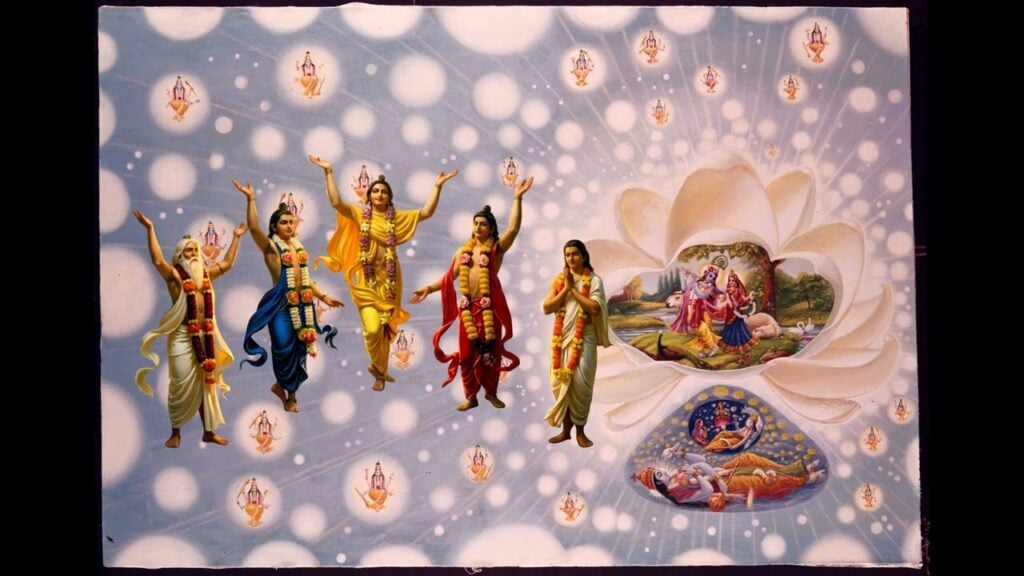
A devotee of the Supreme is consistently portrayed in Hindu scriptures as magnanimous, purifying, and universally inspiring. Descriptions across the Bhakti Tradition emphasize that the presence of such a devotee elevates those who come into contact with them, and even brief association with a saintly personsadhu-sangais celebrated as transformative. This portrayal is not merely devotional praise; it points to a repeatable pattern observed in lived spiritual communities: exemplary character produces tangible ethical influence, clarity of purpose, and renewed commitment to dharma.
Scriptural sources such as the Bhagavad Gita and later devotional texts regularly assert that understanding Krishna, the supreme Lord in Vaishnava thought, becomes accessible through the mercy of pure devotees. Service to these servants of the Divine (seva) is extolled as a direct avenue to cultivating love of God. While this language is distinctively Vaishnava, its underlying principle resonates across the broader Sanatana Dharma and other dharmic paths: spiritual realization often emerges through sincere company, guidance, and service within a living tradition.
Comparable ideals appear across dharmic lineages. In Buddhism, the Bodhisattva’s compassion exemplifies magnanimity oriented toward the liberation of all beings. Jain teachings on ahiṁsa and disciplined conduct hold up saintly exemplars whose presence refines community ethics. Sikh practice elevates seva and sangats as the crucible of shared transformation. These parallels illustrate unity in spiritual diversitydifferent vocabularies, one ethical and devotional grammaraffirming that the magnanimity of a devotee is a common ideal uniting Hinduism, Buddhism, Jainism, and Sikhism.
Classical texts describe the devotee’s qualities as “ornaments” that embellish the person more radiantly than external adornment. These include humility (amanitvam), compassion (daya), integrity in action (dharma-anushthana), equipoise amid praise and blame, and unwavering dedication to the welfare of others. Observers across traditions repeatedly note that such qualities do not merely inspire admiration; they exert a normative pull, inviting reflection, self-correction, and ethical commitment.
Many seekers report that a single, authentic encounter with a saintly person can reorient a spiritual journey. Whether it is a few words offered at the right time, a gesture of unsolicited kindness, or the quiet example of disciplined sadhana, the impact often outlasts the moment. This is the practical meaning of “bestowing good fortune” found in devotional literature: not a mechanical promise of prosperity, but a demonstrable opening of conscience, purpose, and devotion.
Practical steps flow from this insight. Regular satsang strengthens discernment by placing one among those who model aspirational qualities. Seva cultivates humility and solidarity, knitting individuals into the fabric of community well-being. Personal practices such as japa, meditation, or contemplative reading of scriptures refine attention and intention. Together, these habits reinforce the Guru-Shishya Tradition’s enduring lesson: character is formed in company, perfected in service, and stabilized through disciplined practice.
From a dharmic perspective, the magnanimity of a devotee also advances social harmony. Compassionate speech, respect for multiple paths, and willingness to serve beyond sectarian boundaries foster unity in spiritual diversity. In times marked by polarization, the devotee’s inclusive conductrooted in devotion, yet expansive in empathyoffers a reliable template for communal coherence and interfaith respect.
In sum, the magnanimity of a devotee is best understood as a living pedagogy: a set of observable virtues that teach more powerfully than argument. By valuing sadhu-sanga, engaging in seva, and honoring the dignity of diverse dharmic paths, communities cultivate the very qualities that scriptures praise. Such magnanimity does not simply ornament the individual; it illuminates the shared journey toward truth, compassion, and lasting spiritual well-being.
Inspired by this post on Dandavats.