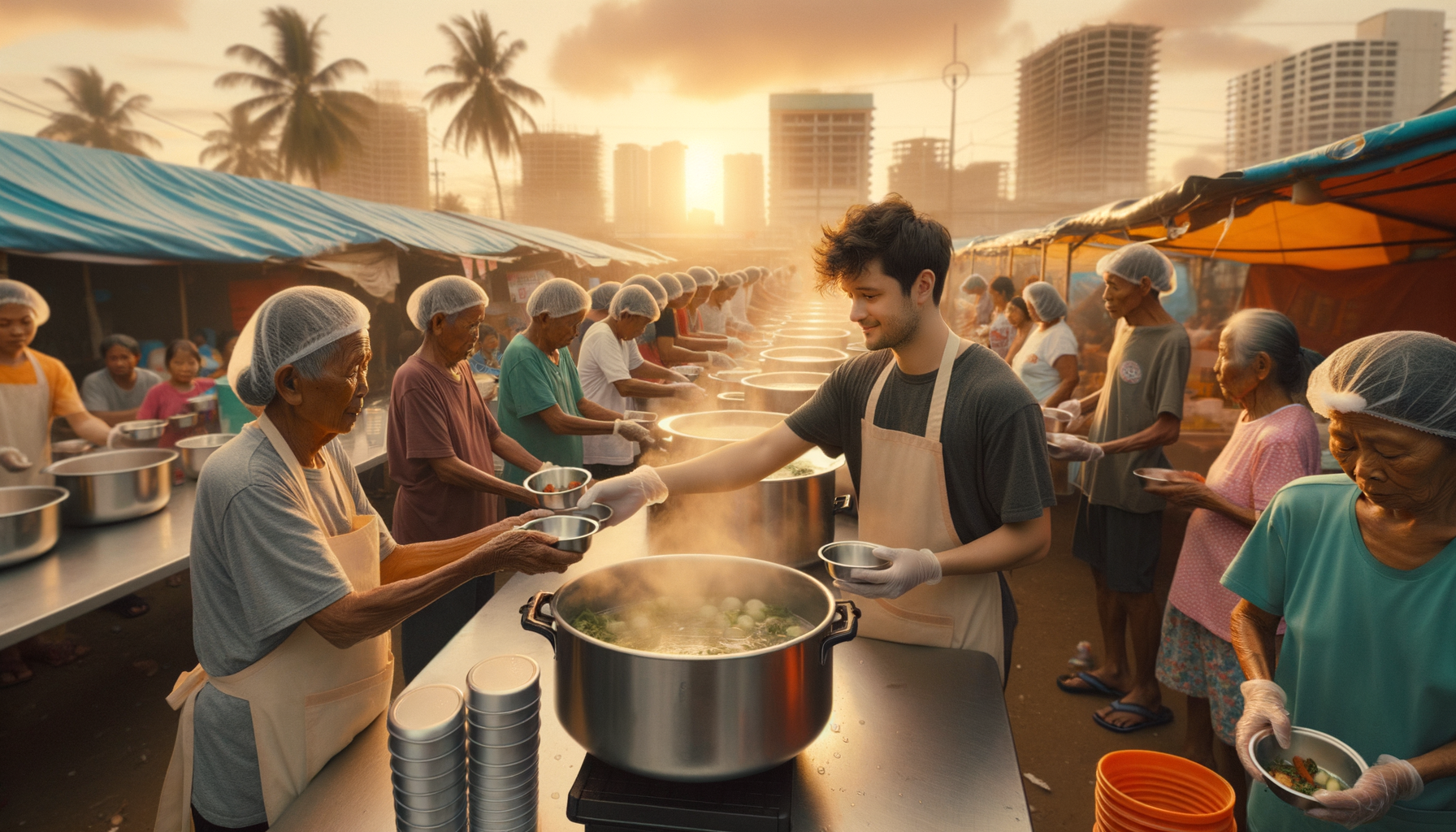
When the earth trembled in Bogo, Cebu, families saw homes crumble and daily life upended in moments. Amid this devastation, a measured, compassionate response emerged that balanced urgency with dignityan approach that turned crisis into a testament to shared humanity and social cohesion.
Responding to the compassionate call to action issued by Governor Pamela Baricuatro, devotees from ISKCON Cebu Philippines and ISKCON Food For Life Philippines mobilized rapidly. They organized community kitchens, coordinated logistics with local stakeholders, and delivered warm, nutritious vegetarian meals to displaced residentsefforts grounded in ahimsa and guided by practical disaster response principles.
The initiative embodied the Filipino spirit of Bayanihan while resonating with a broader dharmic ethos of seva that is honored across Hinduism, Buddhism, Jainism, and Sikhism. This alignment fostered unity, reduced social fragmentation, and strengthened the moral center of community care during a time of profound vulnerability.
Operationally, the response prioritized food safety, hygiene, and equitable distribution. Volunteers focused on providing reliable, plant-based nourishment and clean water, ensuring that support reached evacuation centers and hard-to-reach pockets where immediate relief made a measurable difference to household resilience.
Beyond material aid, the presence of consistent, compassionate service stabilized emotions and restored a sense of normalcy. The steady rhythm of shared meals reconnected survivors to familiar routines, reinforcing trust and signaling that the wider community had not turned away in the face of hardship.
As a model of humanitarian aid, the Cebu earthquake relief demonstrates how government leadership, faith-based organizations, and local volunteers can collaborate effectively. The approachanchored in ethical food security, community kitchens, and transparent coordinationoffers replicable insights for disaster resilience across the Philippines and beyond.
This response also illustrates how dharmic traditions converge in practice: compassion without discrimination, disciplined service, and a commitment to peace and dignity for all. Such convergence strengthens unity in diversity and underscores how spiritual values can guide practical solutions during emergencies.
A short documentary documents this coordinated effort and its on-the-ground impact, providing additional context for researchers, responders, and community leaders. For further reference, see: https://www.dandavats.com/?p=116456.
Inspired by this post on Dandavats.