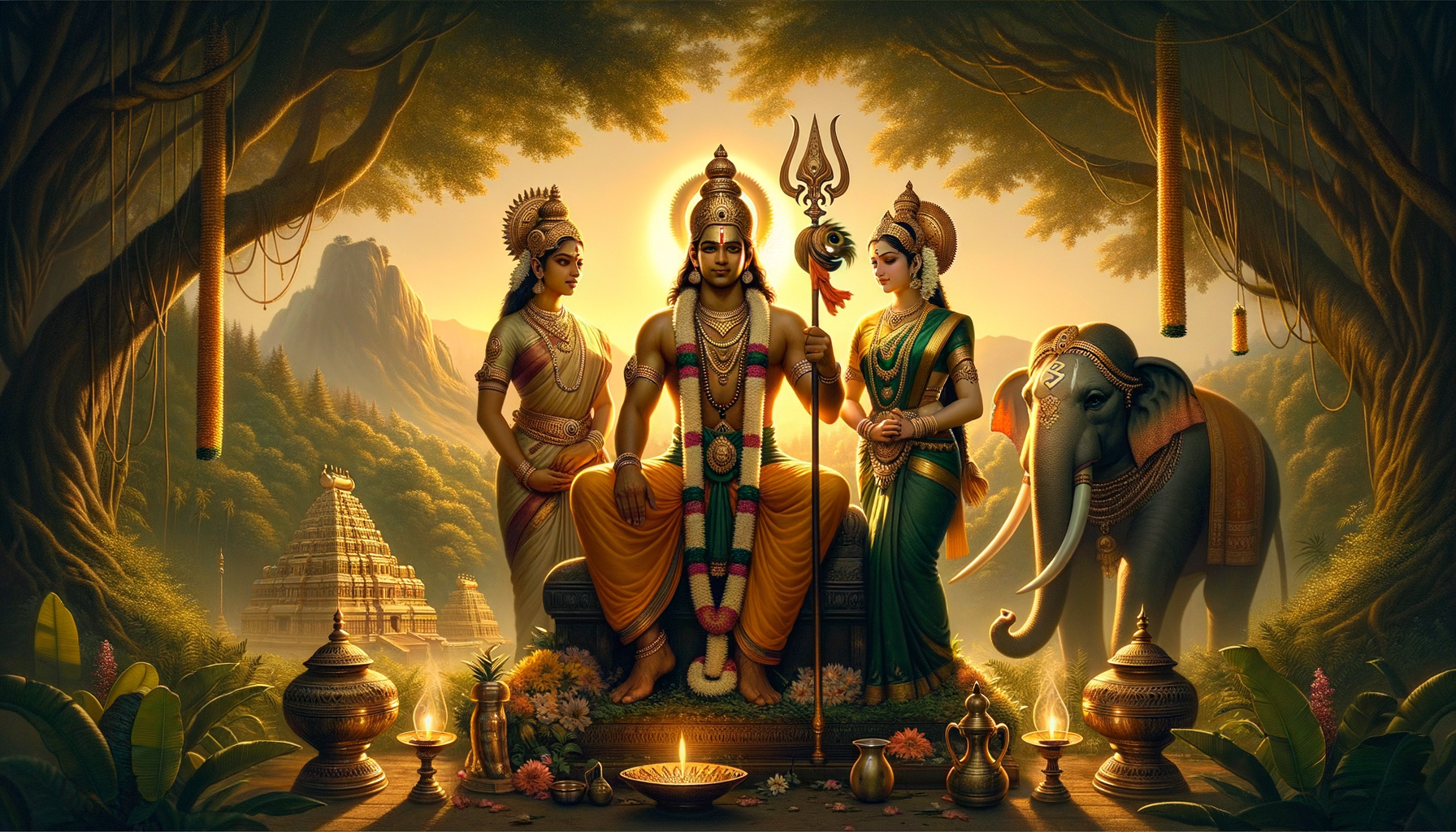
In Hindu folklore of South India, the intertwined marriages of Subramanya (also known as Skanda, Kartikeya, or Murugan) to Devasena and Valli illuminate the compassionate agency of Ganapathi as remover of obstacles. The narrative, remembered in temple traditions and oral retellings, underscores how Ganapathi’s timely intervention helped unite Subramanya with Valli while honoring the earlier, canonical marriage to Devasena, the daughter of Indra.
Devasena’s marriage to Subrahmanya is often presented in classical and Purāṇic frames, situating her as a celestial bride associated with divine order and auspiciousness. In numerous interpretive traditions, Valli and Devasena are read symbolically as complementary forcesfrequently described as personifications of will and actiontogether representing a balanced spiritual life centered on devotion, discernment, and purposeful service.
The Valli narrative unfolds in the southern landscape, where Valli is portrayed as a tribal princess known for steadfast love and uncompromising sincerity. Despite mutual affection, social conventions and protective guardianship posed hurdles to the union. It is at this juncture that Ganapathi’s compassionate wisdom becomes decisive, embodying the very essence of the Vighnahartāone who gently removes hindrances without unsettling moral order.
In widely told versions of Valli Kalyanam, Ganapathi appears in the form of a wild elephant to disrupt the vigilant routine around Valli. Subramanya, sometimes in the guise of an ascetic or hunter, uses the moment to reveal love’s sincerity and depth. The sudden commotion acts not as coercion but as catalysttransforming fear into clarity and hesitation into affirmationuntil the divine identity is revealed and consent is joyfully offered. The symbolism is eloquent: Ganesha turns external obstacles into inner understanding, guiding the heart from uncertainty to luminous resolve.
Such storytelling carries layered meaning for devotees and cultural historians alike. The sibling bond between Ganapathi and Subramanya conveys a graceful ethic of mutual care, while the narrative structure highlights consent, trust, and the sanctity of companionship. At a broader civilizational level, these themes resonate with shared dharmic valuescompassion, wisdom, and harmonythat are celebrated across Hinduism, Buddhism, Jainism, and Sikhism as pathways to inner refinement and communal unity.
Temples dedicated to Murugan across Tamil Nadu and beyond commemorate this lore through festivals and dramatic re-enactments of Valli Kalyanam. These living traditionssung in bhajans, staged in folk theatre, and embodied in ritualkeep the story present as an ethical compass: love matures through perseverance, wisdom ripens through guidance, and spiritual progress flourishes when obstacles are transmuted into insight.
Understanding the dual-consort tradition deepens appreciation for Skanda worship in South Indian temples, where Valli and Devasena together frame a holistic vision of the spiritual path. The narrative affirms that divine grace meets human sincerity halfway: Subramanya’s unwavering love, Valli’s purity of intention, and Ganapathi’s benevolent strategy converge to produce a union that is both emotionally resonant and philosophically instructive.
Read in this light, Ganapathi’s role is neither peripheral nor merely playful; it is pedagogical. By orchestrating circumstances that reveal truth and awaken courage, Ganesha exemplifies how obstacles, when approached with reverence and intelligence, become instruments of transformation. The marriage of Valli and Subramanya thus stands as a timeless testament to dharmic harmonywhere devotion is guided by wisdom, and love finds fulfillment within the moral beauty of consent and community.
Inspired by this post on Hindu Pad.