

Within the Bhagavata tradition, Balarama is consistently portrayed as fair in complexion (śveta-varṇa) and clothed in blue garments (nīla-vastra), while Krishna appears dark like a rain cloud (śyāma) and attired in yellow silk (pītāmbara). This chromatic pairing is not incidental; it functions as a visual theology that encodes strength, serenity, and the ethic of selfless service (seva). The blue of Balarama’s attire serves as a contemplative cue, directing attention to his identity as the stabilizing elder, the bearer of cosmic support, and the exemplar of disciplined devotion.
Classical sources such as the Bhāgavata Purāṇa (notably in Skandha 10’s narrative arc), the Viṣṇu Purāṇa, and the Hari-vaṁśa provide textual foundations for Balarama’s iconography. Temple traditions across India reinforce these descriptions through daily śṛṅgāra (ritual adornment), where Balarama’s fair form is habitually vested in blue cloth, complementing Krishna’s yellow. Vaishnava commentators extend this into a symbolic pedagogy in which color differentiates but also harmonizes their divine functions.
A philological note sharpens the reading: nīla in Sanskrit carries the sense of deep blue or indigo; śyāma signifies a dark, rain-laden hue; and pīta denotes a luminous yellow. These terms do not merely describe pigments; they evoke cosmic moods—oceanic depth and serenity (nīla), monsoon-laden fecundity and mystery (śyāma), and life-giving radiance (pīta). In this triad, Balarama’s blue attire frames him as the cool, stabilizing current alongside Krishna’s effulgent energy.
The chromatic contrast thus becomes a didactic device. In devotional spaces, the white-and-blue of Balarama paired with the dark-and-yellow of Krishna immediately communicates complementarity: stillness with dynamism, form with rasa, and discipline with delight. The garments preach a theology of balance before any word is spoken.
Doctrinally, Balarama is identified with the ādi-guru and with Ananta Śeṣa, the serpentine cosmic support upon whom Nārāyaṇa reposes. In this light, blue garments suggest both depth and bearing capacity—an oceanic steadiness underlying creation. The attire allegorizes the guru-tattva: knowledge held with strength, and strength tempered by serenity. By donning blue, Balarama is read as embodying a sky-and-sea expanse against which the drama of līlā can unfold without instability.
Pancharātra theology further illuminates the symbolism. Balarama is associated with Saṅkarṣaṇa within the catur-vyūha schema, a form linked in various exegetical strands to consolidation, discrimination, and the subduing of egoic turbulence. Blue’s cultural semantics—cooling, vast, and measured—resonate with this function, suggesting a psyche calmed for insight and a will trained for service.
Balarama’s traditional emblems, the plough (hala) and pestle (muśala), ground the symbol in agrarian reality. Agriculture depends upon the right measure of water, and blue is a sign of the life-giving monsoon. Read thus, the blue garment is an agrarian sacrament: it honors the disciplined labor that turns the potential of the rains into nourishment. The attire becomes an ethic—strength directed to sustaining communities.
From an aesthetic perspective, Balarama’s fair body and blue cloth incline toward śānta-rasa, a mood of tranquility that prepares the heart for devotion. White signals clarity and purity; blue underscores composure and depth. In tandem they produce an iconography of poised strength, inviting contemplation rather than compulsion.
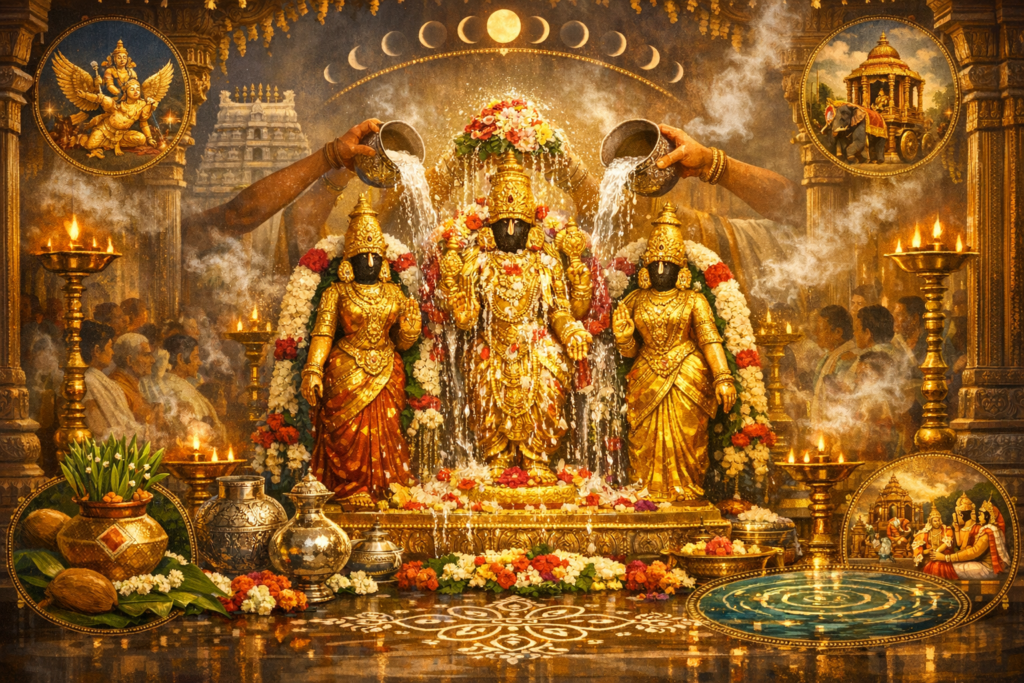
Ritually, temple priests select garments to shape the day’s devotional mood. Blue for Balarama often accompanies offerings that emphasize steadiness—cooling foods, fragrant waters, and gentle flower garlands—so that sight (darśana), scent, and color coordinate to cultivate a restful, sattvic interiority in the devotee.
Regional practice affirms the pattern while allowing variation. In the Jagannath tradition of Puri, Balabhadra’s fair countenance and martial attributes are integral, and blue textiles frequently appear in festive adornment; in South Indian Vaishnava temples, blue vestments for Balarama are common within broader cycles of alankāra. The consistency of the chromatic code across regions strengthens its theological reading while illustrating Hinduism’s characteristic tolerance for local texture.
For many devotees, the first glimpse of Balarama’s blue garment during a festival is palpably calming. The hue is experienced as spacious and assuring, a quiet invitation to align strength with restraint and to transmute emotion into ethical action. The affective power of color fulfills theology in practice.
Modern psychology provides a complementary, though not prescriptive, lens: cool blues are often associated with reduced physiological arousal and increased attentional stability. While not determinative of religious meaning, such findings help explain why the devotional gaze can settle so readily upon Balarama’s nīla-vastra in japa and dhyāna.
Historically, early stone sculptures of Balarama in Mathura and elsewhere could not directly communicate color; textual descriptions carried the semantic load. As painting, textile, and ritual aesthetics developed, the blue garment became a canonical shorthand taught through temple pedagogy, kīrtan narratives, and illustrated manuscripts, aligning popular perception with scriptural memory.
Blue also communicates Balarama’s connection to Ananta Śeṣa and the cosmic waters. The serpentine coil signifies unending support; the marine hue signifies unfathomable depth. The cloth draped on a fair form evokes horizons where sea meets sky—an emblem of stability without limit.
The theme of strength (bala) clarifies why serenity is indispensable. Balarama’s well-known mastery of the mace and his role as instructor in warfare contrast with his refusal to join either side at Kurukṣetra, embodying a strength guided by principle rather than partisanship. The blue cloth, cooling and measured, intimates that true power rests in self-restraint and ethical clarity.
Seva completes the triad. In Vaishnava memory, Balarama serves as the ever-supporting elder—reliable, unpretentious, and tireless. Blue, long associated with dignified duty rather than ostentation, marks that service-ethos. The attire says: strength must become service if it is to be sacred.
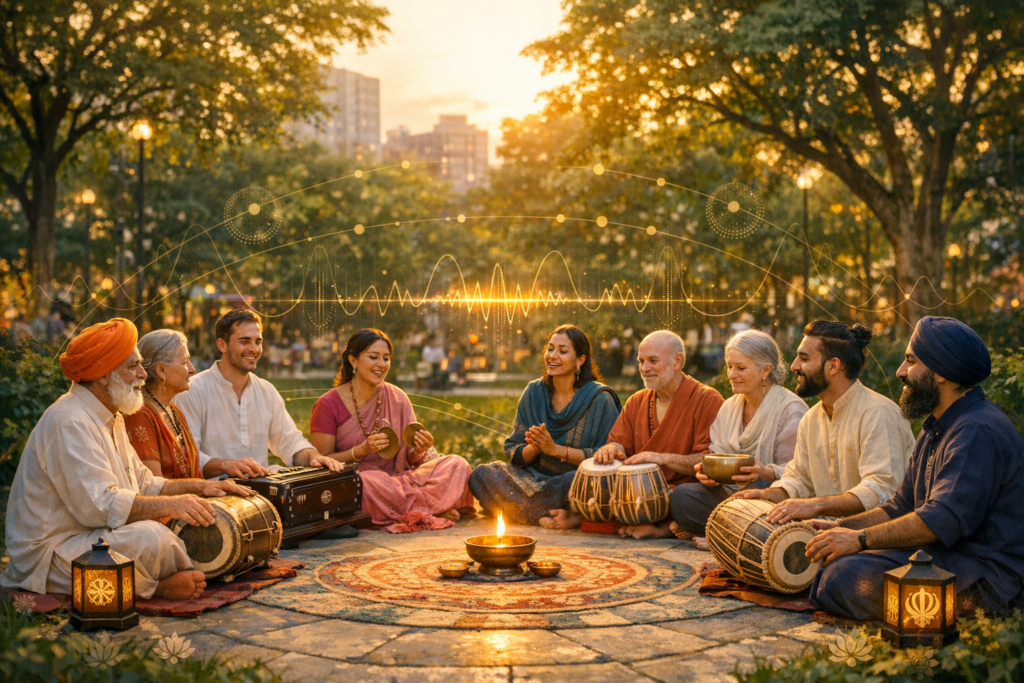
Across dharmic traditions, this chromatic ethic finds resonances that promote unity rather than uniformity. In Buddhist iconography, deep blues associated with Akṣobhya and Bhaiṣajyaguru (Medicine Buddha) signal imperturbability and healing presence—virtues of serenity allied to compassionate action. In Sikh practice, the distinct blue of the Nihang tradition has long connoted disciplined valor in service of the community, harmonizing spiritual steadfastness with protective strength. Jain philosophical emphasis on inner restraint and non-violence (ahiṃsā) likewise valorizes serenity as the ground of ethical power. Shared virtues—calm, courage, and service—form a common civilizational thread.
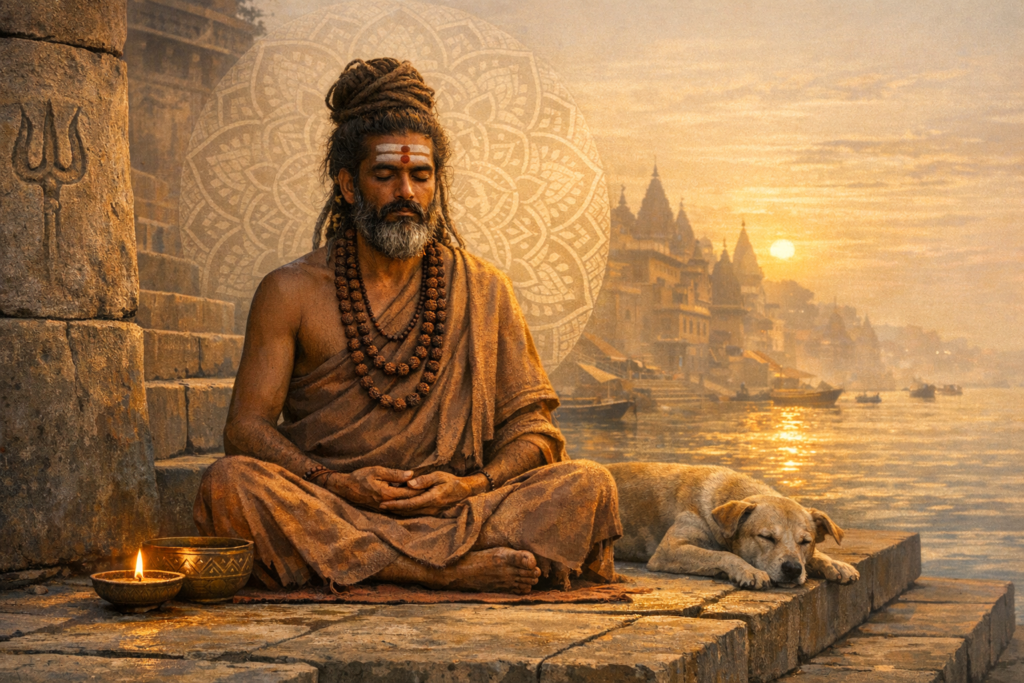
As a practical contemplation, devotees often meditate on Balarama’s blue cloth to internalize steadiness before engaging in outward service. Breath aligned with mantra, and gaze softened upon the image, help convert agitation into resolve. The symbolism thereby becomes a method: cool the mind, clarify intention, and commit strength to the welfare of all.
Interpretive humility remains essential. Not every painting or mūrti follows the same palette, and no single color bears a monopoly on meaning. Hindu iconography thrives on plurality; where one temple teaches through blue, another may emphasize a different attribute to suit its community’s needs. The durability of Balarama’s blue lies not in dogma but in pedagogical usefulness.
Taken together, the fair form and blue attire of Balarama present a compact theology in color: strength without harshness, serenity without passivity, and service without display. In a world that often confuses power with noise, this iconography proposes a more enduring equation—be deep, be steady, and let strength flow as seva. Read this way, Balarama’s nīla-vastra is both symbol and sādhanā, a timeless guide for cultivating inner balance and outer responsibility across the shared landscape of the dharmic traditions.
Inspired by this post on Hindu Blog.








Leave a Reply
You must be logged in to post a comment.