

Attentive observation reveals a sober truth: even amid beauty and achievement, ordinary life is threaded with conflict, loss, and uncertainty. Friction arises predictably within families—between husband and wife, parent and child, and among friends—signaling that suffering is not an exception but a systemic feature of embodied existence. Dharmic traditions interpret this pattern through the lens of samsara, the cycle of birth, death, and rebirth sustained by karma and ignorance, and they converge on the rationale for seeking liberation from rebirth.
To ask why rebirth should be avoided is to ask what perpetuates suffering. Hindu, Buddhist, Jain, and Sikh teachings offer a shared diagnostic: unexamined impulses, craving, and misperception give rise to actions that bind consciousness to recurring conditions. The question, therefore, is not whether life can ever be pleasant, but whether cyclic existence can deliver lasting freedom from dissatisfaction.
In Hindu thought, punarjanma (rebirth) follows from karma-phala, the fruition of volitional action shaped by avidya. The Upanishads describe an underlying identity of Atman and Brahman obscured by superimposition (adhyāsa). The Bhagavad Gita characterizes worldly embodiment as duḥkhālayam aśāśvatam—an abode of sorrow and impermanence—and directs effort toward moksha, where knowledge (jnana), selfless action (karma yoga), and devotion (bhakti) dismantle bondage.
Patanjali’s Yoga Sutra presents a technical chain: latent impressions (samskaras) arise from the kleshas—avidya, asmita, raga, dvesha, and abhinivesha—which condition karma. Karma ripens (vipaka) as future experience, including birth (janma), unless the kleshas are attenuated by abhyasa (steady practice) and vairagya (dispassion). Thus, yogic discipline operates as a causal intervention on the very mechanics of rebirth.
Vedantic schools agree on the primacy of removing ignorance, though they differ on metaphysics and means. Advaita emphasizes discerning the unreality of separative identity; Vishishtadvaita and Dvaita emphasize surrender (prapatti) and the grace of Vishnu; Shaiva traditions articulate liberation as recognition (pratyabhijna) or purification of mala (bondage). Across these, rebirth persists only so long as misapprehension and karmic propensity remain active.
Buddhist analysis begins with dukkha, constitutive unsatisfactoriness. The Four Noble Truths diagnose craving (tanha) conditioned by ignorance (avijja) as the driver of dukkha and prescribe the Noble Eightfold Path as therapy. Dependent Origination (paṭicca-samuppāda) details a precise cycle—avijja → sankhara → viññana → namarupa → salayatana → phassa → vedana → tanha → upadana → bhava → jati → jara-marana—mapping how moment-to-moment clinging culminates in ongoing birth and death. Ending tanha ends the cycle.
Jain philosophy distinguishes jiva (sentient self) from ajiva (non-sentient categories) and treats karma as subtle material particles binding to the soul through passions (kashay). Two complementary processes define liberation: samvara (stopping karmic influx) and nirjara (shedding bound karma). Ahimsa, satya, asteya, brahmacharya, and aparigraha operate as precise controls on karmic inflow, while austerities and contemplation—including the classic 12 bhavana—erode residual bonds, culminating in kevala jnana and moksha.
Sikh teachings affirm the churn of janam-maran (birth-death) under the sway of haumai (egoic self-importance) and ignorance of Hukam (the Divine Order). Freedom (mukti) arises through Naam Simran (remembrance of the Name), Seva (selfless service), honest livelihood (kirat karo), and sharing (vand chhako), with grace (nadar) dissolving ego’s knot. This is a householder’s path that integrates ethics and contemplative remembrance to end the cycle.
Across these frameworks, a common denominator emerges: ignorance (avidya/avijja/ajnana/haumai) generates craving and aversion, which shape actions that compel further becoming. Rebirth is not recommended against out of pessimism, but because cyclic existence structurally cannot provide abiding freedom; any pleasure secured is fragile, and any attainment is vulnerable to loss.
Ordinary experience corroborates the doctrines. The joy of attachment often coexists with anxiety, rivalry, and grief; health gives way to illness; gains trigger fear of decline. Even favorable rebirths are finite, while unfavorable destinies—animal, preta, or hell realms in many cosmologies—entail intense constraint. Avoiding rebirth aligns, therefore, with seeking a state where clarity and compassion are no longer jeopardized by impermanence.
Ethically, karmic causality elevates responsibility. If future conditions are patterned by present volition, then Ahimsa and compassion are not idealisms but strategies for exiting samsara. Right speech, right livelihood, restraint, and generosity diminish karmic influx across all four traditions and directly improve communal well-being.
Crucially, transcendence does not denigrate life. Liberation is framed as the maturation of wisdom and love, not retreat into indifference. The Bodhisattva ethic in Mahayana, lokasangraha in the Gita, Seva in Sikhism, and the Jain ideal of universal friendliness (maitri-bhavana) affirm that progress toward the end of rebirth naturally expresses as service to all beings.
From a technical perspective, each tradition models rebirth as a causal loop that can be interrupted. In Yoga and Vedanta: avidya → kleshas → karma → vasanas → janma → dukha; break the loop through viveka, dhyana, bhakti, and karma yoga. In Buddhism: avijja → tanha → upadana → bhava → jati; break the loop through satipatthana, samadhi, and panna. In Jainism: kashaya → asrava → bandha → paryaya; break the loop through samvara and nirjara. In Sikhism: haumai obscures Hukam; Naam-centered life purifies the mind and ends janam-maran.
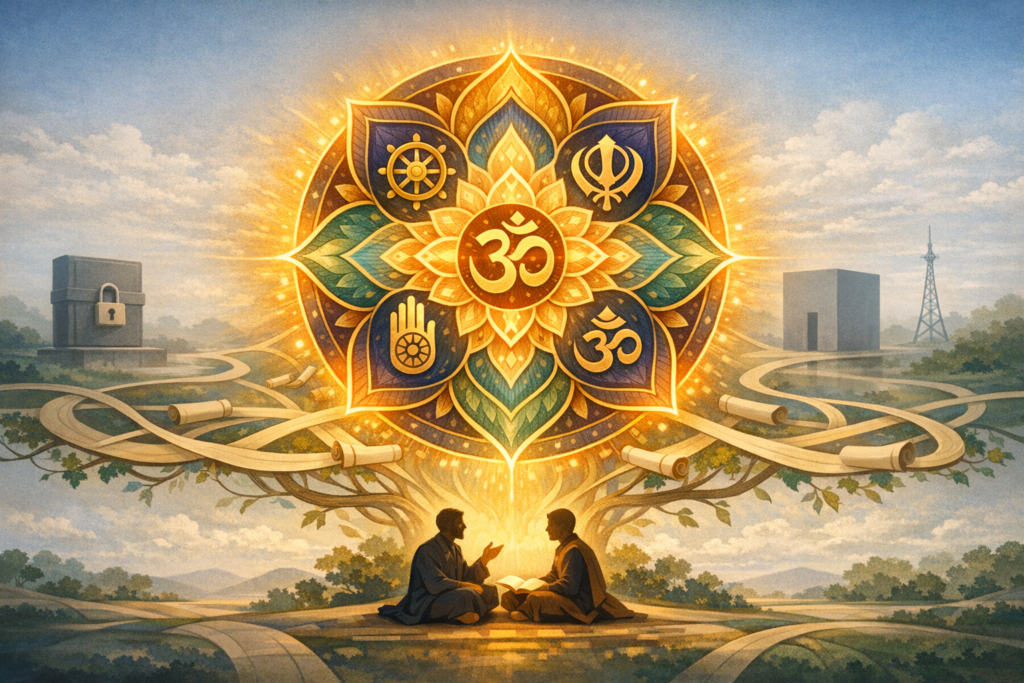
These models differ in metaphysical commitments—atman versus anatta, karma as moral imprint versus subtle matter—yet they converge practically: refine conduct, steady attention, cultivate insight, and dedicate life to the welfare of others. Such convergence illustrates Anekantavada, the Jain principle that complex truths admit multiple valid perspectives.
For householders, the problem is not responsibility but compulsion. The traditions therefore teach how to fulfill duties without new bondage: Gita’s karma yoga sanctifies work without clinging to outcomes; Sikh rehat maryada integrates devotion with ethical labor; Buddhist right livelihood curbs harm; Jain small vows (anuvratas) tailor non-violence and restraint to family life.
Practical application begins with non-harming. Ahimsa operates as a universal gate: abstain from violence in thought, word, and deed; moderate consumption; and prefer livelihoods that do not injure beings. Reducing injury attenuates agitation and karmic influx, easing further practice.
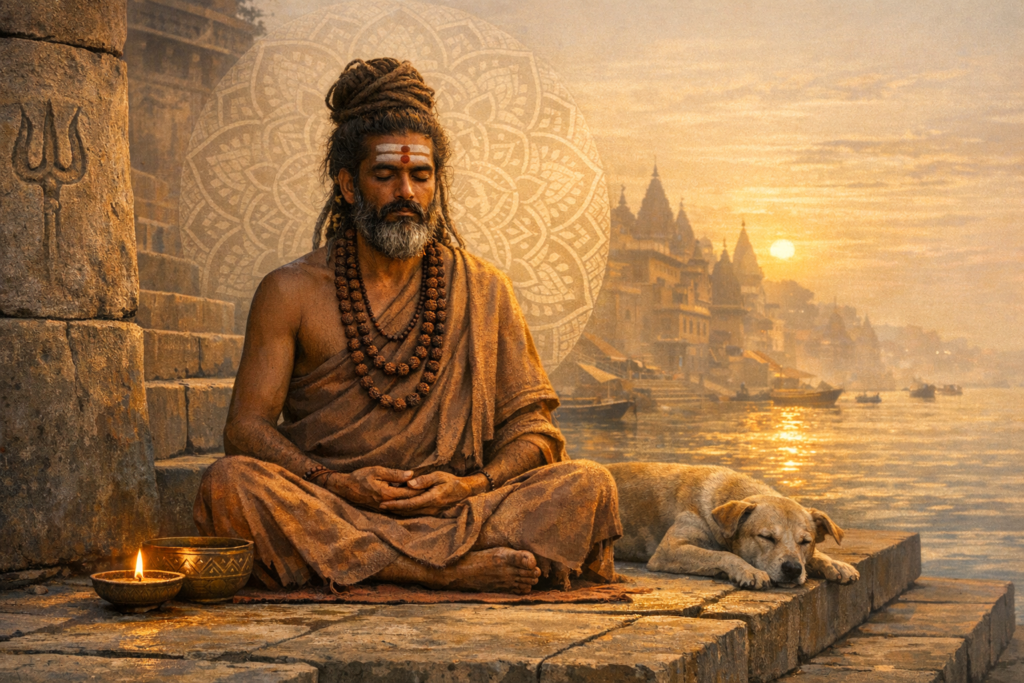
Mind training stabilizes attention and reveals reactivity at its inception. Breath awareness (anapanasati), satipatthana, pratyahara-dharana-dhyana, and Naam Simran calm the nervous system and disclose craving and aversion before they consolidate into action. This is a direct intervention on the volitional seeds of rebirth.
Wisdom requires disciplined study (svadhyaya): the Upanishads and Bhagavad Gita illuminate the nature of self and duty; the Dhamma articulates impermanence and non-self; Jain Agamas map karmic mechanics; the Guru Granth Sahib centers remembrance and humility. Study is not an end but a catalyst for discernment in lived moments.
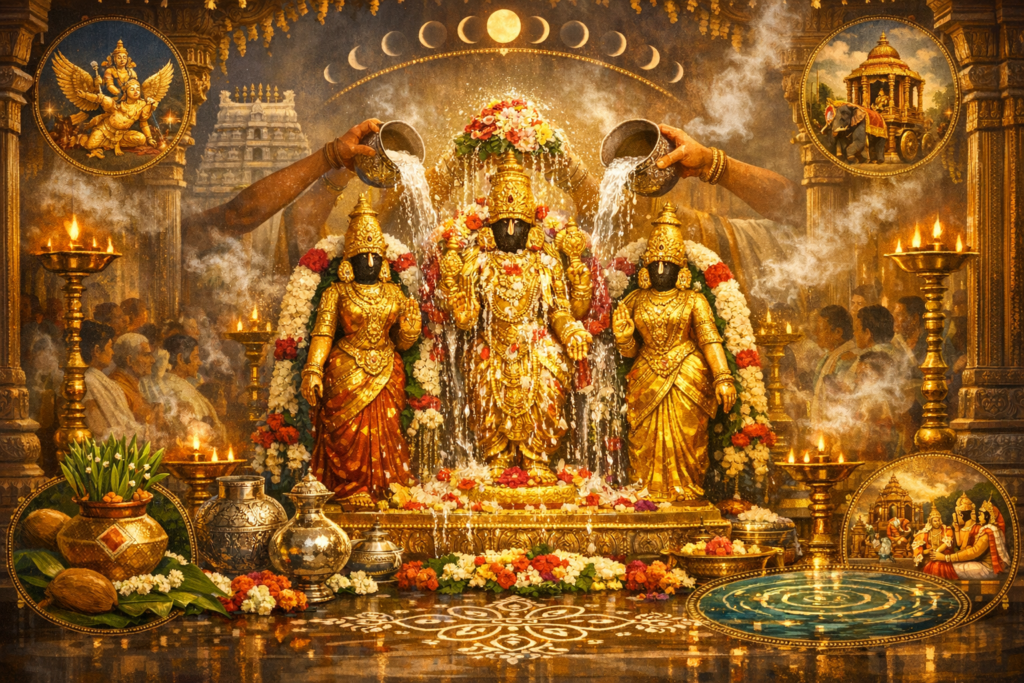
Devotional and affective practices soften the heart. Bhakti, kirtan, metta (loving-kindness), and Simran reorient emotional energy away from egocentric fixation, replacing compulsive grasping with gratitude and surrender. Emotion thus shifts from fueling samsara to supporting liberation.
Purificatory disciplines remove residue. Jain pratikraman, Sikh Ardas, Hindu prāyaścitta, and Buddhist confession-and-restraint protocols enact accountability, making the ethical path concrete and iterative. The 12 bhavana—such as anitya-bhavana (contemplation on impermanence) and asuci-bhavana (impurity of the body)—technically recalibrate perception to reduce attachment.
Service (Seva, dana, karuna) expresses and deepens insight. Acting for lokasangraha transforms the sense of self, weakens haumai and asmita, and aligns the practitioner with Hukam or Dharma. Paradoxically, selfless engagement accelerates release from self-centered cycles.
Right livelihood operationalizes compassion. Aligning work with non-harm, probity, and social uplift prevents daily activity from sowing seeds of future suffering. This is not merely ethical signaling; it is structural prevention of karmic entanglement.
Embodied practice anchors change. Asana and pranayama regulate energy and attention, supporting steadiness for insight. Somatic poise lowers reactivity, diminishing the probability that contact (phassa) escalates into grasping (upadana).
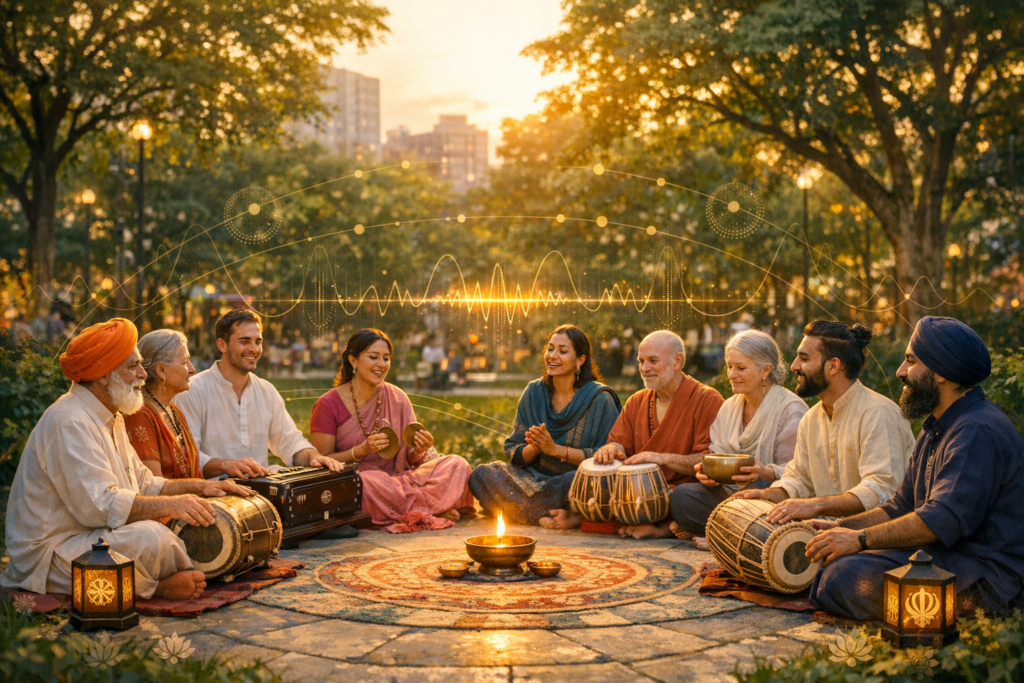
Community sustains trajectory. Satsanga, sangha, and sangat normalize virtue, model accountability, and provide corrective feedback, preventing subtle rationalizations that prolong samsara.
Progress can be gauged by reductions in kleshas: less envy and resentment, more equanimity under praise and blame, and spontaneous kindness. These markers suggest weakening of the causes that otherwise compel return.
The traditions also accommodate different endpoints across temperaments. Some emphasize jivanmukti—freedom while living—others the Bodhisattva vow to remain available to beings, and still others immediate release upon death. These variations are expressions of compassion and are not in conflict; they keep unity of purpose while honoring diversity of calling.
Ultimately, avoiding rebirth is a rational response to how suffering perpetuates itself. It is not world-negation but world-liberation—a commitment to live so lucidly and kindly that the machinery of compulsion falls silent. In such clarity, the shared dharmic aspiration becomes visible: wisdom, non-violence, and service culminating in fearless freedom.
Inspired by this post on Hindu Pad.





Leave a Reply
You must be logged in to post a comment.