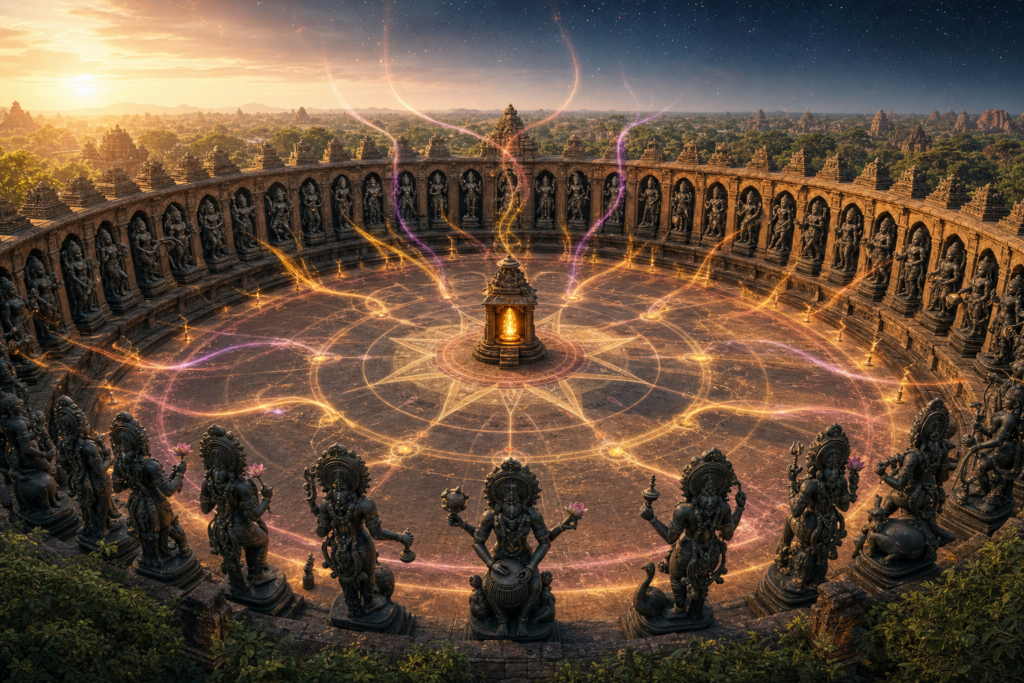
When the Mahabharata turns from counsel to combat at Kurukshetra, one of its most human and enduring scenes unfolds not in the clangor of weapons but in a quiet, deliberate act: Yudhishthira laying down arms and seeking blessings from elders before the first conch is sounded. This measured gesture, preserved in the epic’s Bhishma Parva and remembered alongside the Bhagavad Gita, frames the Kurukshetra War as a Dharma-Yuddha governed by ethical restraints, social obligations, and the guru–shishya ethos. It demonstrates how rajadharma and kshatra-dharma can be harmonized through humility without diluting resolve.
As the two armies assembledDuryodhana’s forces anchored by the venerable Bhishma, and the Pandava host commanded by DhrishtadyumnaYudhishthira descended from his chariot and walked unarmed across the field. He bowed to Bhishma, Drona, Kripa, Somadatta, Shalya, and other elders, seeking their anugraha (blessing) and anujñā (permission) to wage a righteous war. The response was unequivocal: bound by duty to their posts, the elders nevertheless blessed Yudhishthira’s cause as just, promising to fight fairly while acknowledging that Dharma ultimately stood with him.
The symbolism is profound. By practicing pranipāta (reverent bowing) and abhivādana (salutation to elders) at the very threshold of conflict, Yudhishthira aligned intention with Dharma before exercising force. The gesture asserted that ends and means must converge; that even in the extremity of war, legitimate authority is inseparable from ethical conduct. In doing so, he transformed a battlefield into a moral arena where victory required not only prowess but also rectitude.
This moment illuminates the Mahabharata’s layered ethics. Rajadharma obliged Yudhishthira to protect citizens and uphold justice; kshatra-dharma demanded disciplined courage in arms; the guru–shishya tradition required gratitude and deference to one’s teachers. Yudhishthira’s walk of humility held these vectors together, acknowledging personal bonds without compromising public duty. It served as a liminal rite, marking the transition from negotiation (Udyoga Parva) to war (Bhishma Parva) with a visible pledge to the code of Dharma-Yuddha.
The episode also underscores the Mahabharata’s insistence on rules of engagement: fighting by day, honoring duels, sparing the unarmed and the fleeing, and refraining from striking from behind or at a charioteer who is not engaged. Yudhishthira’s blessing-seeking is best read as the ethical preface to these rulesan intentional act aligning the Pandava cause with the responsibilities of Kshatra, rather than the license of brute force. In effect, humility here is not weakness but the seal of legitimacy.
Textually, the narrative situates this rite at the cusp of battle as a conscious performance of moral order. The elders’ blessingsgranted even as they remain bound by loyalty to Hastinapuradisplay the epic’s nuanced treatment of conflicting duties (dharma-sankata): fidelity to sovereign command coexists with a higher recognition of righteousness. Such complexity is a hallmark of the Mahabharata’s ethical realism, which refuses to simplify human obligations into single-line dictates.
Psychologically, the act functions as a stabilizing ritual. Publicly honoring elders integrates conscience with action, stills inner turbulence, and replaces private doubt with communal sanction. The performative humility of the Pandava king neutralizes anxiety and channels resolve; it reassures allies, unsettles opponents accustomed to pure expediency, and fortifies the Pandava claim to moral high ground. In contemporary language, it aligns intent, narrative, and normscritical ingredients for ethical leadership under stress.
The resonance of this gesture extends across Dharmic traditions. In Hindu practice, abhivādana to elders and guru-vandana are foundational. In Buddhism, bowing (vandana) before the Triple Gem and the Pāvarana ceremony at the end of Vassa embody accountability and humility. Jain communities observe Kshamavani, seeking and granting forgiveness to align conduct with non-violence and truth. In Sikh tradition, matha tekna before the Guru Granth Sahib and elders expresses reverence and surrender to higher guidance, while the saint-soldier ideal (sant–sipahi) harmonizes devotion with duty. Yudhishthira’s pre-war rite therefore articulates a civilizational ethicstrength anchored in humilitythat is shared widely in the Dharmic family.
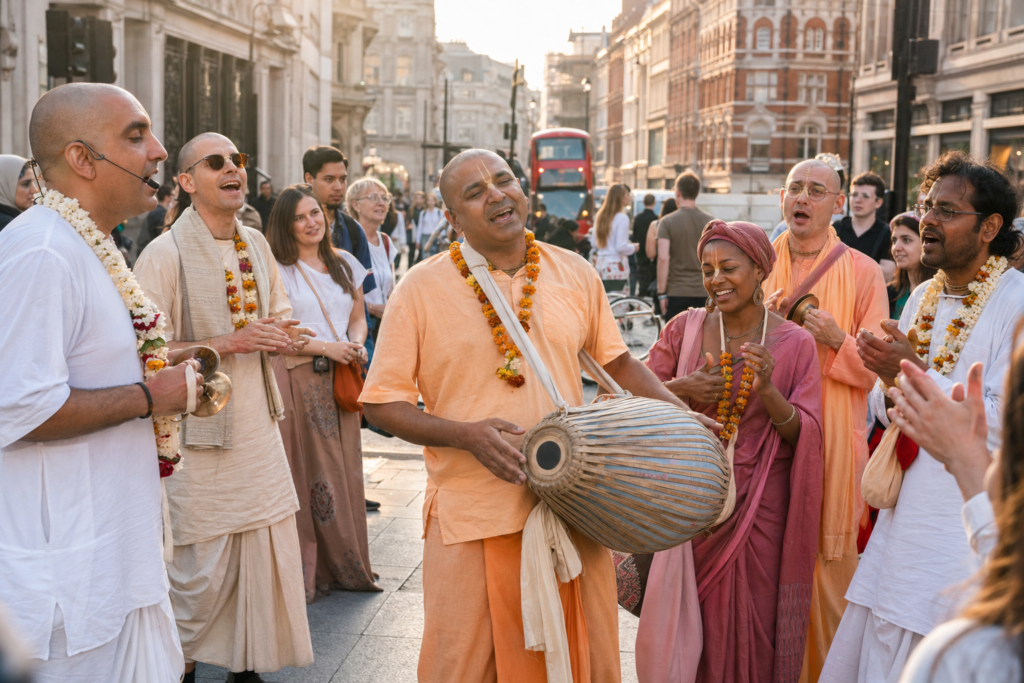
For many, this scene evokes a familiar cultural memory: touching the feet of elders before examinations, journeys, or new responsibilities. The emotional grammar is the sameseeking anugraha to transform personal capacity into rightful action. Such practices are not mere custom; they are ethical technologies that bind individuals to community, temper ambition with gratitude, and transform anxiety into purpose.
Placed alongside the Bhagavad Gita’s philosophical counsel to Arjuna, Yudhishthira’s act supplies a complementary lesson. If the Gita clarifies right understanding (jnana) and right intention (sankalpa), the pre-battle salutation operationalizes right conduct (achara). Together they show that Dharma is realized not only in what is thought but in how one steps forwardpublicly, visibly, and with reverence.
The strategic dimension is equally noteworthy. By seeking blessings from those arrayed against him, Yudhishthira reframed the contest: the Pandavas were not waging a personal vendetta but pursuing justice under rules acknowledged by both sides. This framing constrained excess, raised the reputational cost of transgression, and clarified that victory sought legitimacy as much as successan insight as relevant to statecraft and organizational leadership today as it was to the Pandavas.
The Mahabharata’s broader teachings in Shanti Parva and Vidura-nīti reinforce this ethic of power under restraint. Authority is not self-justifying; it is stewarded for the good of all. Humility, in this view, is not capitulation but calibration: it fine-tunes courage to the frequency of conscience. Yudhishthira’s walk before war exemplifies this calibrationan alignment of Kshatra with Dharma that prevents valor from devolving into violence.
Read as a leadership protocol, the episode suggests practical steps: honor the sources of one’s knowledge, seek consent where consent matters, declare the rules of engagement in advance, and hold oneself publicly accountable to those rules. These measures build trust, reduce the moral fog that accompanies conflict, and enable decisive action without ethical fracture. The lesson is timeless: righteousness is strongest when it bows firstto truth, to teachers, and to the shared codes that dignify even contestation.
In sum, Yudhishthira’s blessing-seeking at Kurukshetra is more than etiquette; it is a template for ethical action under duress. It integrates Dharma and Kshatra, personal reverence and public responsibility, humility and heroism. Across Hinduism, Buddhism, Jainism, and Sikhism, the same grammar of respect, accountability, and compassionate strength binds communities together. The Mahabharata preserves this moment so that future generations can remember: when Dharma bows first, it does not yieldit leads.
Inspired by this post on Hindu Blog.