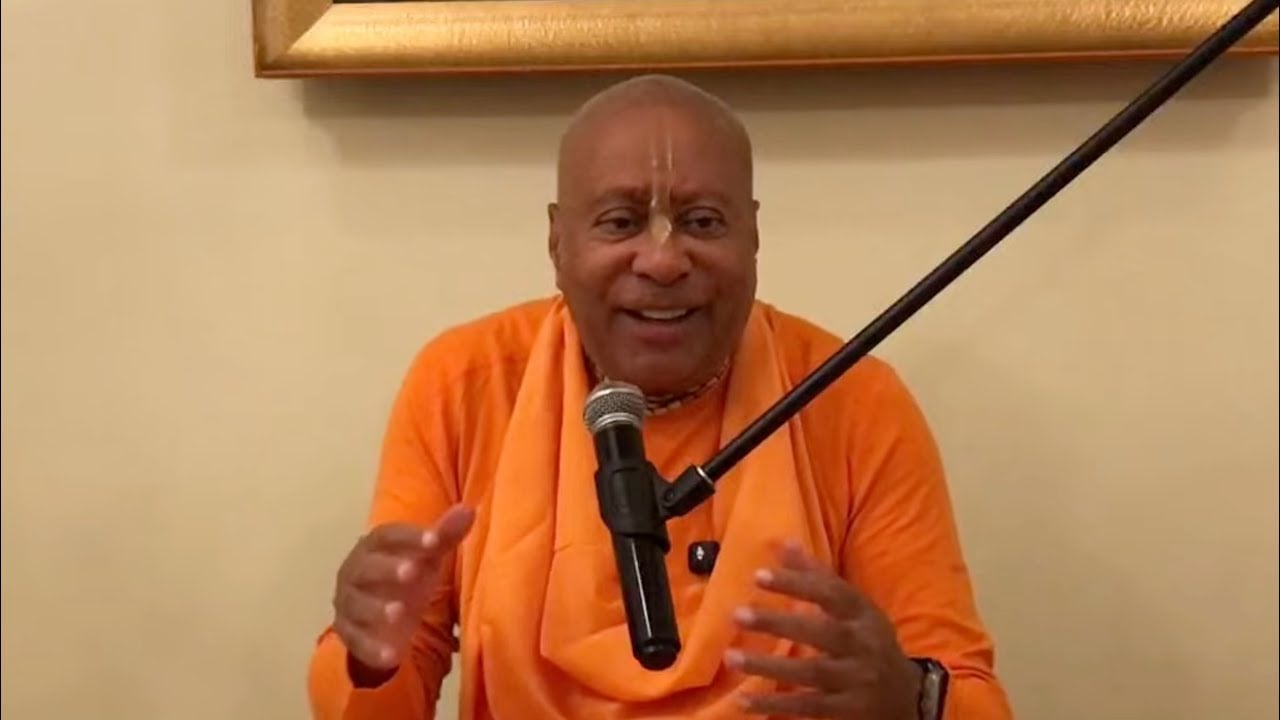
In a morning class on 11 January 2026, HH Devamrita Swami guided listeners through Srimad-Bhagavatam (SB 10.1.58), a verse that distills core principles of dharma and bhakti in the form of four forceful questions. The session invited a measured reflection on truthfulness, inner freedom, ethical restraint, and unwavering devotion to Lord Kṛṣṇa, situating these themes within the living stream of Hindu scriptures and allied dharmic values.
SB 10.1.58 frames its teaching through rhetorical inquiry: What truly pains those who steadfastly adhere to truth? How could pure devoteeswho recognize the Supreme as the ultimate substancelack independence? What deed remains off-limits to those of degraded character? And what would sincere devotees ever abandon when it concerns Lord Kṛṣṇa? Each question asserts an ethical and spiritual claim: truth breeds fearlessness, spiritual realization confers genuine freedom, moral collapse erodes limits, and devotion anchors life in unshakeable purpose.
Considered academically, the verse functions as a concise ethical map. Its interrogative form both challenges and clarifies: where truth (satya) is practiced, anxiety loses ground; where the Absolute is understood as foundational, autonomy emerges as the fruit of alignment rather than assertion; where character is compromised, prohibitions dissolve; and where love of the Divine is mature, sacrifice becomes natural and joyous. This architecture of meaning resonates with Vedic wisdom and the bhakti tradition preserved in Hindu scriptures.
The first inquiry elevates truthfulness as the stabilizing virtue of dharma. In daily life, those committed to truth often experience clarity that dissolves avoidable sufferingfewer duplicities, fewer fears. This point harmonizes with broader dharmic perspectives: in Buddhism, right speech and mindfulness cut through confusion; in Jainism, satya and ahimsa refine conscience; in Sikhism, sat (truth) and nimrata (humility) fortify inner steadiness. The shared insight is that truth-telling nurtures fearlessness and compassion across traditions.
The second inquiry links spiritual knowledge to real independence. Pure devotees recognize the Supreme as the underlying reality; their freedom arises from reliance on that reality rather than on fluctuating externals. This is not escapism but ethical agency: the more consciousness aligns with the Absolute, the less it is compelled by craving or fear. Parallels appear in Buddhist inner freedom (vimutti), Jain aparigraha (non-possessiveness), and Sikh chardi kala (resilient optimism)each pointing to a freedom grounded in higher purpose.
The third inquiry exposes the dangerous elasticity of degraded character. When conscience is dulled, even basic boundaries can be trespassed. Dharmic traditions converge in warning against this slide: guard the mind, temper speech, and regulate action. Hindu thought frames this as disciplined alignment with dharma; Buddhist sila (ethical conduct), Jain vows, and Sikh rehat (discipline) all cultivate guardrails that protect personal integrity and social harmony.
The final inquiry celebrates steadfast devotion. For those whose hearts are anchored in Lord Kṛṣṇa, relinquishment is offered willinglytime, comfort, and ego yield to seva and remembrance. Devotional service (bhakti) thus becomes a path of luminous resiliency, not rigid austerity. The emotional core here is universal: love dignifies sacrifice and converts restraint into freedom.
Listeners frequently find these teachings relatable in ordinary routines: telling a difficult truth at work, choosing restraint over impulse, or re-centering the mind in japa and contemplation. Practical steps emerge naturallycultivate daily honesty, simplify habits to loosen grip on cravings, serve others with humility, and study Hindu scriptures to nourish discernment. In this way, SB 10.1.58 becomes a living guide to applied ethics and devotional focus.
Importantly, the verse’s ethical vision supports unity among Hinduism, Buddhism, Jainism, and Sikhism. Truthfulness, inner freedom, disciplined conduct, and compassionate devotion are shared civilizational assets. Emphasizing these convergences strengthens interfaith respect, fosters cultural harmony, and advances a dharmic public ethos rooted in mutual dignity and responsibility.
In sum, the morning class on SB 10.1.58 illuminates a balanced path: speak truth, cultivate freedom through spiritual alignment, honor ethical boundaries, and persevere in devotion to Lord Kṛṣṇa. Taken together, these commitments nurture inner clarity and social concord, reinforcing a unified dharmic horizon for contemporary seekers.
Inspired by this post on Dandavats.