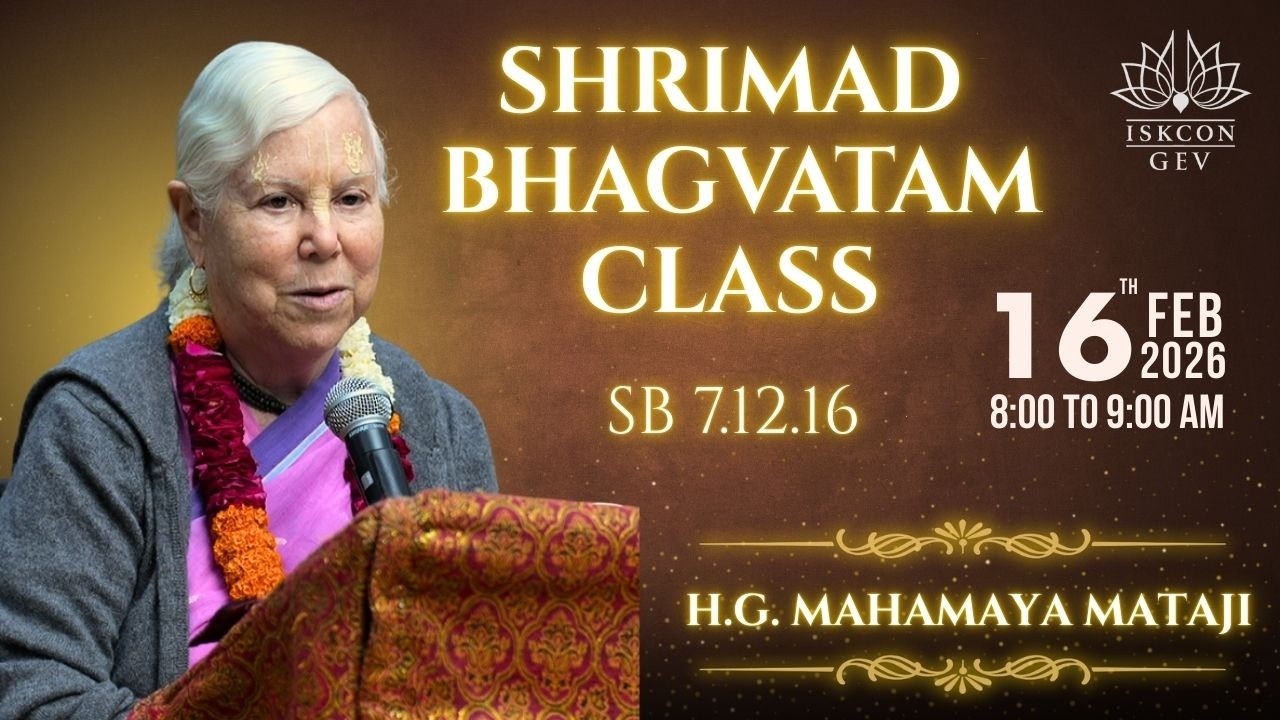
On 15 February 2026, the Morning Srimad Bhagavatam Class (7.12.16) at ISKCON Govardhan Ecovillage (ISKCON GEV) was delivered by H.G. Mahamaya Mataji, a sincere disciple of His Divine Grace A. C. Bhaktivedanta Swami Prabhupada. The session illuminated core teachings of the Srimad Bhagavatam with a focus on devotional service (bhakti), regulated spiritual discipline (sadhana), and Krishna consciousness conveyed through the living guru–shishya parampara. Emphasis was placed on how scriptural wisdom becomes transformative when received through authentic disciplic succession and enacted through daily practice.
Situated within Canto Seven’s broader exploration of dharma, devotion, and the cultivation of character, the verse context engages themes of regulated conduct, humility, and service-centered life. Canto Seven frames bhakti not as sentiment but as a science of spiritual reorientation that harmonizes inner aspiration with outer responsibility. In this frame, 7.12.16 is read as practical guidance that links Vedic ethics with methodical devotion, enabling steady progress amid the complexities of contemporary life.
The class underscored that instruction received within parampara safeguards fidelity to the original intent of the Vedic scriptures while remaining experientially relevant. By receiving knowledge through realized teachers, aspirants anchor their practice in śravaṇa (hearing) and kīrtana (chanting), and orient their daily routines toward purposeful remembrance of Krishna. This process refines intention, stabilizes attention, and gradually purifies the heart.
A structured model of sadhana was mapped in terms of progressive purification: from initial faith (śraddhā) to association with devotees (sādhu-saṅga), disciplined practice (bhajana-kriyā), the clearing of impediments (anartha-nivṛtti), steadiness (niṣṭhā), taste (ruci), attachment (āsakti), spiritual emotion (bhāva), and mature love (prema). This trajectorywell attested in the Gaudiya Vaishnava traditionwas presented as both scripturally grounded and psychologically intelligible, integrating will, emotion, habit, and cognition.
Drawing on the Bhagavatam’s own vocabulary of practice, the nine processes of bhaktihearing, chanting, remembering, serving the Lord’s feet, worship, prayer, servitude, friendship, and full self-offeringwere described as interoperable disciplines that can be tailored to one’s station and temperament. Hearing was highlighted as the primary gateway, because authentic śravaṇa naturally fuels meaningful kīrtana and sustained remembrance (smaraṇa), creating a virtuous cycle of insight and application.
In this reading, Bhagavata dharma is organized around three interlinked categories: sambandha (understanding one’s relationship with Krishna), abhidheya (the process of devotional engagement), and prayojana (the supreme goal of love of God). The class clarified that clarity in sambandha stabilizes practice in abhidheya, while a lived awareness of prayojana infuses effort with hope and direction, preventing mechanical routine from displacing heartfelt devotion.
The ethical substrate of bhakti practicetruthfulness, compassion, self-restraint, and gratitudewas situated alongside the yamas and niyamas of yoga philosophy. This shared moral grammar aligns closely with the wider dharmic family: Buddhism’s sīla (ethical discipline) and mettā (loving-kindness), Jainism’s ahiṃsā and aparigraha, and Sikhism’s simran and seva. The session presented these convergences as complementary pathways that cultivate inner clarity and social harmony, reinforcing the blog’s commitment to unity among Hinduism, Buddhism, Jainism, and Sikhism.
Varṇāśrama duties were described not as rigid social compartments but as supportive frameworks that, when consciously aligned with devotion, help practitioners transform daily work into conscious offering. The Bhagavatam’s vision honors spiritual equalityjīva as inherently sacredwhile acknowledging diverse aptitudes and responsibilities. This balance allows vocation, household life, and civic engagement to become laboratories for humility, service, and remembrance.
Practically, the class emphasized steady morning practice, attentive mantra meditation, reflective study of Vedic scriptures, and mindful participation in satsaṅga. Participants often report tangible calm and moral clarity emerging from consistent japa and kīrtana. Simple but deliberate routinesregular hearing, short intervals of contemplative silence, and scheduled readingcounteract digital overload, strengthen attention, and convert good intentions into sustainable habit.
Community was highlighted as a pillar of perseverance. In saṅga, encouragement, accountability, and shared celebration of milestones make the path joyful and resilient. Parallels with the Buddhist saṅgha and Sikh sangat were noted to underline a cross-traditional insight: collective practice catalyzes virtues that solitary effort struggles to sustain, nurturing empathy, patience, and a spirit of service.
Hermeneutically, the class modeled how the Srimad Bhagavatam interweaves narrative, theology, and aesthetics (rasa) to move the heart as well as instruct the intellect. Engaging with authoritative commentaries, including the Bhaktivedanta purports, the exposition connected textual subtleties with lived experience, demonstrating that revelation becomes luminous when read devotionally and practiced diligently.
The presentation affirmed that Krishna consciousness is dynamic and non-sectarian in its ethical implications: it honors the dignity of all beings, encourages environmental responsibility, and fosters solidarity across communities. At ISKCON GEV, the integration of spiritual practice with ecological stewardship exemplifies how seva can extend to land, animals, and society, translating inner devotion into tangible care for the world.
Throughout, H.G. Mahamaya Mataji’s guidance remained faithful to the Gaudiya Vaishnava lineage while inviting reflective self-assessment: What routines genuinely deepen remembrance? Which habits cloud intention? How can one reframe work, family life, and civic obligations as opportunities for offering rather than distraction? These questions rendered the class both technically rigorous and pastorally sensitive.
In summary, this Srimad Bhagavatam 7.12.16 class clarified a precise architecture for devotional growthrooted in parampara, stabilized by daily sadhana, enriched by community, and oriented toward compassionate action. By highlighting resonances with allied dharmic traditions, the session advanced a vision of unity grounded in shared virtues and practical disciplines. The result is a faithful, contemporary articulation of Bhagavata wisdom that is academically sound, spiritually compelling, and eminently livable.
Inspired by this post on Dandavats.