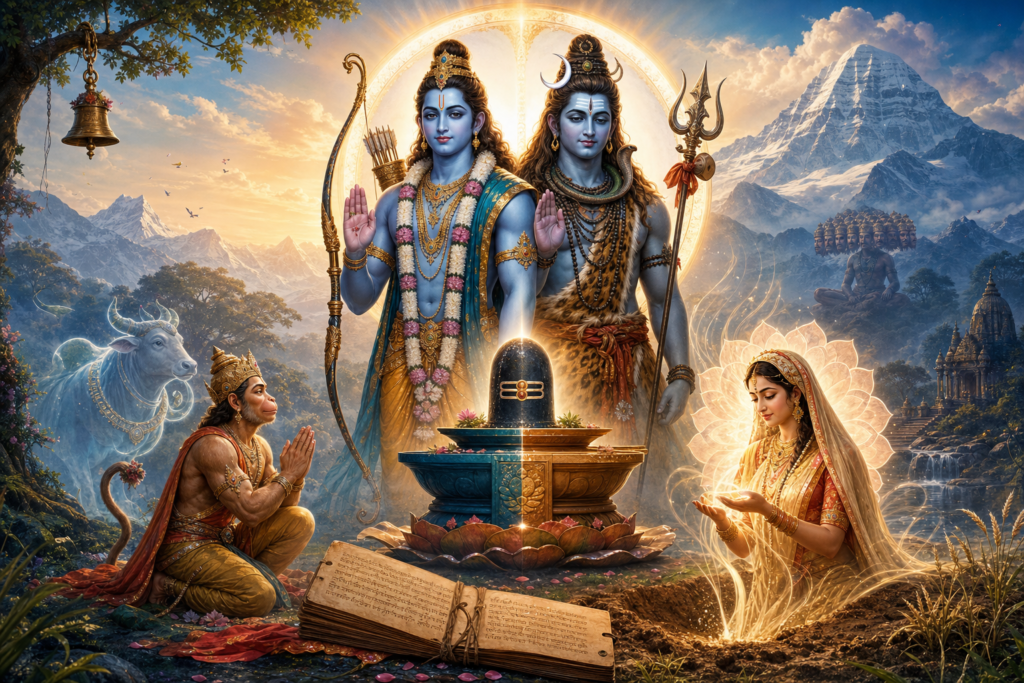
The Ramayana, revered across the Dharmic world as a foundational Hindu scripture, offers more than an epic account of Sri Rama’s life; it maps a profound, seven-fold journey that mirrors the human experience from childhood to liberation. Read as symbolism rather than only history, these stages illuminate how dharma shapes inner character, social responsibility, and spiritual evolution. This perspective resonates with shared values across Hinduism, Buddhism, Jainism, and Sikhism, affirming compassion, truthfulness, self-discipline, and service as universal pathways toward inner freedom and unity.
Stage 1: Bālya (Childhood) symbolizes innocence shaped by samskaras and guided affection. Rama’s early years in Ayodhya reflect the cultivation of trust, reverence, and steadiness. In this phase, the Ramayana underscores how familial love, ethical stories, and gentle discipline nurture foundational virtues. Childhood, seen through this lens, becomes the fertile ground for self-regulation and empathy that later strengthen dharma in action.
Stage 2: Brahmacharya (Studenthood) highlights disciplined learning under wise guidance. Rama’s tutelage with Vasiṣṭha and the journey with Viśvāmitra present a model of focused study, ethical training, and mastery over impulses. The protection of yajñas and restraint in the use of power illustrate how knowledge must be joined to responsibility. This phase aligns with Dharmic ideals of mindful conduct, echoing the importance of right effort and self-control emphasized across the broader spiritual traditions of the subcontinent.
Stage 3: Gṛhastha (Householder) emerges through Rama’s marriage to Sita, a partnership rooted in mutual dharma, dignity, and steadfastness under trial. The union honors equality in duty and respect, portraying family life as a sacred field for practicing compassion, truthfulness, and stability. Rather than mere domesticity, the gṛhastha phase in the Ramayana symbolizes balanced responsibility to loved ones, community, and inner conscience.
Stage 4: Vanavāsa (Forest Exile) reframes loss as purposeful renunciation. Rama’s acceptance of exile to honor a father’s word exemplifies detachment, ecological sensitivity, and humility in the midst of uncertainty. The forest becomes a living classroom where dialogue with sages, friendship with diverse communities, and resilience under hardship reveal that inner freedom grows when external certainties are relinquished. This stage mirrors vānaprastha virtues: simplicity, contemplation, and alignment with a larger moral order.
Stage 5: Dharma-Yuddha (Ethical Confrontation) demonstrates how strength is sanctified by restraint and justice. The conflict with Rāvaṇa is not portrayed as vengeance but as a principled duty to restore balance. Rama’s counsel to Vibhīṣaṇa, careful alliance-building, and measured use of force model how leadership integrates courage, fairness, and compassion. This ethic resonates with the Dharmic emphasis on minimizing harm, upholding truth, and protecting the vulnerable without succumbing to hatred.
Stage 6: Rāmarājya (Governance and Public Duty) represents dharma translated into institutions and daily life. The idealized reign emphasizes justice, transparency, and welfare oriented toward the dignity of every person. In this frame, governance is service, and law aligns with conscience. Parallels can be drawn with shared Dharmic values of seva, satya, and social harmony, affirming that spiritual insight must inform civic responsibility for a society to flourish.
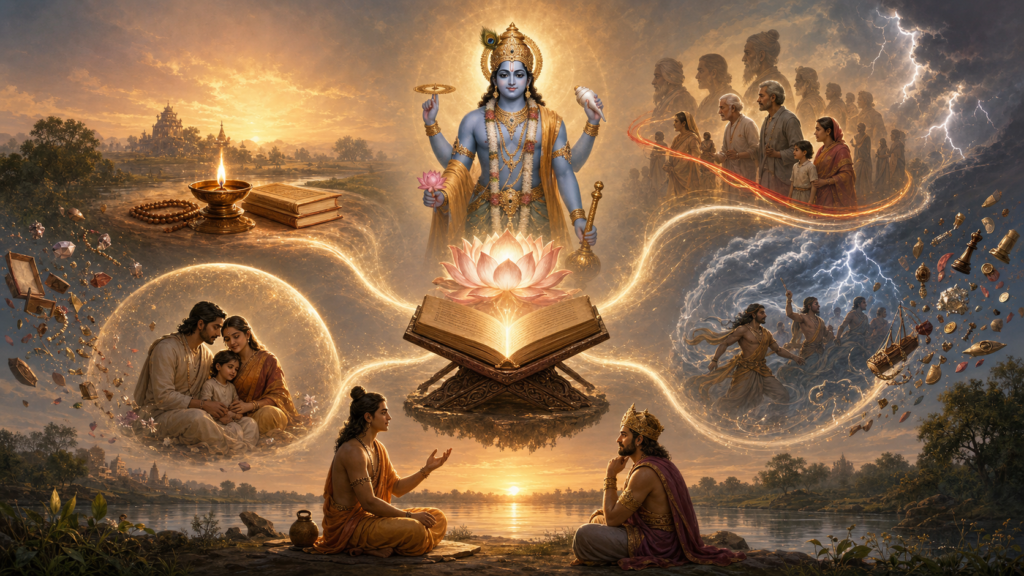
Stage 7: Tyāga and Moksha (Renunciation and Liberation) arrives with Rama’s final relinquishing of the body by the Sarayu. The scene symbolizes the transcendence of attachment, even to success and sovereignty, and the return to the Source beyond name and form. Liberation here is not an escape from life but the culmination of living in unwavering alignment with dharma across all stagesan insight cherished throughout the Dharmic traditions as the highest human aspiration.
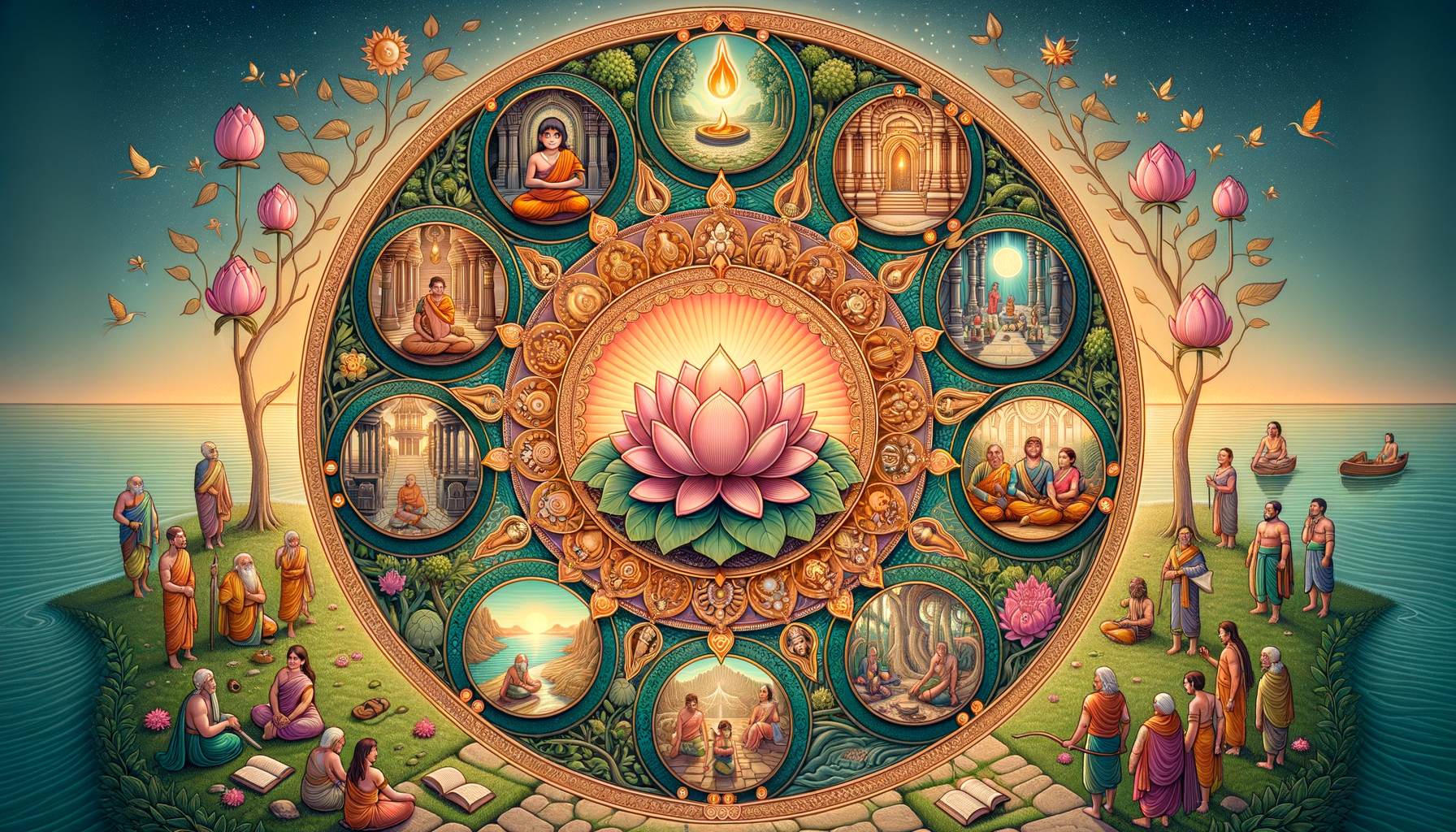
Taken together, these seven stages present a coherent map of spiritual development within the Ramayana’s rich symbolism. Childhood establishes virtue; studenthood hones discipline; household life sanctifies relationship; exile awakens detachment; ethical confrontation purifies intention; governance extends compassion to society; and renunciation seals the journey toward moksha. This progression encourages readers to view their own lives as sacred pathways where every role and responsibility can become a practice of inner refinement.
In practical terms, the Ramayana’s symbolism invites reflection at each step: What virtues are being shaped now? Which attachments can be released? How can knowledge serve others? When conflict arises, what action best restores balance with the least harm? How might public roles be grounded in service and truth? Such questions turn the epic from text into lived wisdom, encouraging unity, ethical clarity, and compassionate action in a plural society.
Ultimately, the Ramayana stands as a shared cultural inheritance that honors the diversity of paths within Sanatana Dharma while aligning with the ethical heart of Buddhism, Jainism, and Sikhism. Its seven stages of life offer a dharma-guided journey from childhood to liberation, affirming that spiritual growth is not confined to hermitage or palace but unfolds wherever courage, compassion, and truth are consciously practiced.
Inspired by this post on Hindu Blog.