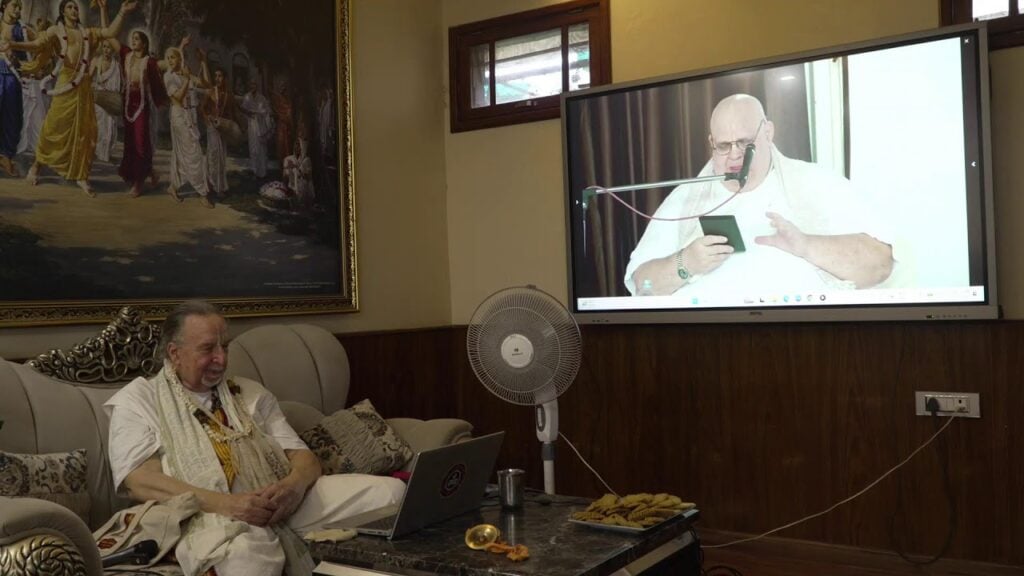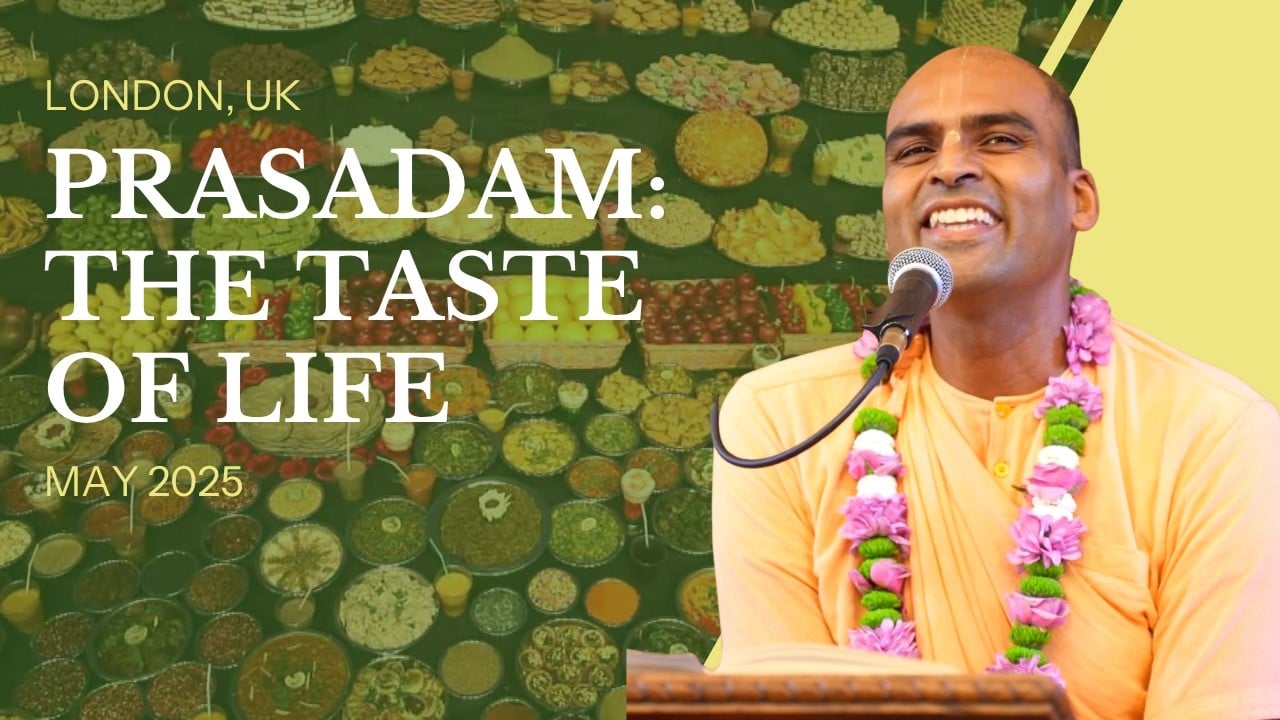
Prasadamsanctified food offered to Godstands at the heart of the Gaudiya Vaishnava tradition as a tangible expression of grace, devotion, and communal harmony. A recent London, UK lecture by HH S.B. Keshava Swami revisited this living practice through the lens of Chaitanya Charitamrita (CC) Madhya 14.36, illuminating how a simple act of offering becomes a profound spiritual technology that nourishes body, mind, and society. In an age seeking reconnection and meaning, prasadam emerges as a bridge between sacred text and daily life, between personal transformation and public service.
CC Madhya 14 centers on Sri Chaitanya Mahaprabhu’s ecstatic kirtan during the Ratha-yatra in Puri and King Prataparudra’s deep humility in service. Within this narrative arc, the king arranges abundant offerings of food for the Lord and His devotees, demonstrating that leadership in bhakti is measured not by prestige but by service. The episode aligns with a broader Gaudiya emphasis: love expressed through practical devotionkirtan, seva, and prasadam distributionuplifts everyone, regardless of background.
Philologically and theologically, the term prasadam connotes mercy, favor, and divine benevolence. In temple and home practice, one first prepares food in a clean, intentional way, offers it with mantra and mindfulness (naivedya), and then partakes of what is returned as prasadam. The act does not aim at altering the food’s chemistry; rather, it situates nourishment within a sacred relationshipdevotee, offering, and the Divinethus transforming the meaning and experience of eating into an encounter with grace.
Scriptural foundations for this practice are clear. Bhagavad Gita 9.26 affirms that the Divine accepts even a simple leaf, flower, fruit, or water when offered with devotion, emphasizing sincere bhakti over opulence. Bhagavad Gita 3.13 further teaches that those who honor food as yajna-śiṣṭasanctified remnants of offeringare freed from the binding reactions of work. Prasadam operationalizes these insights, grounding lofty metaphysics in an accessible, embodied ritual that anyone can practice.
From a Gaudiya perspective, sanctification is relational and intentional rather than mechanical. The offering aligns consciousness with devotion, and the returned food carries that intentionality forward. Consumption of prasadam is said to harmonize the mind with sattvaclarity and calmhelping to soften rajasic restlessness and tamasic inertia. Although modern nutrition evaluates food by macros and micros, the bhakti paradigm adds a complementary axis: the moral-spiritual quality infused by prayerful offering and grateful reception.
The social implications are equally significant. By arranging lavish offerings and ensuring wide distribution, King Prataparudra models an ethic of leadership based on hospitality and inclusion. Historically, traditions like Jagannath Puri’s mahaprasad have served as great equalizers, where diverse communities share a common sacred meal. In this way, prasadam becomes a cultural practice of dignity and solidarity, translating theology into lived social ethics.
Gaudiya Vaishnavism integrates prasadam with sankirtanthe congregational chanting of the Holy Namesforming a twofold mode of transformation: the ear and the palate become gates for grace. The Hare Krishna movement (ISKCON) amplified this synthesis globally by combining public kirtan with free prasadam distribution, especially in urban centers like London. The result is a public-facing spirituality that welcomes newcomers through the universal language of music and food.
Beyond the Gaudiya sphere, cognate practices across dharmic traditions highlight a shared civilizational grammar of sacred hospitality. Sikh langar institutionalizes a free, communal meal that erases social hierarchies by seating everyone together as equals. In Buddhist communities, dānagenerous giving of food to the monastic sanghacultivates compassion and interdependence. Jain ethics foreground ahimsa and purity in diet, and many communities distribute sanctified sweets and vegetarian offerings after worship, aligning nourishment with non-violence and gratitude.
These convergences underline a unifying principle across Hinduism, Buddhism, Jainism, and Sikhism: food, compassion, and reverence are not separate domains but integrated pathways to spiritual and social wellbeing. The Gaudiya articulation of prasadam thus stands alongside langar and dāna as part of a larger dharmic ecosystem that harmonizes inner devotion with outer service. This shared ethos nurtures unity in diversity, affirming that sanctified hospitality can cultivate peace where ideologies alone may falter.
London’s cosmopolitan landscape offers a compelling context for prasadam’s relevance today. In a fast-paced environment shaped by migration and multicultural exchange, sanctified food invites slow attention, communal gathering, and mindful gratitude. Many households and congregations in the UK have found that a short offering before mealsaccompanied by a simple mantrarecalibrates the atmosphere of the home, aligning routine nourishment with spiritual aspiration.
For those new to the practice, a practical sequence can be distilled into five steps: cook vegetarian, onion- and garlic-free fare in a clean space with a peaceful mind; place a portion before a sacred image or altar; offer with sincerity while reciting the Hare Krishna maha-mantra or a simple prayer; allow a moment of contemplative silence, acknowledging that the act itself is the true gift; then respectfully distribute as prasadam. This minimal “ritual technology” is scalablefrom a student flat to a community kitchenwithout losing its essence.
Ethically and ecologically, prasadam often embraces a sattvik, lacto-vegetarian diet that favors seasonal, plant-based abundance. Such fare harmonizes with ahimsa and reduces ecological footprints relative to resource-intensive meats, thus aligning spiritual commitments with sustainable living. The emphasis on simplicitygrains, legumes, vegetables, fruits, and dairy where used responsiblysupports clarity of mind and long-term wellbeing.
Gaudiya sources also link taste (rasa) with devotion, yet they invert the usual order: taste follows devotion, not the reverse. When food is first offered, flavor becomes more than sensory delight; it becomes a reminder of divine relationship. Many practitioners note that prasadam subtly reshapes appetite, replacing cravings with contentment and turning mealtimes into opportunities for gratitude rather than consumption alone.
Community kitchens exemplify the social potency of prasadam. Whether feeding festival crowds, supporting the homeless, or nourishing students far from home, these efforts embody annadanagift of foodas a sacred duty. The London experience echoes the Puri paradigm: when sanctified meals are shared across lines of culture and class, community resilience grows, and strangers become neighbors.
The narrative focus on King Prataparudra also carries a political-theological lesson: rulers who serve become true custodians of dharma. In CC Madhya 14.36 and its surrounding verses, service to Sri Chaitanya Mahaprabhu culminates in the consolidation of communal joy through abundant offerings and distribution. This sets a Gaudiya benchmark for leadershipadministrative excellence expressed as compassion and hospitality.
For families, prasadam fosters intergenerational continuity. Children who receive laddus or kitchari as prasadam often form early associations between nourishment and kindness, reverence and sharing. Over time, these impressions mature into valuesgratitude, restraint, and serviceshaping character as surely as nutrition shapes the body.
At an individual level, mindfulness around sanctified eating can recalibrate the nervous system. A brief pause before partaking, a moment of remembrance, and a posture of gratitude reduce hurried consumption and promote relaxed digestion. The practice thereby unites the spiritual and somaticdevotion softens stress, and the body becomes a beneficiary of inward stillness.
For seekers who already maintain meditation, japa, or study, prasadam provides a daily anchor that reinforces practice off the cushion. Each meal becomes a checkpoint for alignment: Is the mind present? Is the heart grateful? Is service flowing outward? In this way, prasadam supports a 24-hour bhakti ecology, where nourishment, remembrance, and service interweave.
In multicultural settings, sanctified food can also function as interfaith diplomacy. Inviting neighbors to share prasadam communicates warmth without argument, hospitality without proselytization. The act itself conveys the Gaudiya truth that divine grace is not a scarce commodity; it multiplies when shared.
Ultimately, prasadam operationalizes a core Gaudiya intuition: when love precedes consumption, life tastes different. CC Madhya 14.36 foregrounds this truth in the language of storyhumility in a king, devotion in a saint, and joy in a shared meal. In contemporary London and beyond, that same alchemy of grace remains available at every table where food is offered, received, and shared in remembrance of the Divine.
Inspired by this post on Dandavats.