Kubera, revered as the Lord of Wealth and the King of the Yakshas, occupies a central position in Hindu scriptures for embodying prosperity aligned with righteousness (dharma). Also known as Vaisravana, his very name signals lineage from the sage Vishrava and points to his custodial role as the guardian of the northern direction (Dikpala). This enduring portrayal across epics and Puranic literature frames wealth not as excess but as a sacred trust to be stewarded with ethical clarity.
Traditions describe Kubera as ruling from Alaka (Alakapuri), a resplendent city nestled amidst the Himalayas near Mount Kailash. The geographical proximity to Kailash underscores an intimate association with the sacred landscape of the Himalaya while situating his kingship among the Yakshas within a wider spiritual ecology. In this way, space and sovereignty converge: the northern quarter becomes both his charge and his emblem of guardianship.
Within the Mahabharata, Kubera is praised as “the best of the Yakshas, resplendent and golden-complexioned,” a formulation that captures his radiance, authority, and auspicious presence. Such descriptors consolidate his identity as both a moral exemplar and a divine administrator whose gifts of wealth are meant to circulate in service of order (rta) and social well-being. Textual variations across traditions consistently affirm this view of Kubera as a patron of lawful prosperity.
His lineage further clarifies his stature. As Vaisravana, he is widely regarded as the son of Vishrava, which also makes him the half-brother of Ravana in several narrative streams. Kubera’s consort is commonly named Bhadra, and his sonsNalakuvara (Nalakuvara/Nalakubera) and Manigrivaare known in the Bhagavata Purana for their moral transformation after sage Narada’s admonition. These familial threads reveal how ethical instruction, divine kinship, and the governance of wealth interweave in classical narratives.
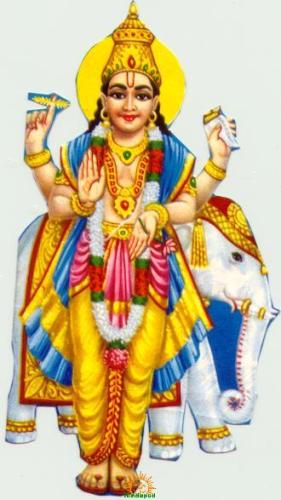
Iconography presents Kubera as dignified and abundant: often pot-bellied to signify plenitude, bearing a money-bag or a treasury key, and sometimes a mace to indicate protective authority. Regional traditions may vary in specific attributes, yet the underlying message remains consistentwealth is safeguarded and redistributed under the auspices of dharma. The aesthetic choices of artists and communities thus serve to teach that fortune must be accountable to higher principles.
Across the wider dharmic world, Kubera’s figure resonates with shared values. In Buddhist traditions, Vaisravana is honored as the northern guardian and a protector of the faithful, reinforcing the ideal of vigilant stewardship. In Jain contexts, the presence of Yakshas as attendant deities reflects a cognate concern with ethical guardianship and auspiciousness. Sikh teachings on honest labor (kirat karni), sharing (vand chhakna), and remembrance of the Divine offer a complementary vision: prosperity gains meaning when grounded in righteousness and service. Taken together, these perspectives nurture unity among dharmic traditions by affirming that wealth, rightly understood, supports spiritual flourishing and communal harmony.
For householders, Kubera symbolizes the balanced pursuit of artha (prosperity) within the framework of dharma. Practices associated with Dhanteras, placement of a Kubera-yantra, or simple meditations on gratitude and responsibility are experienced as ways to harmonize material life with ethical purpose. Many devotees report that reflecting on Kubera’s guardianship of the north evokes a felt sense of stability, reminding them that true abundance is measured by integrity, generosity, and collective well-being.
Interpreted through an academic lens and lived through devotional practice, Kubera’s story offers a coherent ideal: prosperity is not an end in itself but a means to sustain dharma, protect the vulnerable, and celebrate the sacredness of everyday life. As guardian of the northern quarter and Lord of Wealth, his legacy invites readers to reimagine affluence as responsibilityan invitation shared across Hinduism, Buddhism, Jainism, and Sikhism. In this shared ethical horizon, Kubera’s lineage becomes a living guide to compassionate stewardship and unity in spiritual diversity.
Inspired by this post on Hindu Blog.