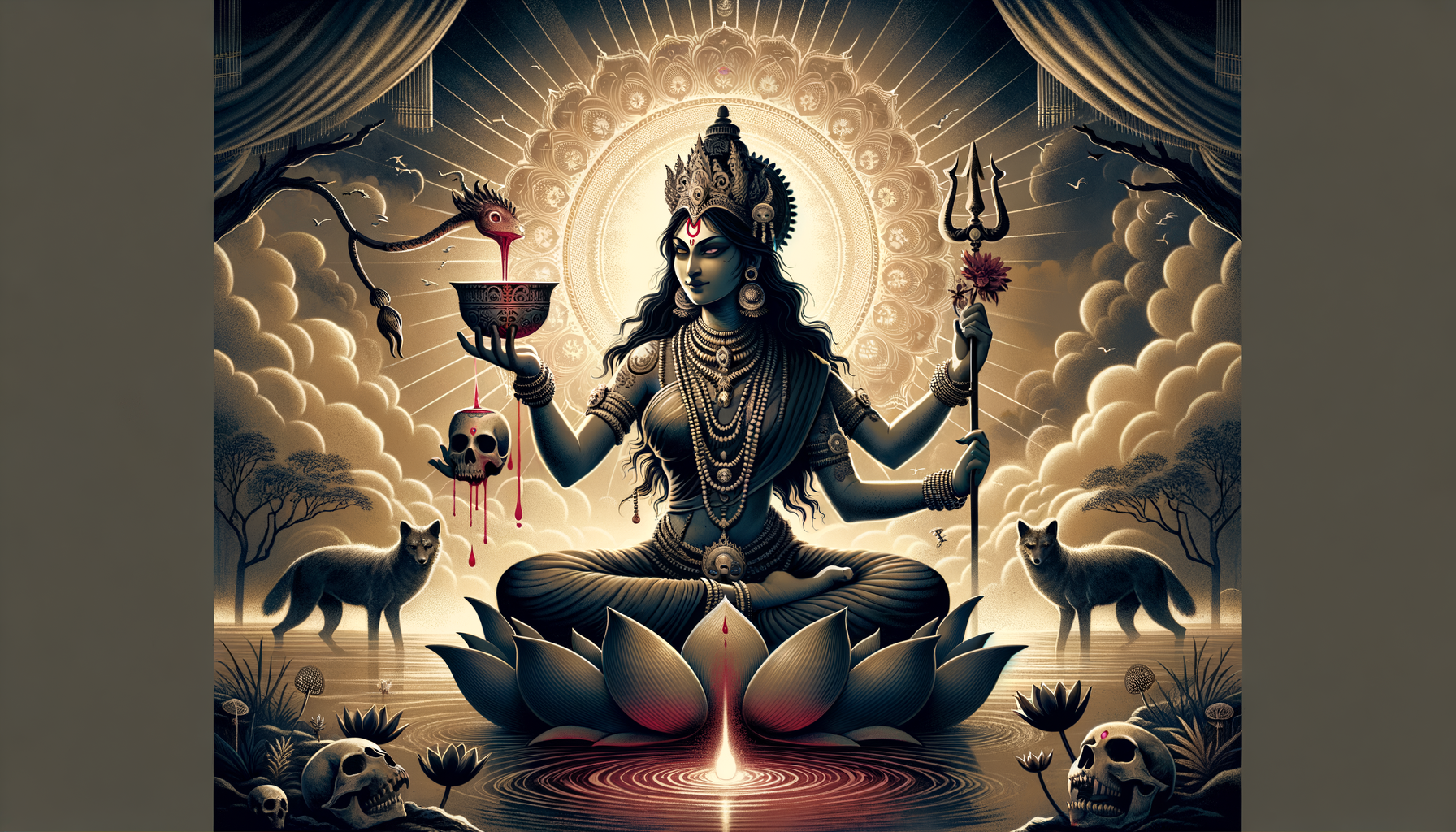
Chamunda Devi stands among the most awe-inspiring manifestations of Shakti in Hindu goddess iconography. Frequently depicted holding a skull cup (kapala) brimming with blood, she conveys a profound synthesis of protection and purification. This motif, rooted in the Devi Mahatmya and echoed across various Tantric scriptures, symbolizes the transformative power that converts fear and impurity into wisdom and compassionate strength.
In the Devi Mahatmya, the fierce form associated with Chamunda emerges to vanquish the asuras Chanda and Munda, after which the victorious goddess is honored with the name Chamunda. The icon of the kapalagrasped in a hand that has subdued evilserves as a visual teaching: life’s darkest residues (represented by blood) are not discarded but consciously transmuted. The skull, emblematic of impermanence, becomes a vessel of sacred intent, making the gruesome a site of spiritual insight.
Tantric symbolism reads the kapala as a discipline of fearlessness. Blood denotes prana, the vital force, and also the ego’s tenacious attachments. In Chamunda’s grip, it signifies an uncompromising purificationan assurance that destructive tendencies can be contained and sanctified. Here protection does not merely repel harm; it reforms it at the root, turning the energies of harm into guardianship, clarity, and resolve.
This symbolism resonates across dharmic traditions. In Shaiva-Shakta Tantra and Vajrayana Buddhism, the kapala functions as a meditative reminder of anicca (impermanence) and śūnyatā (emptiness), directing practitioners toward wisdom and compassion. While Jainism and Sikhism may not employ the kapala motif, their ethical emphasis on inner purification, truthfulness, and fearlessness parallels the same moral horizon. Read together, these traditions affirm unity in spiritual diversity, encouraging a shared commitment to non-harm, self-restraint, and the protection of all beings.
Devotees often describe experiences at Chamunda temples as encounters with fearless compassion: a tangible sense that the goddess absorbs turmoil and returns equanimity. In contemporary practice, this usually takes the form of inner offeringsprayer, mantra, and disciplined livingechoing the older Tantric insight that transformation begins within. Pilgrims speak of the kapala as a mirror for conscience, urging the relinquishment of anger, envy, and despair in favor of courage, discernment, and service.
As an emblem of protection, the kapala instructs that true safeguarding includes the purification of motive. It invites practitioners to convert raw emotion into ethical action: anger into steadfast courage, grief into compassion, and fear into wise vigilance. This interpretive framework, fully consistent with Shakti traditions, offers practical guidance for daily lifeespecially for those seeking spiritual resilience without abandoning a grounded ethical compass.
Chamunda’s broader iconographycremation-ground setting, mundamala (garland of skulls), and attendants such as jackalsintensifies the teaching by placing the goddess beyond conventional fear. These details emphasize that the path to clarity often runs through honest engagement with impermanence and mortality. Properly understood, the imagery does not celebrate violence; it confronts it, revealing a disciplined path where destructive forces are recognized, restrained, and transmuted for the sake of dharma.
Taken together, the skull cup (kapala) of Chamunda Devi represents a fierce, protective grace and a rigorous ethic of purification. From the Devi Mahatmya to later Tantric readings, the message remains consistent: spiritual power includes the responsibility to transform one’s own shadows. For communities across Hinduism, and in conversation with Buddhism, Jainism, and Sikhism, this image becomes a shared invitationhonor life’s fragility, safeguard one another, and cultivate inner clarity for the welfare of all.
Inspired by this post on Hindu Blog.