Krsnadasa Kaviraja Gosvami opens Caitanya-caritamrta with two carefully chosen verses that introduce Advaita Acarya. These verses orient the reader to the devotional architecture of the Bhakti Tradition within Hindu spirituality, inviting attentive study of how sacred relationships are structured and sustained in Hindu scriptures.
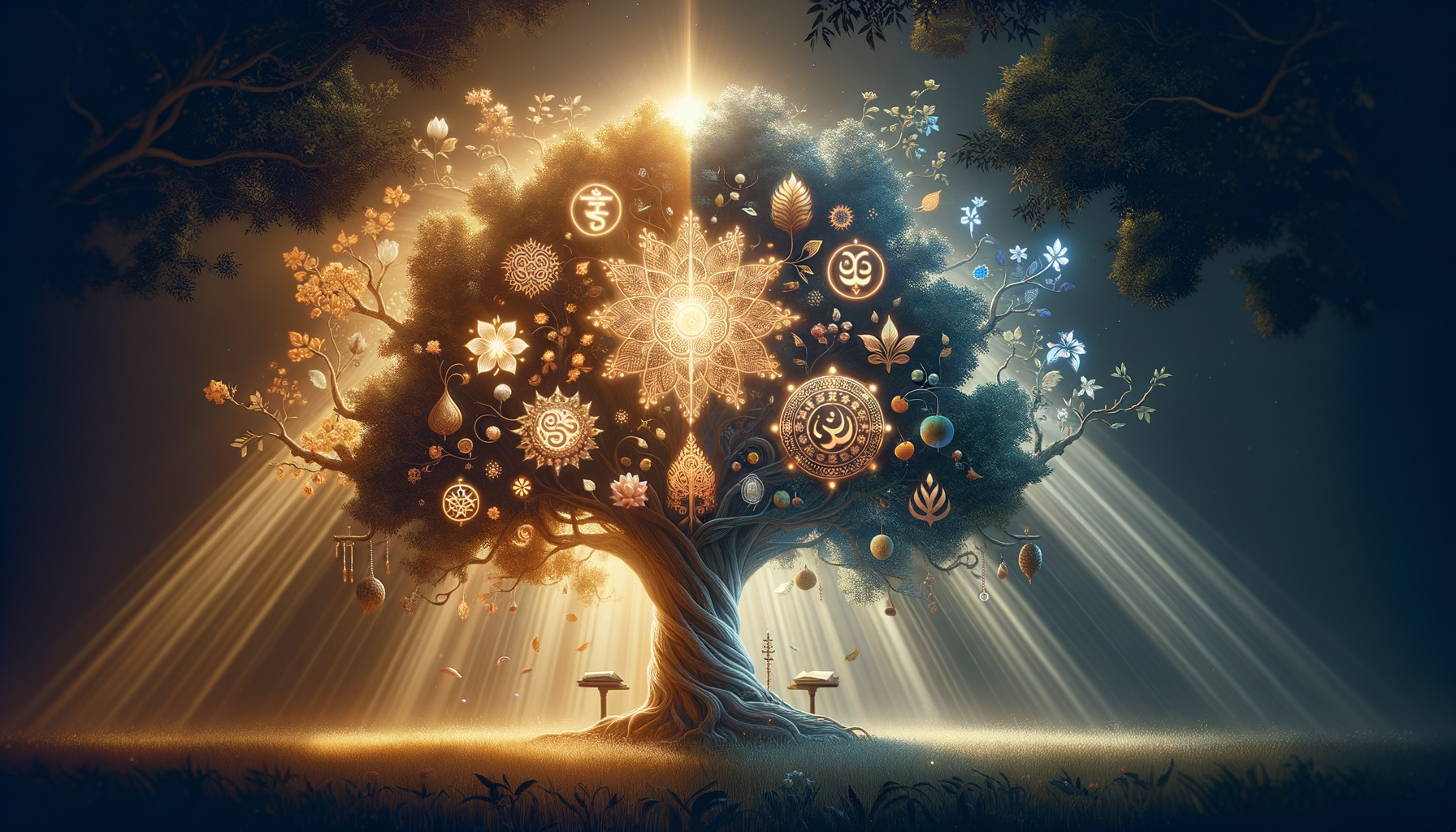
The narrative then presents a vivid image: a living spiritual tree in which Sri Caitanya Mahaprabhu is the main trunk, Lord Nityananda the first branch, and Advaita Acarya the second branch. This metaphor clarifies how spiritual authority, guidance, and service interrelate, demonstrating how teachings travel through a lineage to nourish collective practice.
Identifying Advaita Acarya as the second branch underscores the cooperative nature of grace and effort. Trunk and branches work in concert, channeling spiritual vitality into leaves, flowers, and fruitsan elegant image for teachings, communities, and compassionate action that continue to blossom.
For many practitioners and students of religion, this imagery resonates with lived experience: mentors who steady one’s study of texts, communities that sustain daily discipline, and moments of insight that feel connected to something larger than the individual. Such associations deepen appreciation for the collaborative ethos at the heart of the Bhakti Tradition and its enduring relevance within Hindu scriptures.
The same image invites a broader dharmic reflection. Across Hinduism, Buddhism, Jainism, and Sikhism, shared valuescompassion, humility, self-discipline, and sevaform an interdependent canopy under which diverse paths thrive. The spiritual tree thus becomes a model for unity in spiritual diversity, encouraging mutual respect without erasing distinct practices.
Approached in this spirit, the portrayal of Advaita Acarya strengthens a reader’s capacity to honor lineage, cultivate respect across traditions, and translate devotion into ethical action. It offers a contemplative map for study, dialogue, and community life aligned with harmony of faiths and the integrative vision celebrated throughout Hindu spirituality.
Inspired by this post on Dandavats.