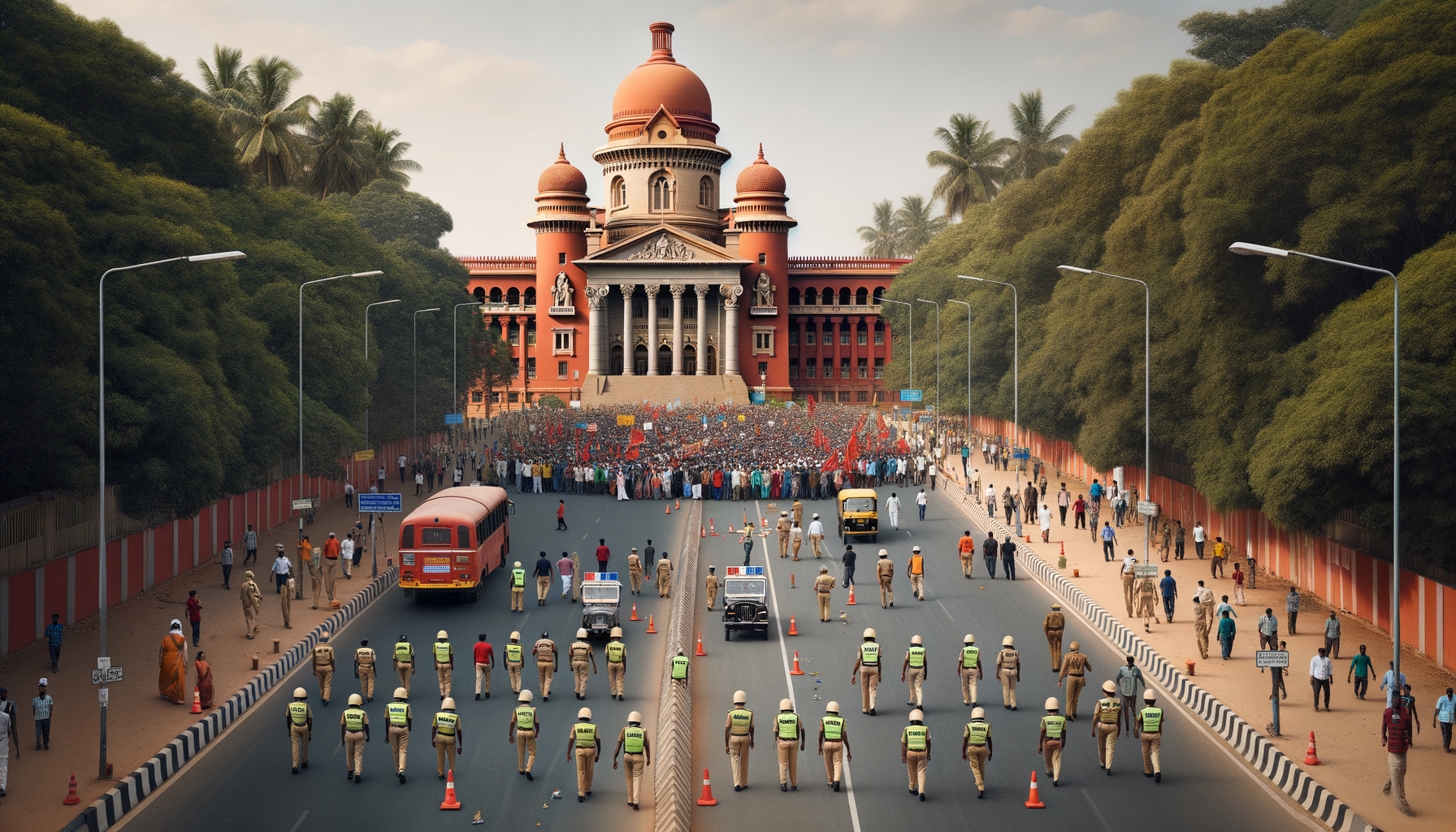
In a landmark development in Bengaluru, the Karnataka High Court delivered a clear rebuke to the use of blanket restrictions on public gatherings, emphasizing that such measures cannot be employed indiscriminately to halt peaceful processions, including the proposed route march by the Rashtriya Swayamsevak Sangh (RSS). The ruling underscores that constitutional guaranteesparticularly the freedom of speech and peaceful assemblymust be balanced with public order through proportionate, narrowly tailored measures rather than broad prohibitions.
The Court’s reasoning places Article 19 of the Constitution at the center of administrative decision-making, reiterating that the right to assemble peacefully cannot be curtailed by sweeping orders. It clarified that reasonable restrictions under Article 19(3) must be specific, evidence-based, and time-bound. In practical terms, permissions for public demonstrations should be decided case by case, with reasoned orders, route modifications where necessary, and calibrated safeguards instead of outright bans.
Concerns raised by the State about law and order were acknowledged, yet the judgment affirms that preventive action must remain proportionate. Authorities retain the power to impose conditionssuch as time windows, route diversions, and security protocolswhile avoiding measures that indiscriminately stifle the freedom of assembly. This approach both protects constitutional rights and equips law enforcement with clear, accountable tools to maintain public safety.
The timing of the disputeamid public attention on RSS activities and the broader context of civic mobilizationsinvites reflection on democratic norms. For many residents, the right to assemble evokes memories of national movements, community yatras, and religious processions. The Court’s intervention helps preserve a civic culture in which groups across traditionsHindu, Buddhist, Jain, and Sikhcan conduct peaceful gatherings with respect, responsibility, and mutual trust.
Beyond the immediate case, the ruling offers a governance framework: establish standard operating procedures for permissions, articulate written reasons for approvals or denials, enable swift appellate review, and prioritize crowd management training for police. Such steps create predictable pathways for festivals, rallies, and processionsensuring that constitutional rights, public order, and social harmony move in tandem.
Politically, the decision should not be read as a zero-sum victory. Instead, it reinforces the shared constitutional compact: diverse viewpoints and associations can express themselves peacefully, while the State ensures safety through minimal, necessary intervention. This balance strengthens public confidence in institutions and supports unity in diversityan enduring commitment across India’s dharmic traditions.
As Karnataka and other states navigate similar requests for public demonstrations, the Karnataka High Court’s guidance offers a measured template. By privileging proportionate restrictions over blanket curbs and by insisting on transparency and accountability, the ruling safeguards fundamental freedoms while supporting the orderly conduct of processions in Bengaluru and beyond.
Inspired by this post on Struggle for Hindu Existence.