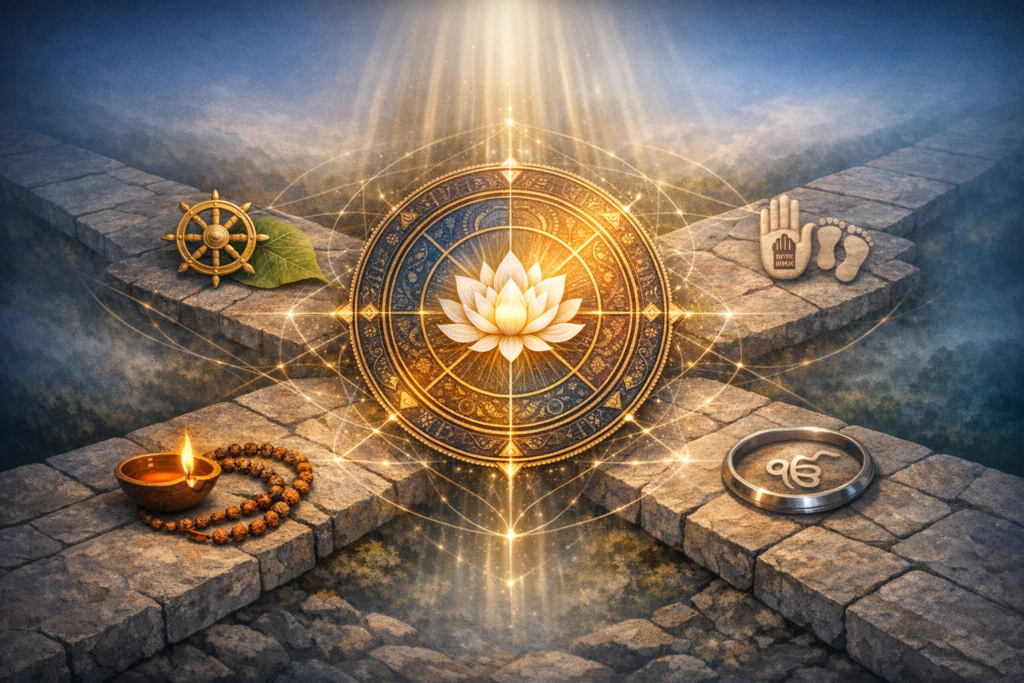
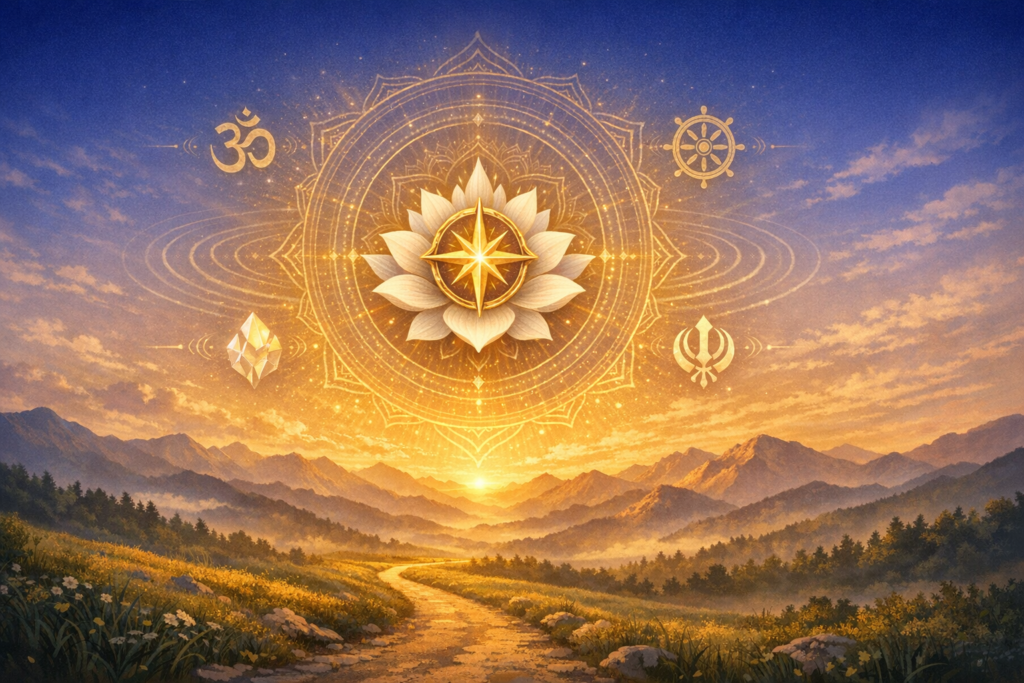
The lotus, or padma, pervades the sacred art of South Asia. It surfaces in the hands of Vishnu and Lakshmi, forms the radiant seat of Brahma, blossoms beneath Buddhas and Bodhisattvas, and appears in Jain images and Sikh scriptural metaphors as a symbol of inner purity. Against this broad canvas, one observation invites deeper study: within mainstream Hindu iconography, Shiva is seldom defined by the lotus. Understanding why requires tracing the theological, ritual, and artistic grammar that makes Shaiva imagery distinct while remaining harmoniously situated within the shared dharmic inheritance of Hinduism, Buddhism, Jainism, and Sikhism.
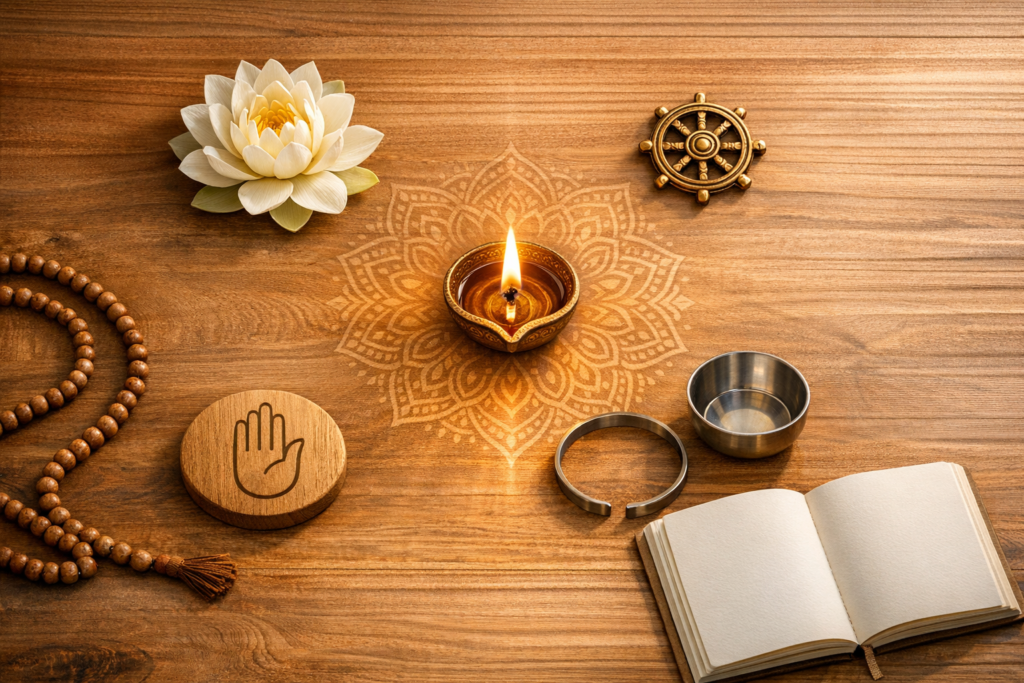
Across dharmic traditions, the lotus signifies purity unsullied by its watery milieu, emergence from the depths toward enlightenment, and a luminous stillness that supports creation, sustenance, and inner awakening. In Vaishnava art, the lotus naturally aligns with Vishnu’s role in upholding cosmic order (dharma) and with Sri-Lakshmi’s abundance and auspiciousness. In Buddhist and Jain visual languages, the lotus seat becomes a universal platform of awakening and perfected restraint. Sikh teachings employ the lotus as an evocative metaphor for living untouched by worldly stain while remaining in the world. This wide semantic field forms the backdrop to the Shaiva exception.
Shaiva iconography follows prescriptions found across Agamas and Shilpa Shastras, where each deity’s attributes (ayudhas), posture, ornaments, and environment communicate a precise theological message. In this grammar, Shiva’s primary emblems are the trident (trishula), the drum (damaru), serpents, the crescent moon, the rivulet of Ganga, the tiger skin, sacred ash (vibhuti), rudraksha beads, and the bull Nandi—culminating in the aniconic linga as the most pervasive form of worship. The lotus is not absent from Shaiva ritual life, but it is not the defining emblem by which Shiva is recognized in sculpture and painting.
The philosophical rationale is transparent. Whereas the lotus frequently signals the world’s auspicious flourishing—wealth, fecundity, and the luminous purity that makes ordered life possible—Shiva’s iconic presence dwells at the margins that most humans avoid: cremation grounds, ash, skulls, and the relentless contemplation of impermanence. This is not a rejection of auspiciousness but a radical pedagogy. Shiva teaches that the highest auspiciousness (shiva) lies beyond the conventional binary of mangala and amangala. By embracing what society deems inauspicious, the Shaiva path alchemizes fear, grief, and finitude into liberation.
Material metaphors reinforce this theology. The lotus grows from water and mud, its textures soft, aqueous, and fecund. Shiva’s textures are antithetical: ash like desert dust, the stillness of mountain stone, the austerity of a hide drawstringing an ascetic’s drum. Where the lotus points to the grace that sustains worldly order, Shiva’s emblems point to the ground of being uncovered when order dissolves. One symbol discloses the pristine unfolding of life; the other discloses the freedom that remains when all that unfolds returns to silence.
Ritual practice mirrors this distinction. In Shaiva worship, bilva (bilwa) leaves, dhatura (thorn-apple), akanda, water for abhisheka, and vibhuti play leading roles. Bilva’s trifoliate leaf is read as a resonant sign of Shiva’s three eyes, three stripes (tripundra), and three functions of grace. While lotus offerings are not prohibited and may appear in regional or festival practices, the normative emotional palette of Shaiva puja is contemplative austerity rather than the opulent, watery abundance that the lotus typically communicates in Vaishnava shrines.
A widely taught pedagogical map associates the lotus with sattva—the luminous clarity that suits Vishnu’s preservation—while acknowledging Brahma’s rajas (creative activity) and some Shaiva forms’ association with tamas (veiling, dissolution). Yet mature Shaiva theology insists that Shiva is trigunatita—beyond all three gunas. In that light, the relative absence of the lotus in Shaiva art is not a demotion of purity but a sign that Shiva’s auspiciousness cannot be contained by any single worldly sign, even one as exalted as the lotus.
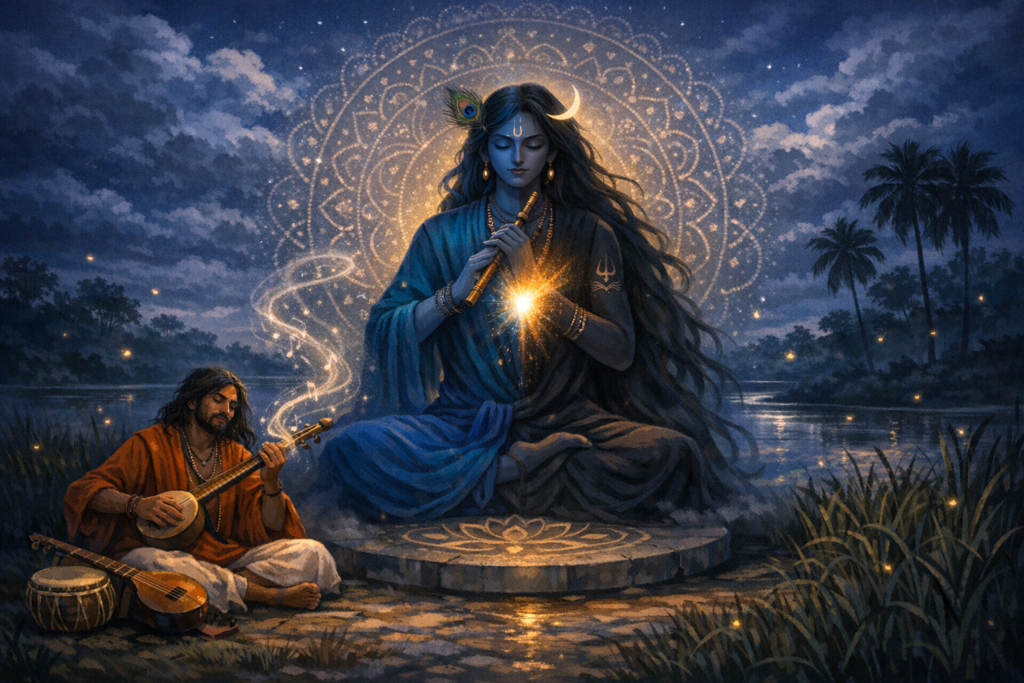
Yogic symbolism deepens the nuance. The body’s subtle centers (chakras) are visualized as lotuses; the heart is a “hrit-pundarika,” and meditation postures include padmasana, the lotus seat. Shiva as Yogeshvara, the archetypal meditator, is often shown seated in padmasana on a tiger skin or rocky Kailasa ledge. Thus, even when the physical lotus flower is not emphasized, lotus symbolism saturates Shaiva yoga: the mind opens petal by petal, kundalini ascends through lotus-chakras, and pure awareness—connoted in many traditions by the thousand-petaled sahasrara—shines as Shiva’s own nature.
Art history substantiates this pattern. Early Shaiva images from Gupta through Chola and beyond consistently foreground the trishula, damaru, ascetic ornaments, and the linga. Regional schools occasionally present exceptions—some Nepalese and Eastern Indian depictions include a nilotpala (blue lotus) as a secondary attribute—but the pan-Indic visual identity of Shiva coheres around ascetic and transformative emblems rather than a lotus-throne. The aniconic linga, in particular, discloses the theological priority: consciousness as formless, beyond qualities—an emphasis not easily reconciled with the lotus as a primary hand-held emblem.
Scriptural motifs are consonant with this visual logic. Puranic narratives frequently link the lotus with Vishnu and Brahma (the lotus from Vishnu’s navel bearing Brahma), while Agamic instructions sculpt Shiva’s presence through the linga and ascetic yogic signs. Upanishadic and Tantric sources, meanwhile, preserve the lotus in a yogic-phenomenological key—“the lotus of the heart,” chakra-lotuses, and the ascent to pure consciousness—allowing Shaiva spirituality to embrace the lotus inwardly even where outward iconography highlights ash, moon, and trident.
The theology of place further clarifies the divergence. Vaishnava deities often appear amid cosmic oceans and lotus lakes (padma-sarovara) that reinforce the imagery of preservation and abundance. Shaiva deities frequent cremation grounds (shmashana), snow peaks, and wild forests—liminal spaces where forms dissolve and attachments loosen. Each environmental palette educates the devotee: one through beauty and order, the other through fearless seeing. Both culminate in liberation and both belong to the shared dharmic pursuit of truth.
Devi iconography underscores context-sensitivity. When Parvati appears as benign mother or Lakshmi-like granter of prosperity, the lotus may be appropriate. As Durga, Kali, or Chamunda—forms that emphasize protection, severance of ignorance, and radical compassion—the lotus recedes, and crests, skulls, severed heads, and weapons articulate a different soteriological mood. The pattern seen with Shiva is part of a broader iconographic logic: symbols follow function.
Nuance remains vital. In some liturgies and regional temples, lotus blossoms are offered to Shiva, festival decorations weave lotus motifs, and certain textual traditions list a lotus among the many acceptable offerings for special observances. The key is norm versus possibility: lotus use in Shaiva practice is possible and occasionally attested, but it is not the canonical marker that identifies Shiva across time and region in the way trishula, damaru, rudraksha, or the linga do.
Devotees often describe a felt difference upon entering a Shaiva shrine: the dry fragrance of bilva, the cool smoothness of the stone linga under abhisheka, the charcoal-grey touch of vibhuti, and the unwavering gaze of Nandi aligned with consciousness itself. The sensory field is spare, elemental, and interiorizing. Compared with the lotus-rich, lake-like calm of many Vaishnava sanctums, the Shaiva ambience tutors courage in confronting impermanence—another path to the same summit of freedom recognized by all dharmic traditions.
Seen from a dharmic-unity lens, the divergence is complementary rather than competitive. Buddhism’s lotus seat, Jainism’s lotus-bearing Tirthankaras (for instance, Padmaprabha), Sikh metaphors of living like a lotus in water yet unstained, and Shaivism’s cremation-ground meditation all teach non-attachment and awakening. The shared goal is moksha, kaivalya, nirvana, or union with the One—different pedagogies, convergent realization. This unity-in-diversity is a central strength of the Indic spiritual ecosystem.
In summary, the lotus is not “missing” from Shiva; it is reframed. Outwardly, Shaiva art privileges the emblems of radical transcendence—ash, moon, trident, linga—that dissolve conventional frames of auspiciousness. Inwardly, Shaiva yoga fully embraces lotus symbolism as the language of consciousness unfolding. Accounting for historical practice, scriptural guidance, ritual preference, and inter-dharmic parallels yields a coherent answer: Shiva’s relative distance from the lotus in public iconography is a deliberate theological choice, balancing the Indic spectrum in which other deities and traditions carry the lotus on behalf of the shared quest for truth.
For seekers comparing symbols across traditions, this offers a practical takeaway. When purity, prosperity, and ordered flourishing are sought, the lotus speaks eloquently. When fearlessness before impermanence and direct realization of the formless are needed, the Shaiva palette becomes an unsurpassed guide. Both movements complement one another, and honoring both preserves the harmony and unity at the heart of Hinduism, Buddhism, Jainism, and Sikhism.
Inspired by this post on Hindu Blog.