Across Hinduism and other dharmic traditions, a recurring question arises: why does Brahma never grant the boon of immortality? In homes where Puranic tales are lovingly narrated, this question often surfaces with curiosity and wonder. The answer carries deep philosophical weight, illuminating Hindu cosmology, the ethics of power, and the purpose of human life.
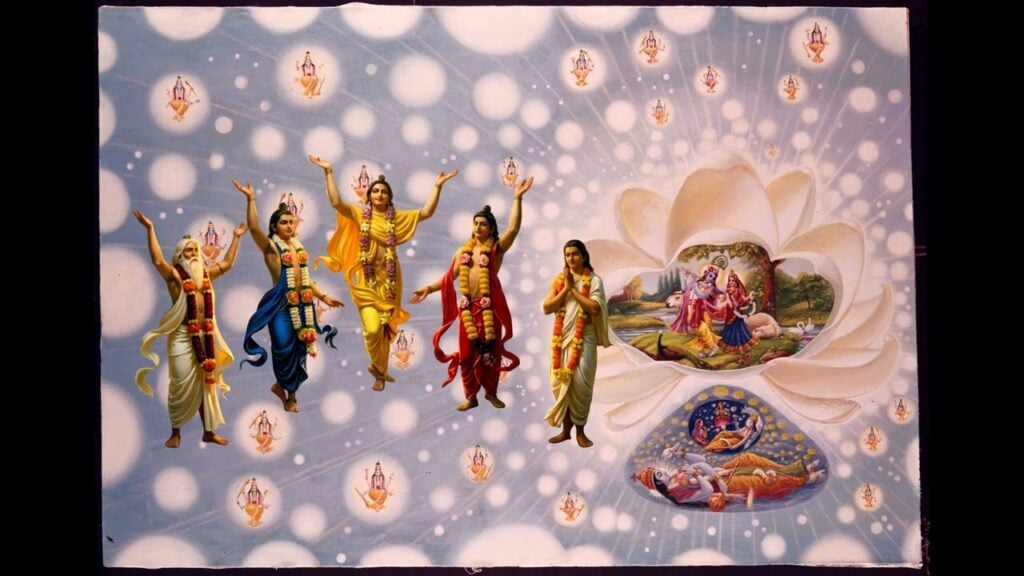
Within the TrimurtiBrahma the creator, Vishnu the preserver, and Shiva the transformerBrahma operates inside the framework of time and causality. As described in the Puranas, even Brahma’s lifespan, though vast, is measured in kalpas. Because the creator exists within the cycle of creation and dissolution (srishti and pralaya), unconditional bodily immortality contradicts the very order he serves; thus, it cannot be conferred.
The laws of dharma and karma sustain cosmic equilibrium. In this order, all embodied beings are subject to samsarabirth, death, and rebirth. A boon that suspends mortality would disrupt this balance, rendering the moral architecture of the universe incoherent. Consequently, boons (varas) are granted in highly conditional forms that align with the maintenance of cosmic order rather than exempting individuals from it.
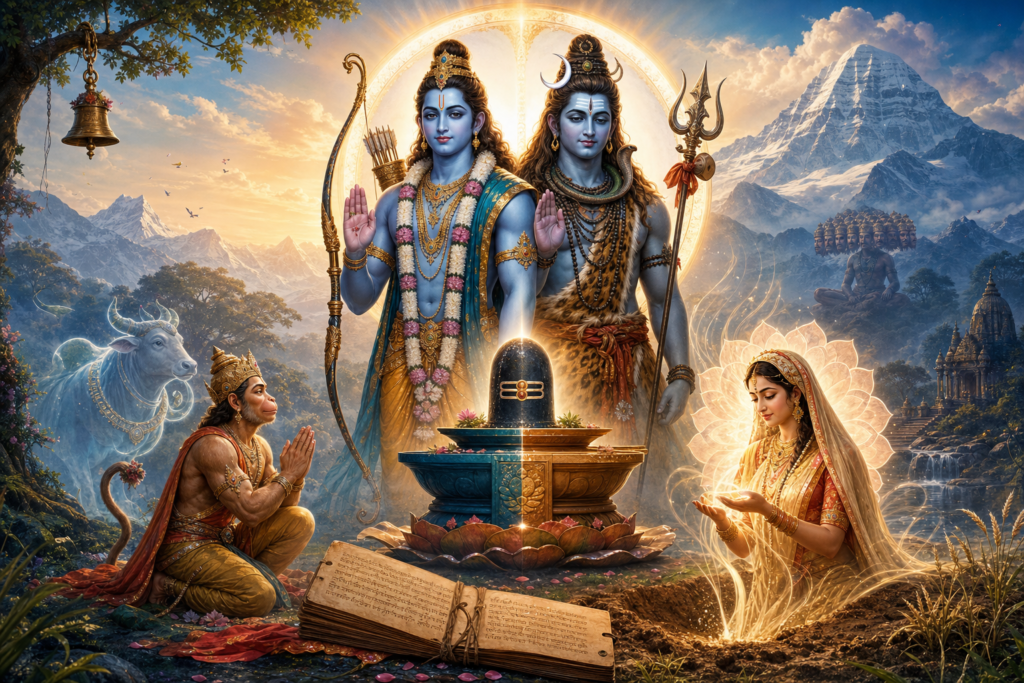
Puranic narratives make this principle vivid. Hiranyakashipu’s request for immortality is famously refused by Brahma. What is granted instead is a carefully qualified boon, designed to respect the limits of dharma and temporality. When those limits are manipulated toward adharma, Vishnuupholding preservationappears as Narasimha to restore balance. The story is not a loophole but a lesson in the ethical boundaries of power.
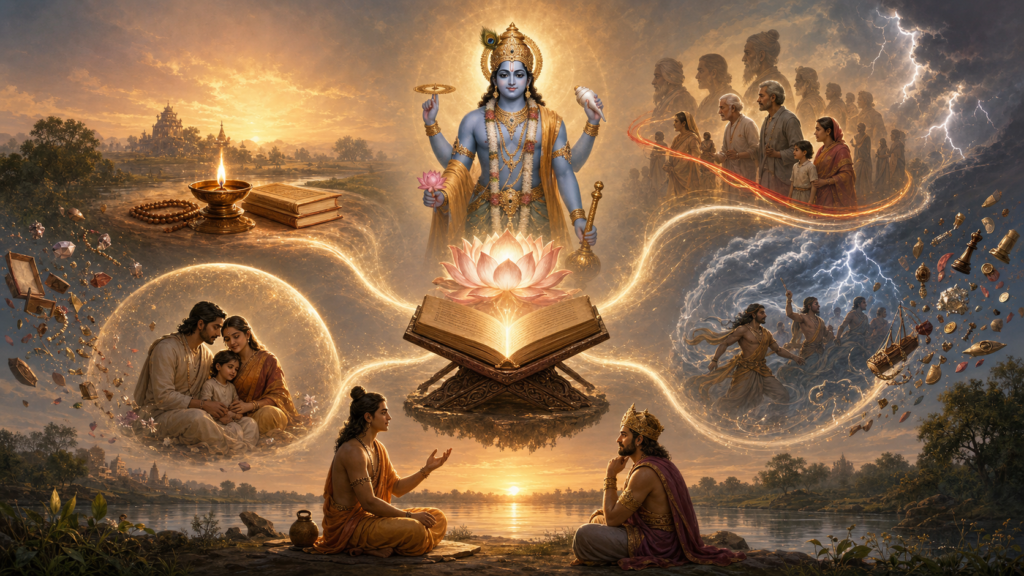
Boons function within, not above, the cosmic law. Deities do not unmake reality; they administer it. Thus, while long life, protection under specific conditions, or extraordinary capacities may be bestowed, absolute immortality is distinct from these and belongs only to the transcendent reality that is beyond creation. In Vedantic terms, the eternal is Brahman, not the perishable body.
Hindu philosophy therefore distinguishes between physical longevity and spiritual liberation. Immortality of the body is neither the aim nor the measure of success; mokshafreedom from bondage to karma and samsarais the true goal. Texts such as the Mahabharata, the Bhagavad-Gita, and the Puranas repeatedly point seekers away from endless embodiment toward realization of the atman’s unity with the ultimate.
This wisdom resonates across dharmic traditions. Buddhism emphasizes anitya (impermanence) and directs effort toward nirvana rather than enduring embodiment. Jainism underscores impermanence and aspires to kevala-jñāna and release from karmic accumulation. Sikhism orients the seeker toward living in hukam, meditating on Naam, and dissolving ego rather than clinging to bodily permanence. The shared ethic is clear: the path prioritizes liberation and inner transformation over physical immortality.
There are also ethical consequences to consider. Unlimited bodily life would magnify the potential for unchecked adharma, upsetting the moral fabric that dharma upholds. Time-bounded power, conditioned by karma, permits correction, renewal, and balance. In this framework, Vishnu’s role as preserver and Shiva’s role as transformer are not exceptions but expressions of the same cosmic law that precludes immortality boons.
Cosmology further reinforces the point. Across yugas and kalpas, all manifest forms undergo change. At pralaya, even the realms of the devas are reabsorbed. Because creation itself is cyclical, absolute immortality for any embodied being is a category error; it confuses the timeless with the temporal.
For contemporary seekers, the teaching is practical and compassionate. Rather than pursuing a perilous illusion of physical immortality, the traditions invite commitment to dharma, self-knowledge, meditation, seva, and ethical living. The boon truly worth seeking is clarity of purpose and the gradual loosening of bondage. In that light, Brahma’s refusal is not a denial but a pointer to a higher promise: not unending embodiment, but freedommokshagrounded in the unity and timeless wisdom shared across Hinduism, Buddhism, Jainism, and Sikhism.
Inspired by this post on Hindu Blog.