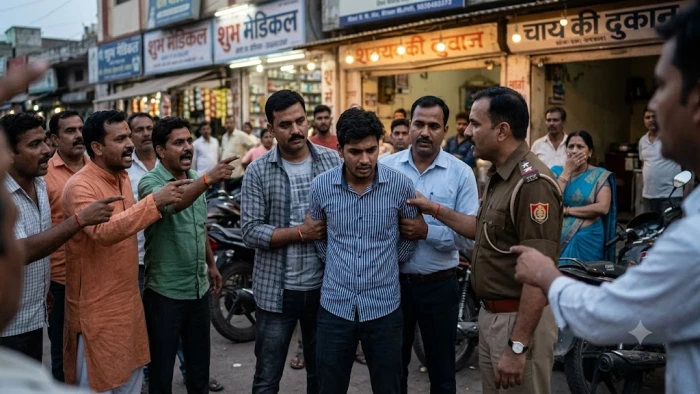
In Sangli, office bearers of the Hindu Ekata Andolan lodged a formal complaint at the Sangli City Police Station, seeking registration of a case against Mustafa Mulani and calling for stringent action in accordance with the law. The step reflects a clear preference for institutional redress over confrontation, emphasizing due process and public order.
Situations that touch religious sentiment can intensify rapidly; however, recourse to lawful mechanisms typically de-escalates tension and reinforces trust in civic institutions. In this context, community stakeholders often recognize that measured police action and transparent procedures help prevent polarization while safeguarding rights and responsibilities for all.
Community experience in cities like Sangli shows that when concerns are channeled through formal complaints rather than public provocation, it supports a broader culture of Communal Harmony and Religious harmony. This approach aligns with shared dharmic valuesAhimsa (non-violence), Satya (truth), and Seva (service)that resonate across Hindu, Buddhist, Jain, and Sikh traditions, encouraging restraint, dialogue, and mutual respect.
From a governance perspective, prompt, even-handed police inquiry and clear communication reduce uncertainty and rumor, which are often catalysts for fear and division. By centering the Rule of Law, the Sangli City Police Station can provide a fact-based foundation for subsequent decisions, ensuring that any action taken regarding the complaint against Mustafa Mulani remains fair, proportional, and accountable.
As the process unfolds, collaborative engagement among community leaders, civil society groups, and local administration can deepen understanding and prevent escalation. When differences are addressed through lawful channels and respectful dialogue, the outcome is not only stability but also renewed confidence in the institutions designed to protect citizens and uphold pluralism.
Inspired by this post on Hindu Jagruti Samiti.