Tag: Immortality

  • Nava Chiranjeevis: Powerful Lessons from Hinduism’s Immortal Witnesses

    Nava Chiranjeevis: Powerful Lessons from Hinduism’s Immortal Witnesses

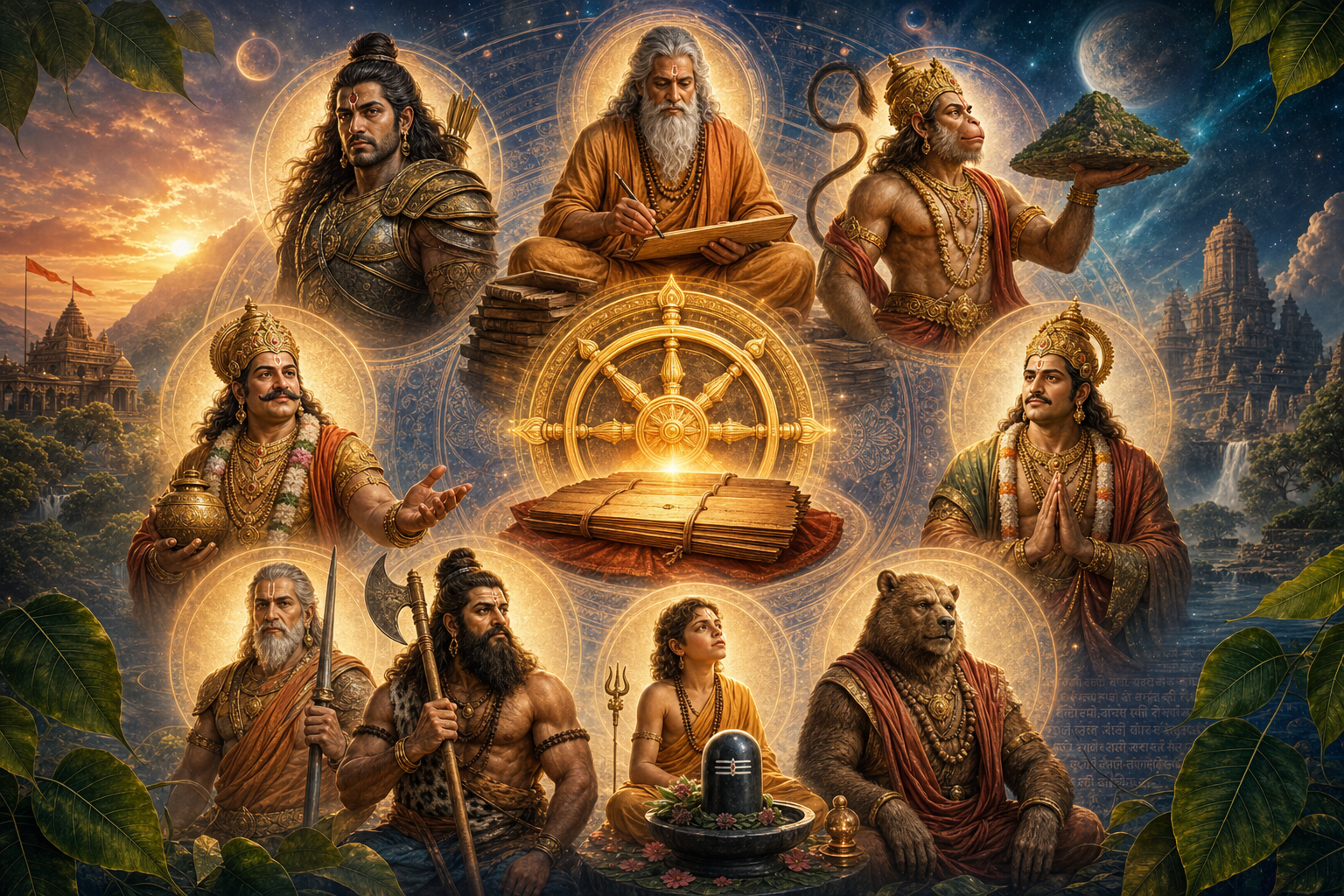
    The Nava Chiranjeevis, or Nava Sanjivis, are the nine enduring witnesses of Hindu Puranic and Itihasa tradition. Their stories show that immortality in Hinduism is not merely endless life, but a deeper responsibility shaped by dharma, memory, devotion, knowledge, and consequence. Ashwatthama, Mahabali, Veda Vyasa, Hanuman, Vibhishana, Kripacharya, Parashurama, Markandeya, and Jambavan each preserve a…

  • Amritatva in Hinduism: The Transformative Quest for Immortality and Bliss

    Amritatva in Hinduism: The Transformative Quest for Immortality and Bliss

    Amritatva in Hinduism refers to the state of immortality, bliss, and liberation described in the Upanishads and later Hindu philosophy. It is closely related to moksha, mukti, nirvana, and kaivalya, though each term carries distinct meanings across Dharmic traditions. The concept teaches that lasting happiness cannot be found in temporary pleasures alone, but in realization…

  • Mrityunjaya Murti of Shiva: Timeless, Death-Conquering Iconography, Vedic Mantra, and Rituals

    Mrityunjaya Murti of Shiva: Timeless, Death-Conquering Iconography, Vedic Mantra, and Rituals

    Mrityunjaya Murtithe death-conquering form of Shivaunites Vedic mantra, Purāṇic narrative, and precise iconography into a living theology of courage and immortality. This article decodes the Mahamrityunjaya (Tryambaka) mantra from Rig Veda 7.59.12 and related Yajurveda sources while explaining how shilpa-śāstra and Āgamas shape the image’s attributestrinetra, jata-makuṭa, serpent ornaments, triśūla, ḍamaru, and the amṛta-kalaśa. It…

  • Garuda’s Gigantic Ascent: The Epic Struggle with Indra for Amrit, the Nectar of Immortality

    Garuda’s Gigantic Ascent: The Epic Struggle with Indra for Amrit, the Nectar of Immortality

    This in-depth exploration traces Garuda’s gigantic ascent to obtain amrit from the devas, centering the story’s ethical core in filial devotion, dharma-yuddha, and disciplined restraint. Readers gain a clear view of the Mahabharata (Ādi Parva) sources, with careful links to later Puranas such as the Garuda Purana and Padma Purana. The technical details of heaven’s…

  • Garuda’s Immortality Without Amrit: A Timeless Dharmic Guide to Purpose and Freedom

    Garuda’s Immortality Without Amrit: A Timeless Dharmic Guide to Purpose and Freedom

    Garuda’s story from the Mahabharata and Puranas reveals how immortality can arise without consuming Amrit, redefining freedom as self-mastery rather than possession. It demonstrates purpose over acquisition, filial devotion as seva, and non-attachment as a source of clarity and strength. The episode models ethical intelligencefulfilling vows while sustaining cosmic orderthrough Garuda’s restraint and discernment. Readers…

  • Why Brahma Refuses Immortality Boons: Timeless Dharma, Cosmology, and the Path to Moksha

    Why Brahma Refuses Immortality Boons: Timeless Dharma, Cosmology, and the Path to Moksha

    Why does Brahma never grant immortality? In Hindu cosmology, even the creator functions within time and cannot override the laws of dharma and karma. Puranic narratives, such as the story of Hiranyakashipu and Narasimha, illustrate that boons are conditional to preserve cosmic balance. This view shifts focus from bodily permanence to moksha, aligning with the…

  • The Immortality Key: Uncovering the Secret History of the Religion with No Name

    The Immortality Key: Uncovering the Secret History of the Religion with No Name

    This is an origin story of Christianity with a psychedelic plot twist. While we all have heard of Rome, Jerusalem, and Nazareth, most of us have not heard of Eleusis. This Greek harbor town was the spiritual capital of the Western world. Plato visited Eleusis and wrote about the “blessed sight and vision” he witnessed…