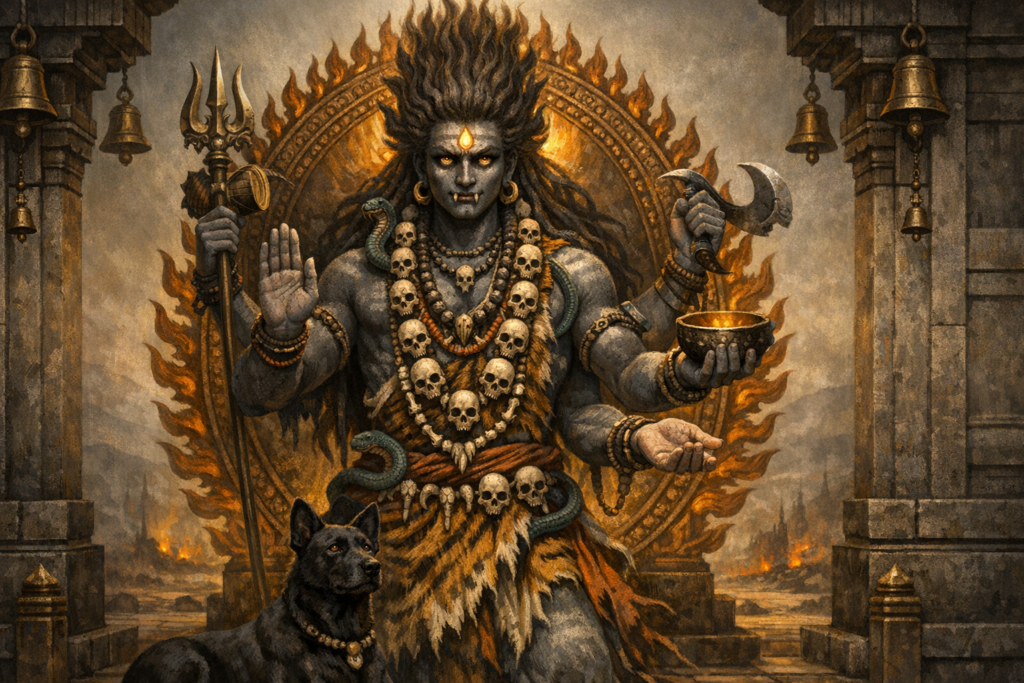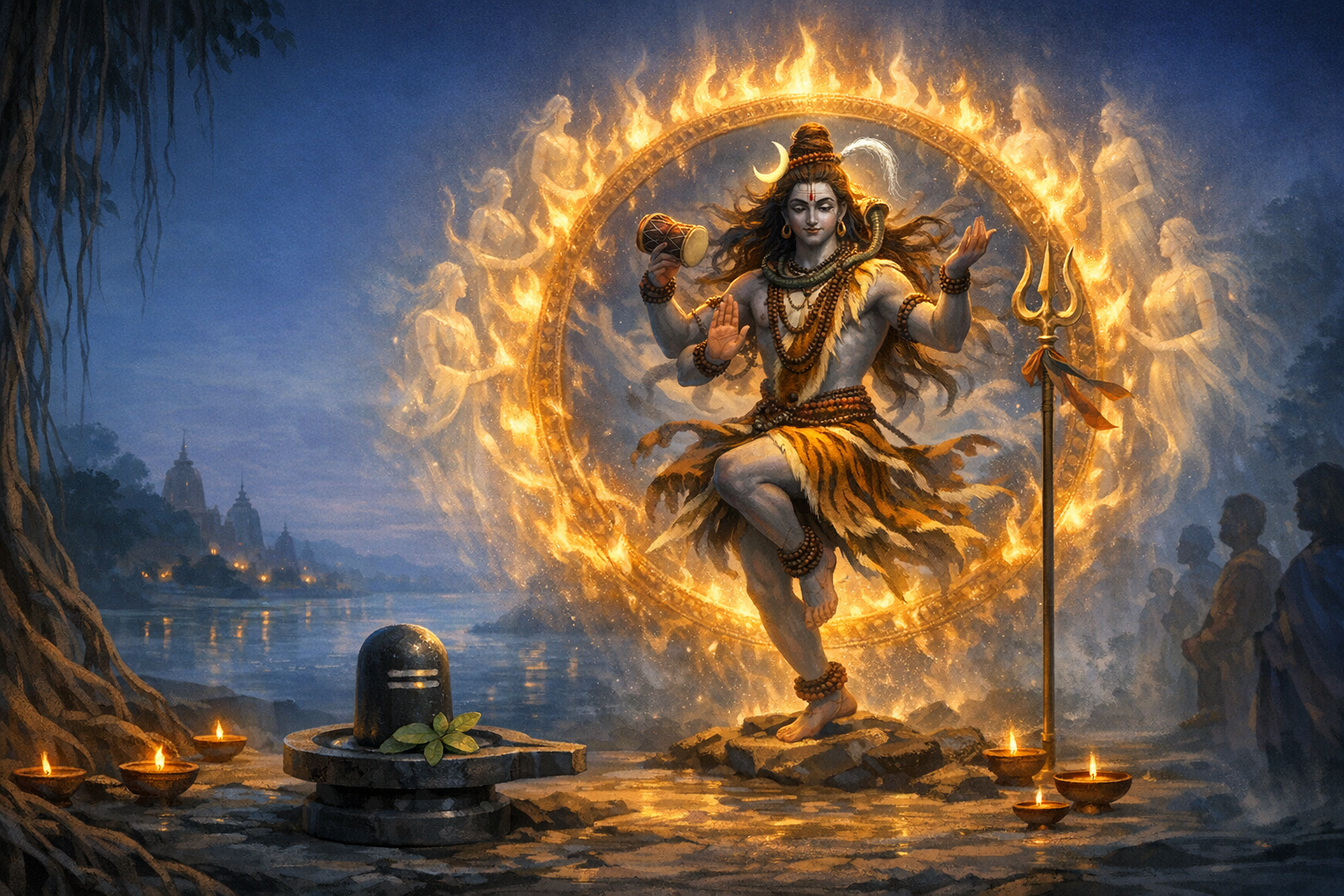
Shiva occupies a singular place in Hindu Dharma as the deity who stands at the threshold between the seen and the unseen, the pure and the impure, the celebrated and the forgotten. While many gods are depicted amidst celestial opulence, Shiva chooses the cremation grounds, wears ashes, and moves among serpents. In this liminal habitat, he is revered as the master of bhuta-ganas—ghosts, spirits, and unsettling forces—signaling a theology that refuses to exclude anything from the compass of the sacred.
This imagery is neither incidental nor merely aesthetic. It encodes a comprehensive spiritual anthropology in which dread, decay, loss, and marginality are not denied but transfigured. By consecrating the cremation ground, Shiva sacralizes impermanence and dignifies those whom society ignores. The result is a vision that dissolves rigid binaries—purity and pollution, insider and outsider—and invites a fearless embrace of reality in its totality.
The term bhuta-ganas itself is instructive. Bhuta refers both to subtle beings and to the elemental constituents of existence, while gana indicates retinues or communities. As Ganapati is the leader of the ganas in one register, Shiva is the sovereign whose presence unites contingents across the spectrum of life, death, and the in-between. The mythology neither demonizes these beings nor romanticizes them; it integrates them, indicating that spiritual maturity arises from inclusion rather than denial.
Vedic roots underwrite this posture of radical inclusion. The figure of Rudra in the Rig Veda and the liturgy of Sri Rudram in the Yajurveda reveal a deity who both wounds and heals, terrifies and consoles. The Tryambaka (Mahamrityunjaya) mantra petitions release from mortality’s noose while acknowledging death’s inescapable nearness. From Rudra’s ambivalence emerges Shiva’s integration: the Lord who governs life and death without preference, enveloping fear in wisdom.
Puranic literature—Shiva Purana, Skanda Purana, and allied texts—extends these foundations. Narratives of Tripurantaka, Kapalin, and Ardhanarishvara expand a theology in which creation, preservation, dissolution, concealment, and grace (the pañcakṛtya) are facets of a single divine dance. Nothing lies beyond this choreography: ghosts, goblins, and forgotten souls are participants, not pariahs, in the cosmic rite.
The cremation ground (smashana) functions as a university of impermanence. Ash (vibhuti or bhasma) across Shiva’s body is a catechism in one stroke: all things pass, yet what is essential remains untouched. Devotees who touch vibhuti on the forehead experience a tactile memento mori that paradoxically deepens belonging. The site many fear becomes, through Shiva’s presence, a sanctuary for courage and clarity.
The aghora dimension clarifies this ethic of fearlessness. Aghora signifies “not terrible,” pointing to a vision in which even the fearsome appears as a mode of compassion once rightly seen. Bhairava, especially Kaal Bhairav as kṣetrapāla (guardian) of Kashi, focuses this insight: time and transience are not adversaries to be evaded but thresholds to be understood. In revering Bhairava, practitioners cultivate steadiness amid flux.
Shiva’s companionship with the marginalized carries social implications. By presiding over those relegated to the periphery, he retracts the logic of exclusion. Ascetics styled as avadhutas, mendicants outside conventional markers, and communities stigmatized by purity codes all find, in Shiva’s orbit, a declaration of inherent worth. The theological claim doubles as a civic ethic: dignity is not a privilege conferred by status, but a truth revealed by insight.
These motifs resonate across dharmic traditions. Vajrayana Buddhism places charnel-ground imagery at the heart of sadhana, where confronting decay opens pathways to fearless compassion; protectors such as Mahakala echo time’s transforming edge familiar to Bhairava. Jainism, through aparigraha and tapas, refines a rigor of detachment that mirrors Shiva’s ash-borne dispassion while affirming ahimsa as the highest discipline. Sikhism’s nirbhau, nirvair (fearless, without enmity) aligns with the Shaiva ideal of equanimity before life and death. Each tradition converges on a common horizon: liberation through courage, clarity, and compassion.
As Shiva Nataraja, the ananda-tandava stages the grammar of the universe in movement: creation, maintenance, dissolution, concealment, and grace. Under his dancing feet, the apasmara (forgetfulness) is subdued, dramatizing the conquest of ignorance rather than of persons. The circle of flames around Nataraja is not annihilation alone but the radiance of continuous renewal, a reminder that endings are bends, not breaks, in the cosmic current.
The aniconic shiva linga, often misunderstood, exemplifies subtlety in symbol. Far from a crude reduction, it functions as an axis mundi—an abstract aperture through which the formless is honored without fixation. In many temples the linga-yoni ensemble encodes complementarity rather than conflict, gesturing to the indivisible dance of polarity that births and sustains existence. Where images can distract, the linga concentrates.
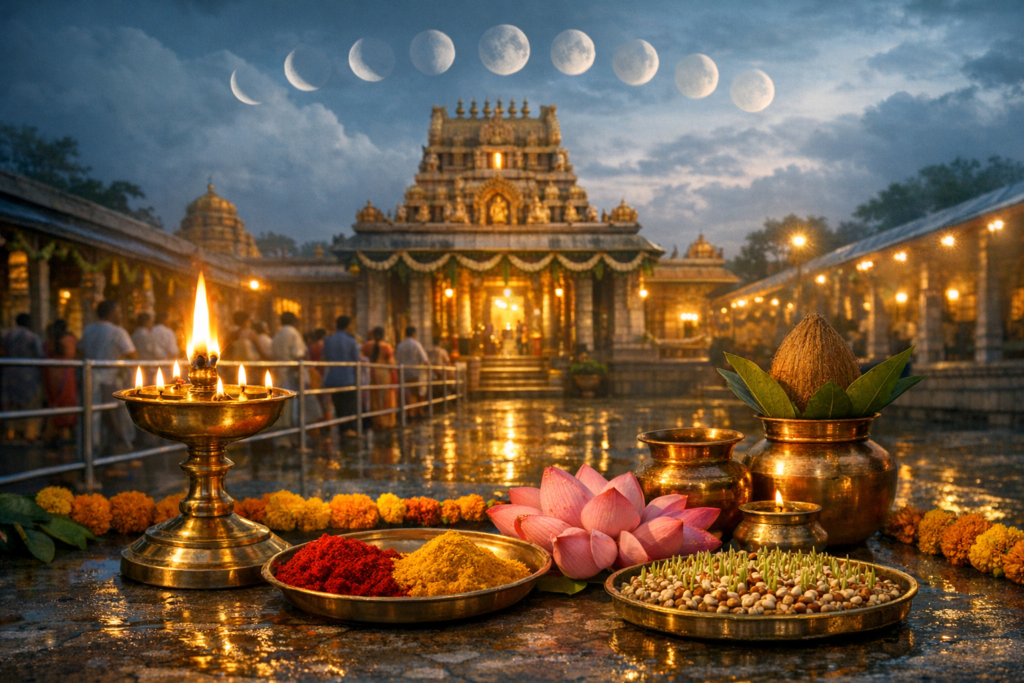
Ritual life translates these theologies into lived experience. On Maha Shivaratri, devotees practice vigil, fasting, japa, and abhishekam with water, milk, and bilva patra, enacting surrender before the ungraspable. Rudra-abhisheka sections from the Yajurveda intensify a meditative current that many find both sobering and exhilarating. The night’s austerity is not deprivation; it is a rehearsal for clear seeing.
Historical Shaiva lineages made this vision concrete. Pashupata and Kapalika movements, as well as later Agamic and Tantric schools, explored disciplined engagement with the liminal—not as license but as technology for transmutation. Even practices such as panchamundi asana, preserved in textual memory, signify a willingness to confront fear and revulsion, reframing them as fuel for awakening. Properly rooted in ethical restraints (yama-niyama) and guided by a competent guru, such methods clarify rather than confuse.
Psychologically, Shiva’s liminality models integration of the human “shadow.” The bhuta-ganas can be read as disowned emotions, memories, and impulses. In Shiva’s retinue, they are neither expelled nor indulged; they are illumined and ordered. This is not self-negation but self-clarification, an approach congruent with contemplative disciplines across Hinduism, Buddhism, Jainism, and Sikhism that transmute afflictive states into wisdom.
Socially, Shiva’s embrace of the outcast functions as a critique of brittle hierarchies. Cremation grounds ignore pedigrees; mortality levels rank. By standing there and welcoming those deemed impure, Shiva exposes the limits of exclusionary logics and enshrines an ethic of radical hospitality. The message is not anti-ritual but post-prejudice: practices may be many, but dignity is one.
In a plural civilization, the doctrine of Ishta offers a durable framework for unity. Ishta in Hinduism recognizes that seekers differ in temperament and therefore in their fruitful approaches to the divine. Within this horizon, devotion to Shiva as Nataraja, to Vishnu as Sri Rama or Sri Krishna, meditation on the Buddha’s compassion, Jain aparigraha, or the Sikh remembrance of the One aligns under a single value: multiple valid paths to realization. Such plurality strengthens social cohesion when paired with mutual respect and shared ethical commitments.
Importantly, this inclusivity does not require negating other paths; it invites encounter without erasure. Shiva’s presence among bhuta-ganas models a capacious center that can host diversity without fear. The cremation ground becomes an emblem of common ground: where human vulnerability is obvious, sectarian pride loses urgency, and compassion finds its natural register.
Geographically and culturally, Shaivism’s footprint—from Kashi to Chidambaram, from Himalayan hermitages to coastal shrines—exhibits remarkable adaptability. In each setting, the same paradox returns: the Lord of dissolution is also the fountain of renewal. Communities that honor Shiva often cultivate resilience practices—collective singing of Sri Rudram, community service on festival days, and shared meals—that translate metaphysics into solidarity.
For devotees and observers alike, the practical question remains: what does it mean to welcome the “outcast” within and without? The tradition answers by recommending fearless self-inquiry, disciplined compassion, and reverence for the sanctity of all life. In honoring Shiva as Lord of the bhuta-ganas, one acknowledges that no fragment of experience is beyond redemption, and no person is beyond dignity.
In sum, Shiva’s sovereignty over ghosts, goblins, and the forgotten reframes the margins of existence as sites of profound learning. The theology is unabashedly integrative: it neither hides death nor worships it, neither indulges chaos nor suppresses it. By standing where most refuse to stand, Shiva reveals a path in which wisdom, courage, and compassion converge. That path, shared across dharmic traditions in diverse idioms, sustains unity in spiritual diversity and equips communities to meet the world as it is—whole, complex, and holy.
Inspired by this post on Hindu Blog.