
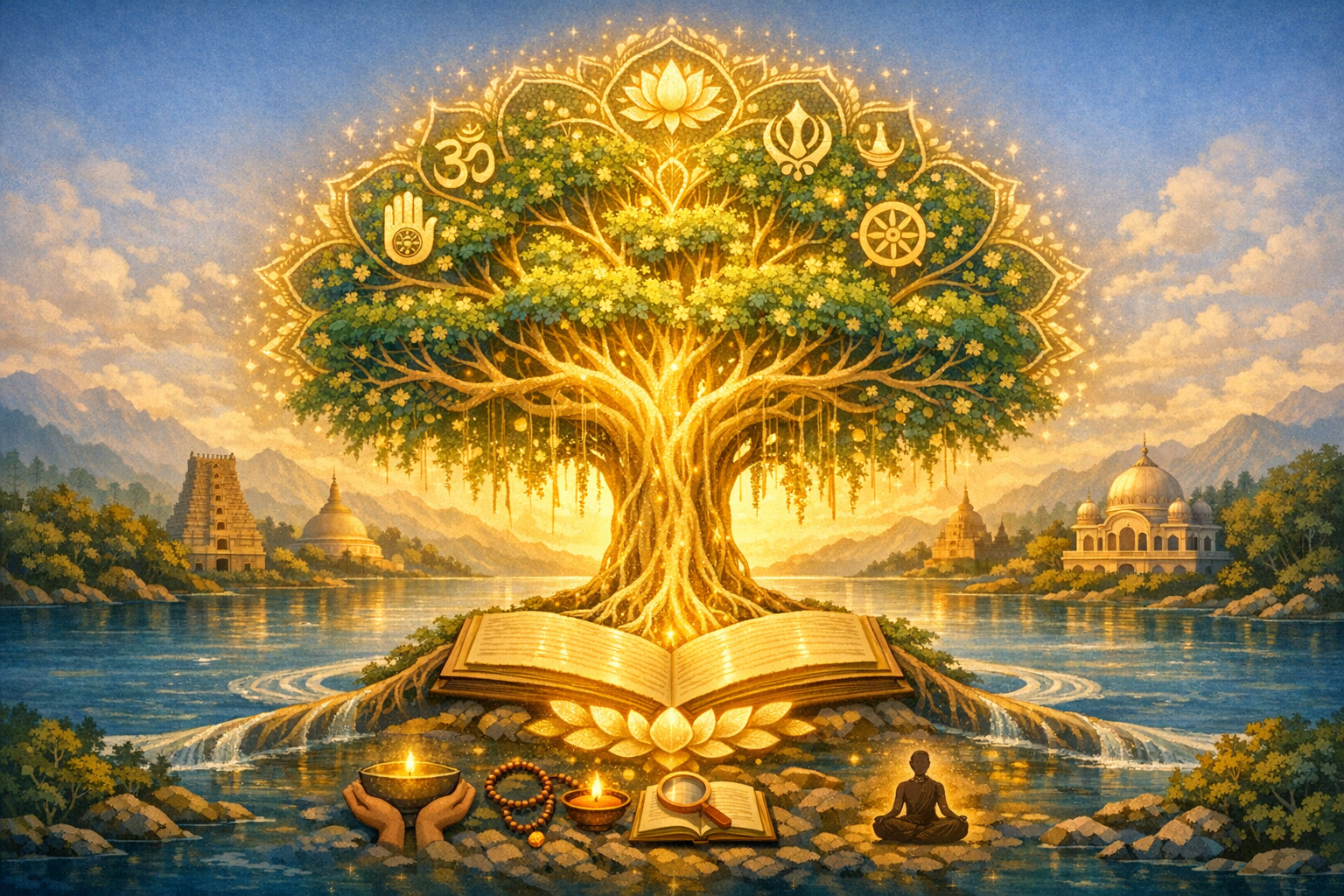
Sanatana Dharma, commonly identified with Hinduism, is best understood as a living, adaptive wisdom tradition rather than a narrow, prescriptive religion. Its scope is civilizational and experiential, embracing philosophy, ritual, ethics, aesthetics, and community life in ways that help individuals and societies orient themselves within a complex and often bewildering world.
The term “Sanatana” signifies what is perennial or timeless, and “Dharma” denotes the principles, duties, and intrinsic order that sustain life and meaning. Together, Sanatana Dharma points to an enduring framework that guides moral reasoning, spiritual practice, and social responsibility while remaining open to revision and renewal through insight, dialogue, and lived experience.
Describing Hinduism solely as a “religion” risks reducing its civilizational scope to a set of dogmas. Sanatana Dharma functions as a comprehensive ecosystem of knowledge and practice. It integrates metaphysical inquiry with everyday disciplines, offers multiple soteriological paths, and evolves through debate, commentary, and experimentation. This breadth enables seekers to find what aligns with temperament, stage of life, and social context.
Pluralism is not a peripheral attribute of Sanatana Dharma; it is a central organizing principle. The idea of Ishta (chosen focus of worship or practice) affirms that individuals may approach the ultimate Reality through diverse names, forms, and contemplative methods. This pluralism harmonizes with the Jain doctrine of Anekantavada (the many-sidedness of truth), the Buddhist emphasis on upaya (skillful means), and the Sikh insistence on universal remembrance of the One (Ik Onkar), strengthening unity in spiritual diversity across the Dharmic family.
Scriptural foundations are layered and dialogic. Shruti texts such as the Vedas and Upanishads articulate foundational cosmology, metaphysics, and contemplative insight; Smriti literature—including the Mahabharata, Ramayana, Dharmashastras, and Puranas—translates principles into narrative, law, and devotion. Agamas and Tantras provide temple, ritual, and yogic frameworks. This stratified canon invites interpretation rather than rigid literalism, fostering continuity with creativity.
Hermeneutically, Sanatana Dharma accepts multiplicity in meaning (artha) and method (marga). Classical commentators demonstrate how the same mantra or narrative can yield ethical, psychological, ritual, and nondual insights. This openness to layered reading encourages learning communities to cultivate both fidelity to lineage and responsiveness to present needs.
Philosophically, the six classical darshanas—Nyaya, Vaisheshika, Samkhya, Yoga, Purva Mimamsa, and Vedanta—offer complementary lenses. Nyaya refines logic and debate; Vaisheshika catalogs categories of existence; Samkhya maps consciousness and matter (purusha and prakriti); Yoga prescribes disciplined practice; Mimamsa develops ritual hermeneutics; and Vedanta explores the nature of Brahman, atman, and liberation. Their cross-pollination with Buddhist and Jain logics exemplifies Dharmic intellectual synergy.
Epistemology (pramana) in these traditions values multiple modes of knowing—pratyaksha (perception), anumana (inference), shabda (reliable testimony), upamana (analogy), arthapatti (postulation), and anupalabdhi (non-cognition). Rather than opposing reason and revelation, Sanatana Dharma weaves them into a graded pathway from everyday discernment to transformative realization.
Practice is plural yet rigorous. Karma Yoga (selfless action) sacralizes work and service (seva); Bhakti Yoga (devotion) cultivates love, gratitude, and surrender; Jnana Yoga (knowledge) employs inquiry and discernment (viveka); and Raja/Ashtanga Yoga integrates ethical observances (yamas and niyamas), posture, breath (pranayama), sense-withdrawal (pratyahara), concentration (dharana), meditation (dhyana), and absorption (samadhi). Many practitioners blend these paths according to capacity and context.
Ethically, Dharma aligns inner growth with social responsibility. Virtues such as ahimsa (non-violence), satya (truthfulness), asteya (non-stealing), brahmacharya (right use of energy), and aparigraha (non-hoarding) orient personal conduct. These ideals resonate across Dharmic kinships: Jain ahimsa and aparigraha, Buddhist sila and karuna, and Sikh seva and simran, underscoring a common moral core that encourages compassion, restraint, and dignity.
Cosmologically, Sanatana Dharma embraces cyclical time (yugas, kalpas) and ecological interdependence (rita, the cosmic order). Whether read literally or symbolically, these ideas cultivate humility before vast temporal scales and support an ethos of environmental stewardship. Many communities thus regard rivers, forests, and mountains as sacred, integrating sustainability into worship and livelihood.
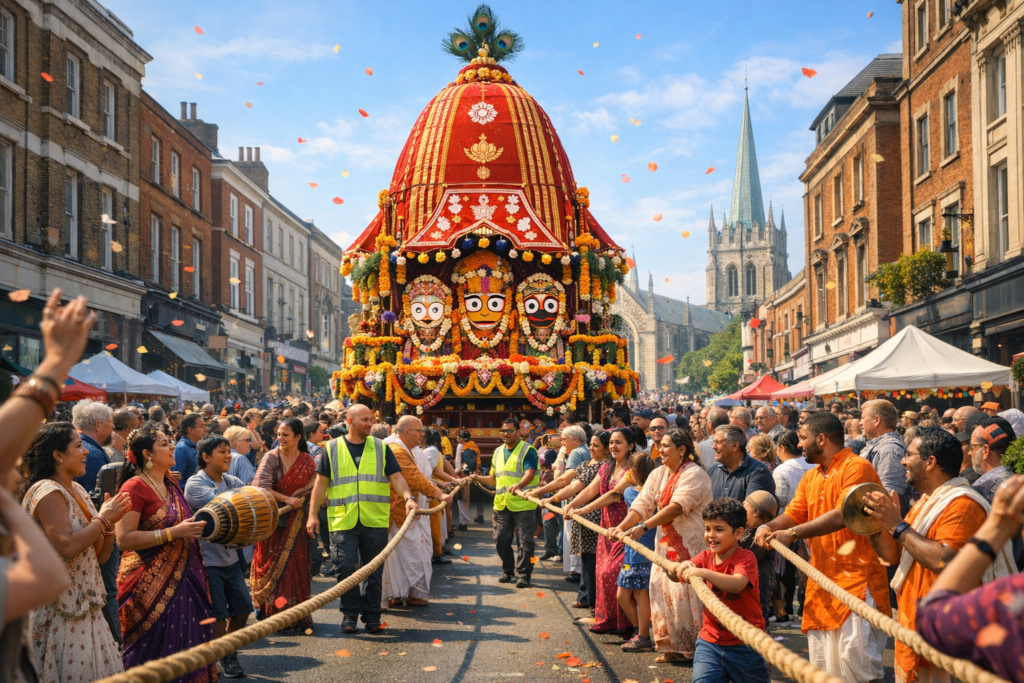
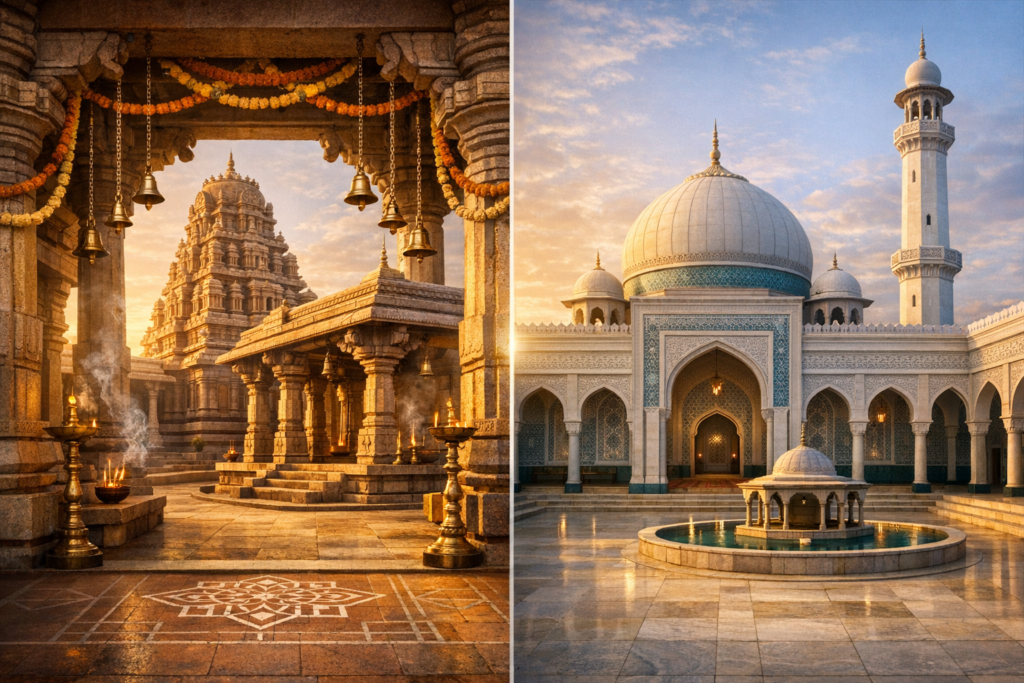
Ritual and temple traditions are designed to bridge the visible and the subtle. Murti (sacred embodiment) is not seen as mere idol but as a consecrated locus of presence through prana-pratishtha. Daily puja, seasonal festivals, and pilgrimage (tirtha-yatra) synchronize individual rhythms with communal time, offering shared moments of meaning, joy, and service.
Samskaras (life-cycle sacraments) mark ethical and spiritual thresholds—from naming (namakarana) to initiation (upanayana), marriage (vivaha), and final rites (antyeshti). They frame family life as a sacred journey, embedding values in practice. Many householders report that simple acts—lighting a lamp at dawn, sharing prasad, or reciting a verse—strengthen resilience and belonging.
Socially, the ashrama model (brahmacharya, grihastha, vanaprastha, sannyasa) recognizes changing duties across life stages. Contemporary reinterpretations emphasize competence, equality of dignity, and inclusive participation in knowledge and leadership, aligning with the Dharmic aim of lokasangraha—sustaining social harmony and welfare.
Common misconceptions obscure this complexity. The popular phrase “330 million gods” gestures not to polytheistic chaos but to an imaginative acknowledgment of the infinite modes in which the One can be contemplated. Likewise, “idol worship” is better understood as symbolic meditation and relational devotion, where form becomes a disciplined pathway to the formless.
Intertradition dialogue within the Dharmic family advances shared flourishing. Hindu Vedantic nondualism, Buddhist insight into anicca and sunyata, Jain Anekantavada, and Sikh devotion to Ik Onkar collectively enrich the understanding of consciousness, ethics, and society. This complementarity serves the ideal of Vasudhaiva Kutumbakam—“the world is one family.”
Ishta as a guiding principle promotes freedom of spiritual method without diluting unity. Individuals may honor Krishna, Shiva, Devi, the formless Brahman, or the sacred syllable Om, just as others may center meditation on breath, compassion practice, or the Divine Name. The result is unity in spiritual plurality, where shared virtues anchor diverse practices.
Yoga and meditation contribute evidence-informed benefits—attention regulation, emotional balance, and stress resilience—while retaining their soteriological aim of moksha (liberation). When combined with Bhakti’s gratitude practices and Karma Yoga’s ethic of seva, daily life becomes a field for contemplative action and ethical excellence.
In diaspora communities, Sanatana Dharma often functions as a cultural home and a universalist bridge. Youth programs that teach Sanskrit shlokas alongside mindfulness, community service, and interfaith dialogue demonstrate how eternal principles adapt to modern plural societies without losing depth.
Education has always been central. From ancient gurukulas and monastic universities to contemporary institutes, learning is framed as character formation and liberation, not mere information transfer. Classical debates model intellectual humility: strong claims tested by stronger questions in pursuit of clarity and compassion.
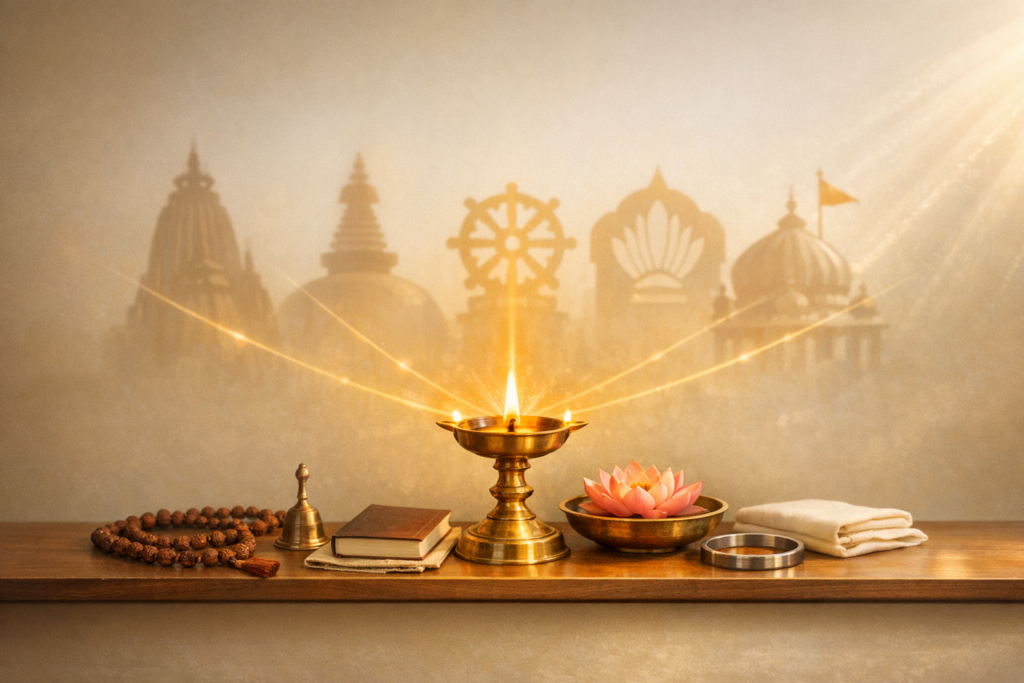
Practically, many households integrate concise disciplines: a few minutes of pranayama to steady attention, silent japa or kirtan to open the heart, a verse from the Upanishads or Bhagavad-Gita to anchor ethics, and one daily act of seva to embody Dharma. Over time, these small practices reorient habit, cultivate gratitude, and harmonize duty with inner freedom.
Sanatana Dharma’s public ethos aims at dignity for all beings. By encouraging dialogue over dogma, responsibility over rhetoric, and service over self-display, it helps communities respond to contemporary challenges—polarization, ecological stress, and loneliness—with wisdom, solidarity, and hope.
Ultimately, Sanatana Dharma is a participatory ocean of meaning. It invites seekers to wade in through devotion, dive through inquiry, and navigate by practice, recognizing that many currents can lead to the same vastness. In honoring the distinct strengths of Hinduism, Buddhism, Jainism, and Sikhism while celebrating their shared Dharmic foundations, it offers a mature, unifying path toward clarity, resilience, and joy.
Inspired by this post on Hindu Blog.






Leave a Reply
You must be logged in to post a comment.