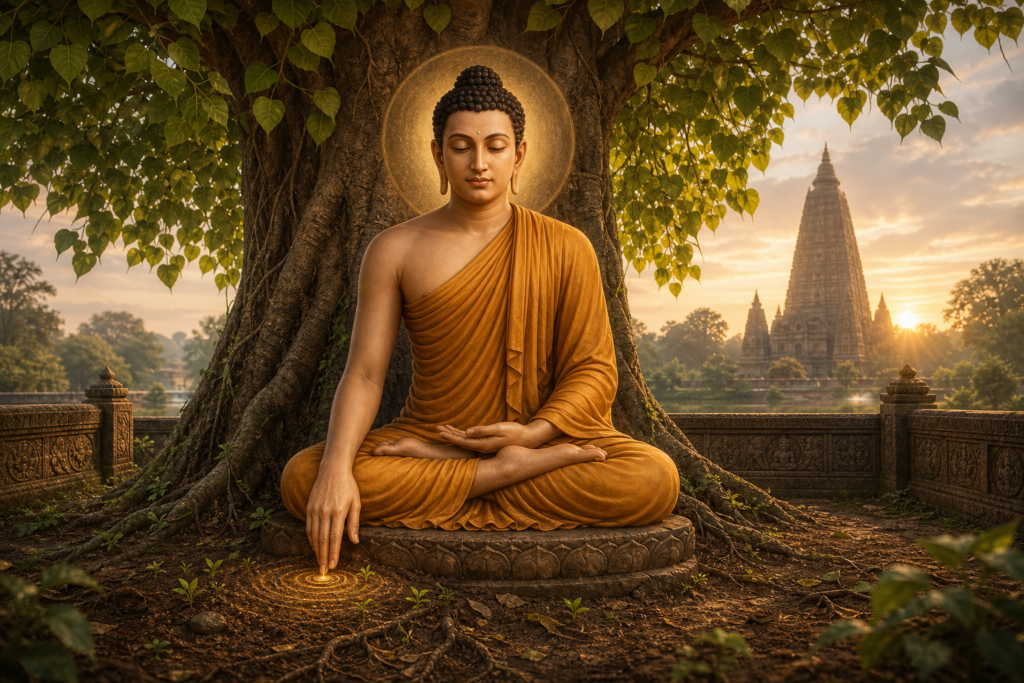
In Hinduism, there is no doctrine of an eternally doomed soul. The philosophical vision centers on a compassionate cosmology in which every jiva journeys through samsara, guided by karma and nurtured by dharma, toward eventual moksha. This framework, affirmed in the Upanishads and animated in the Bhagavad Gita, portrays existence as an educative, corrective, and ultimately liberating process rather than a permanent sentence.
At the heart of this view is the understanding of atman as intrinsically luminous and capable of realization. Karma outlines moral causality, not fatalism; it maps consequences while preserving moral agency. Through self-cultivationwhether via karma-yoga, bhakti, dhyana, or jnanapractitioners transform tendencies and align life with dharma, steadily loosening the knots that bind consciousness to rebirth.
Texts that describe naraka (hell-like realms) present them as remedial and impermanent, not everlasting. Such states function as moral pedagogy within samsara, reinforcing responsibility while safeguarding hope. The overarching telos remains mokshafreedom from ignorance (avidya) and the cessation of suffering (duhkha).
This non-eternalist ethos resonates across the wider family of dharmic traditions. Buddhism affirms that there is no eternal self and that karmic results are finite; even distressing realms are not perpetual, and nirvana remains possible. Jainism teaches that every jiva can attain kevala jnana through purification, ahimsa, and tapas, rejecting eternal condemnation. Sikhism emphasizes mukti through Naam, grace, and righteous conduct, orienting life toward union rather than permanent exclusion. Together, these perspectives cultivate a shared civilizational confidence in renewal, compassion, and transformative ethics.
Hindu pluralism further strengthens this hope-filled vision. The acceptance of multiple margasbhakti, jnana, karma, and raja-yogahonors diversity in temperament and practice while sustaining unity in spiritual diversity. This inclusivity fosters religious tolerance, interfaith dialogue, and social harmony without reducing profound philosophical differences.
Many contemporary seekers recognize the psychological and ethical benefits of this framework. Moving from fear-based narratives to responsibility-centered growth, they find that practices such as japa, seva, pranayama, and meditation encourage resilience, emotional clarity, and moral steadiness. Communities shaped by these disciplines often report deeper empathy, steadfast commitment to non-violence, and a sustained orientation toward the welfare of all (lokasangraha).
Ultimately, the Hindu concept of liberation replaces despair with disciplined hope. By affirming that no soul is eternally lost, it unites ethical accountability with boundless possibility. In concert with Buddhism, Jainism, and Sikhism, it offers a coherent, plural, and rigorous path: transform karma, refine consciousness, and realize freedomwithout fear of eternal damnation.
Inspired by this post on Hindu Blog.