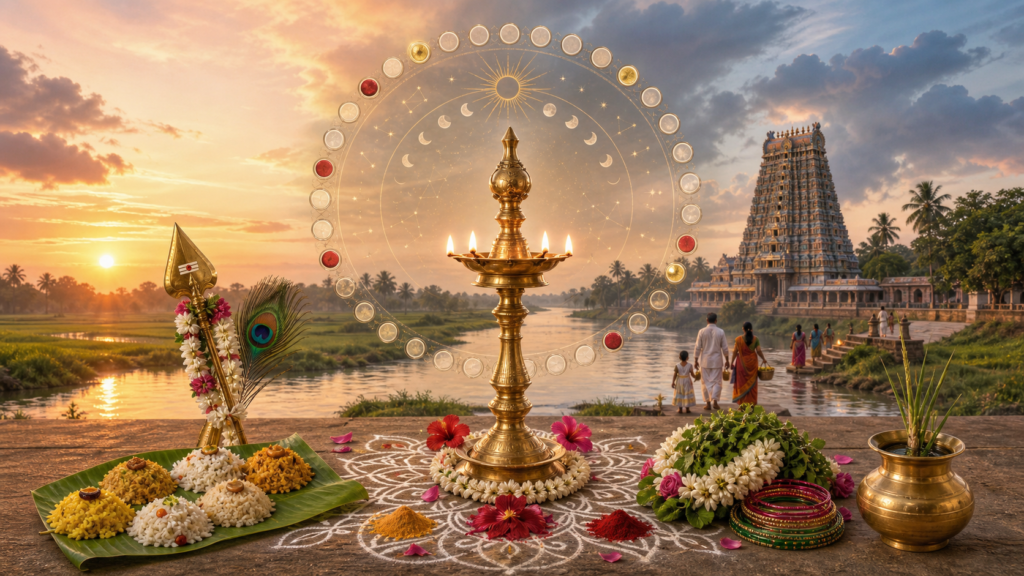
Manmatha, also known as Kamadeva, appears in Hindu scriptures as the celestial archer whose domain extends beyond worldly desire into the subtler sphere of sacred attraction. Classical narratives portray a sugarcane bow strung with buzzing bees and five flower-tipped arrows that awaken the heart to the presence of the Supreme. In Hindu philosophy, this symbolism functions as a contemplative bridge between mythic imagery and lived devotion, suggesting that loverefined and oriented toward the Divinebecomes a force that draws the soul (jīva) toward its highest good.
Puranic and poetic traditions commonly describe the five flower-arrows as aravinda (lotus), aśoka, chūta (mango blossom), navamallikā (jasmine), and nīlotpala (blue lotus). Each flower carries an evocative quality: purity and depth (lotus), the easing of sorrow (aśoka), youthful freshness (mango blossom), sweetness and intimacy (jasmine), and contemplative serenity (blue lotus). Taken together, they symbolize progressive refinements of attention, tenderness, and awemovements of the heart that soften, steady, and illumine love when it is directed toward the Divine.
Within the bhakti tradition, these subtle movements of love naturally open into five devotional relationships, or rasas: śānta (peaceful reverence), dāsya (serviceful devotion), sakhya (sacred friendship), vātsalya (parental tenderness), and mādhurya (conjugal sweetness). These rasas articulate how the devotee may relate to the Supreme across a spectrum ranging from serene contemplation to intimate, love-drenched union. The five arrows, in this reading, are not inducements to attachment but catalysts that reorient love toward transcendence.
Śānta-rasa (peaceful reverence) centers on inward stillness and contemplative awe. The lotus imagery here evokes purity and depth: love becomes clear-sighted, free from turbulence. Readers often recognize this rasa in moments of silent darśana, japa, or scriptural reflection when the mind stabilizes and a quiet joy arises, not from possession, but from presence.
Dāsya-rasa (serviceful devotion) expresses love through humility, dedication, and practical seva. The easing quality of aśoka resonates with this mood: sorrow diminishes as life is consecrated to divine service. Hanuman’s devotion to Śrī Rāma exemplifies how obedience, honor, and steadfast work become vehicles of ecstatic love rather than burdens of duty.
Sakhya-rasa (sacred friendship) brings affection, trust, and shared play into the devotional path. The freshness of chūta (mango blossom) mirrors the spontaneous joy of companions who serve and celebrate together. In the Mahābhārata, Arjuna’s rapport with Śrī Krishna illustrates how counsel, courage, and camaraderie can be sanctified as a bond of friendship with the Divine.
Vātsalya-rasa (parental tenderness) transforms love into protective care, forgiveness, and nurturing attention. The gentle sweetness of navamallikā (jasmine) evokes the intimacy of this bond. The narratives of Yaśodā and Krishna illuminate how guidance, responsibility, and affectionate correction become offerings of love, teaching that compassion itself can be worship.
Mādhurya-rasa (conjugal sweetness) represents love’s most intimate refinement, suffused with longing, joy, and complete self-giving. The contemplative depth of nīlotpala (blue lotus) aligns with the mystery of union celebrated in the līlās of the Gopīs and Śrī Krishna. Here, aesthetic beauty (rasa), poetry, music, and dance become vehicles for a love that is both tender and all-absorbing.
In comparative perspective, the spiritual ethos of other dharmic traditions affirms similar movements of the heart. Buddhism’s brahmavihārasmettā (loving-kindness), karuṇā (compassion), muditā (empathetic joy), and upekkhā (equanimity)cultivate dispositions that resonate with śānta and vātsalya. Jain teachings on maitri and karuṇā foster non-violence and care that harmonize with dāsya and sakhya as compassionate service. Sikh practice centers prem (love), nām-simran (remembrance), and seva (selfless service), embodying devotion in community. While theological languages differ, the shared commitment to love, compassion, and ethical living underscores a profound unity in spiritual plurality across the dharmic family.
Practitioners often find that these rasas illuminate ordinary life: silent prayer before dawn (śānta), conscientious work dedicated to the Divine (dāsya), honest companionship that uplifts (sakhya), patient caregiving in family life (vātsalya), and moments of lyrical devotion through kīrtana or poetry (mādhurya). Small, consistent gesturesoffering food with gratitude, speaking gently, serving without recognitionbecome practical ways to allow Manmatha’s “arrows” to soften the heart toward the Supreme.
For contemplative practice, one may meditate sequentially on the five flowers, noting the felt shift from attention and purity to tenderness and intimacy. Scriptural study (śravaṇa), remembrance (smaraṇa), and service (seva) can be framed within the rasas, allowing readers to discern which relationship naturally predominates and how others might mature over time. This reflective method preserves theological accuracy while inviting an experiential, emotionally resonant engagement with bhakti.
Viewed through this lens, Manmatha’s five arrows are not incitements to restlessness but pedagogies of the heart. They invite a transformation in which desire is refined into devotion, affection is stabilized by wisdom, and intimacy is made luminous by selfless love. Such maturation supports a culture of compassion and mutual respectan aspiration shared across Hinduism, Buddhism, Jainism, and Sikhismaffirming unity in spiritual diversity without erasing the richness of each tradition.
Inspired by this post on Hindu Blog.