-
Decoding the Nathpanthis: Distinctive Marks, Sacred Symbolism, and Their Modern Relevance

The Nathpanthis (Kanphata Yogis) can be respectfully identified by a constellation of signs—split-ear kundalas, tripundra ash, rudraksha malas, jata, austere robes, and mantric salutations such as “Alakh Niranjan” and “Adesh.” This long-form guide explains what each marker means, how it functions within Shaivite practice, and how Nath monastic settings (mathas, akharas, dhunis) provide context. It…
-
The Sacred Ethics of Speech: Why Offending Devotees Harms Bhakti and Dharmic Unity

This analysis examines why offending devotees carries significant ethical and spiritual consequences across Hinduism, Buddhism, Jainism, and Sikhism. Drawing on the Bhagavad Gita, the Bhagavata Purana, Buddhist Right Speech, Jain Anekantavada, and Sikh teachings on ninda, it outlines a shared Dharmic framework for reverent, truthful, and compassionate communication. Practical protocols—private counsel, restorative repair, and tradition-specific…
-
Honoring Dr. I. J. Singh: Enduring Legacy of Sikh Scholarship, Dharmic Unity, and Seva

This tribute reflects on Dr. I. J. Singh’s enduring legacy as a scholar of Sikhism whose life integrated faith, rigorous reasoning, and seva into a coherent method. It outlines how careful definitions, hermeneutic humility, and evidence-based argument advanced both public understanding and institutional ethics in the Sikh Community. It highlights miri-piri as a practical design…
-
King Charles III’s Lambeth Summit: A Powerful Step Toward Interfaith Harmony and Dharmic Unity

King Charles III convened about thirty leaders from Muslim, Sikh, Baháʼí, Christian, Hindu, and other traditions at Lambeth Palace Library to advance interfaith dialogue and social cohesion in the UK. The setting underscored scholarship and stewardship, framing the meeting as both symbolic and practical. Grounded in the UK’s 2021 Census realities, the piece explains why…
-
Modern Love, Ancient Bhakti: How Krishna’s Wisdom Transforms Youthful Desire into Dharma

This article reframes the turbulence of modern romance through Krishna-centered bhakti, showing how desire (kāma) matures into expansive love (prema) when guided by dharma. Drawing on the Bhagavad Gita and Srimad Bhagavata Purana, it explains the cognitive arc of attachment and offers a practical sequence—śravaṇa, kīrtana, smaraṇa, and sevā—to steady attention, study, and relationships. Yoga’s…
-
Sikh New Year Unveiled: Time, Grace, and the Soul’s Journey across Dharmic Pathways

The Sikh New Year is observed through two complementary frames: 1 Chet in the Nanakshahi calendar in mid-March and Vaisakhi (Baisakhi) in mid-April, when the Khalsa was inaugurated at Anandpur Sahib in 1699. Grounded in Gurmat, the New Year weaves time (hukam), grace (nadar, kirpa), and the soul’s aspiration into a coherent path centered on…
-
Celebrate Birthdays by Tithi for Profound Spiritual Well‑Being: A Scholarly, Practical Guide

Observing birthdays by janma tithi, rather than the civil date, aligns personal milestones with the Hindu calendar’s exact Sun–Moon geometry. This lunar approach—affirmed by Sadguru Dr Charudatta Pingale (HJS)—anchors the day in Vedic timekeeping and fosters spiritual well‑being. Practical guidelines clarify how to identify the janma tithi, handle kshaya/vriddhi tithis, and balance janma tithi with…
-
Beyond Names and Forms: Embracing the Infinite Nature of God in Dharmic Wisdom

Hinduism teaches that the divine is infinite and cannot be confined to one form or name, as expressed in the Upanishadic dictum “Ekam Sat Vipra Bahudha Vadanti.” This perspective affirms religious pluralism through Ishta, allowing varied yet valid approaches to the sacred. Related dharmic traditions reinforce this vision: Jainism’s Anekantavada, Buddhism’s skillful means, and Sikhism’s…
-
Manmatha’s Five Arrows and the Five Bhakti Rasas: Symbolism, Practice, and Dharmic Unity

This article explores Manmatha (Kamadeva) as the celestial archer whose five flower-arrows symbolize the refinement of love from emotion to devotion. It connects these arrows to the five bhakti rasas—śānta, dāsya, sakhya, vātsalya, and mādhurya—clarifying how each rasa expresses a distinct relationship with the Divine. Readers gain practical ways to integrate these rasas into daily…
-
Akali, the Timeless Kali: Exploring Nine Manifestations in the Tantra Purana and Mahakala Samhita

This article surveys nine manifestations of Goddess Kali drawn from the Tantra Purana, Toral Tantra, and the Mahakala Samhita (Anusmriti Prakarana), with special attention to Akali. Akali is explained as “beyond time,” highlighting a core Shakta insight into the timeless ground of reality. The discussion connects theological meaning with lived experience, showing how these forms…
-
Lucknow University Conference on Hindutva Calls for Teaching Hindu Texts to Enrich Curriculum

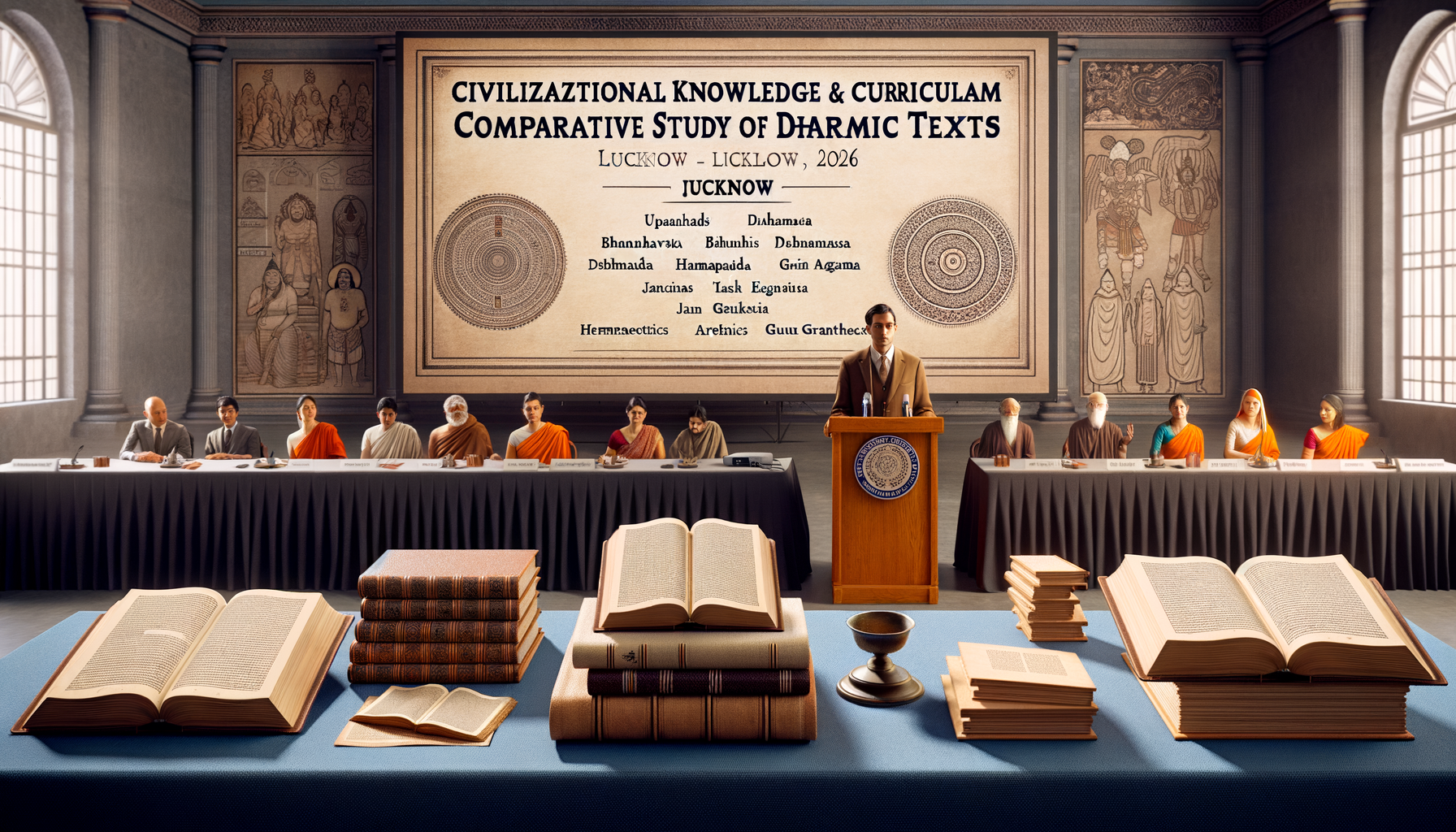
A national conference at Lucknow University on 20 January 2026 explored how the study of Hindu texts can be academically integrated into university curricula. Framed as civilizational inquiry rather than partisanship, the dialogue emphasized comparative study across Hinduism, Buddhism, Jainism, and Sikhism. Proposed pathways included electives, reading seminars, philological methods, and interdisciplinary courses that connect…
-
Light and Shadow in the Heart: Dharmic Wisdom on Human Duality and Inner Harmony

Dharmic traditions view the human heart as a dynamic interplay of light and shadow, emphasizing growth through accountability rather than moral absolutism. Hindu scriptures describe the guṇas and the contrast of daivī and āsurī qualities, while the Upanishads situate clarity in the Self beyond mental fluctuation. Buddhism’s Middle Way, Jainism’s Anekantavada, and Sikh reflections on…
-
Roaring Devotion: Simha Rāja Reimagines The Lion King with a Kṛṣṇa Conscious Lens, Uniting Audiences

The Bhaktivedanta Players closed their 40th anniversary year with Simha Rāja, a Kṛṣṇa conscious reimagining of The Lion King that blended devotional drama with cultural education. The production highlighted dharma, ethical leadership, and responsibility to the community while maintaining the narrative’s familiar arc. Audiences reported a strong emotional resonance, noting renewed appreciation for Devotion and…
-
No Life Is Lesser or Greater: A Transformative Dharmic Insight on Sacred Equality

This article explores the Hindu philosophical teaching that no life is inferior or superior, grounding sacred equality in Atman and the unity of all existence in Brahman. It clarifies how this insight becomes an ethical imperative through Ahimsa and Dharma, encouraging compassionate, responsible action. Readers gain a clear understanding of sama-darśana in the Bhagavad Gita…
-
Living Liberation Now: Hindu Moksha (Jivanmukti) and Parallels in Buddhism, Jainism, Sikhism

Hindu thought presents moksha as jivanmukti—liberation achievable in this lifetime—grounded in the Upanishads and the Bhagavad Gita. This living freedom is described as a state beyond pleasure and pain, where equanimity and compassion guide daily action. Multiple pathways—jnana, bhakti, karma, and raja yoga—offer complementary means to stabilize insight. The vision aligns with dharmic parallels: Buddhist…
-
When Brahma Created Termites: Vishnu’s Decapitation and the Awe-Inspiring Rise of Hayagriva

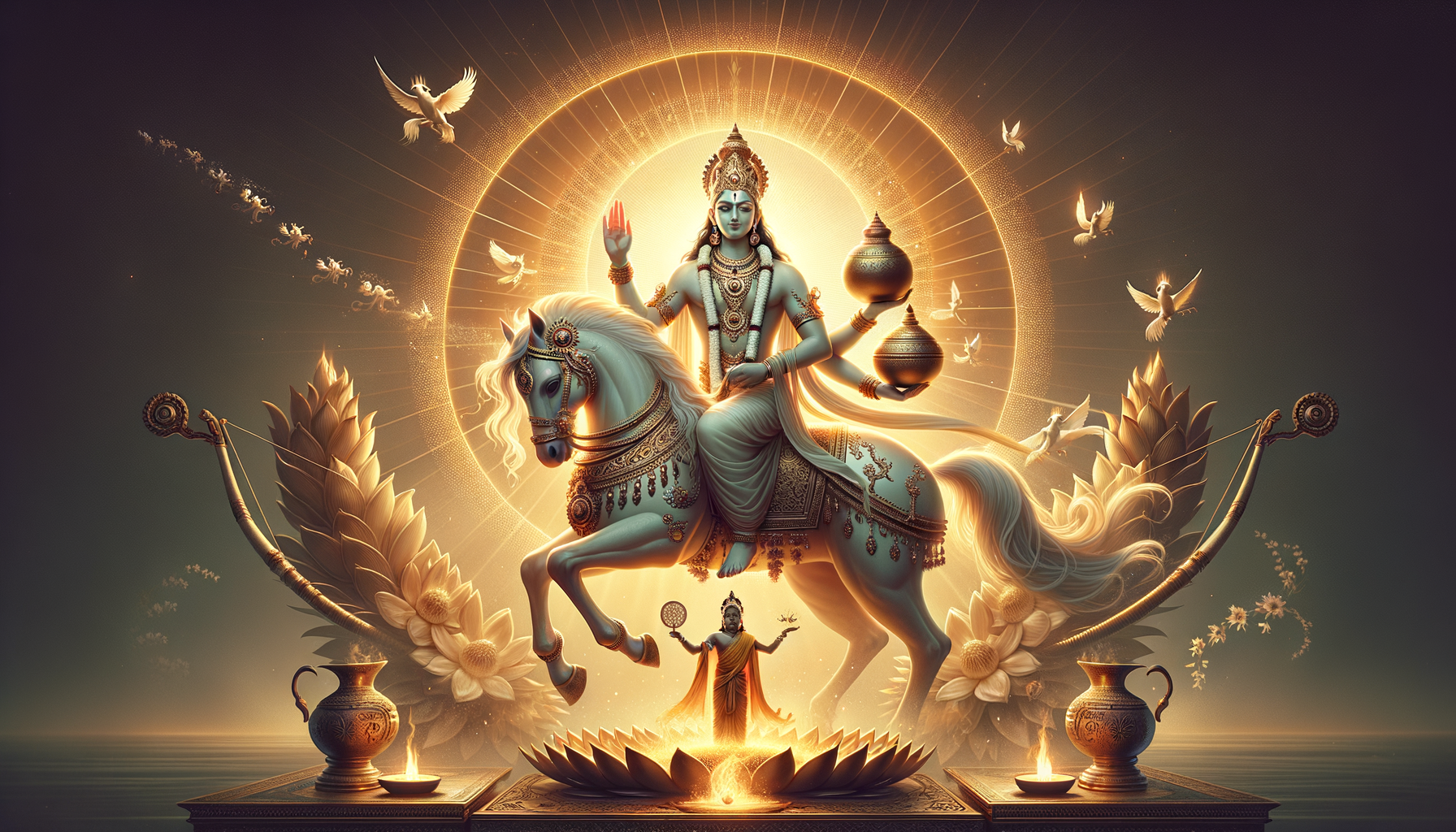
This article explores the Purāṇic narrative in which Brahma creates termites to awaken Vishnu, leading to the unexpected decapitation that culminates in Vishnu’s horse-headed form, Hayagriva. It clarifies major variations found in Hindu scriptures, highlighting how yajna, vigilance, and knowledge restore cosmic order. Readers gain a nuanced, academic account that remains emotionally resonant: small causes…
-
Poetry as an Arrow: Devotion That Pierces the Heart and Spins the Mind in Bhakti

A timeless aphorism frames a dharmic insight: true poetry and devotion should stir both heart and mind. This piece explores how bhajans, shabads, gathas, and stavans act like a bowman’s arrow—precise, transformative, and unifying across Hinduism, Buddhism, Jainism, and Sikhism. Readers gain an academic yet accessible understanding of why emotional resonance must be joined with…
-
Decoding Four-Handed Hindu Deities: Powerful Insights into the Purusharthas

Four-handed Hindu deities embody a precise visual philosophy: the divine guides all four aims of life—dharma, artha, kama, and moksha—within a single, integrated vision. This academic overview clarifies each Purushartha and shows how four arms symbolize balance rather than excess. Readers learn how common attributes and mudras can suggest the four aims while remaining flexible…
-
Discover the Ultimate Secret of the Gunas: How the Divine Transcends and Guides Them

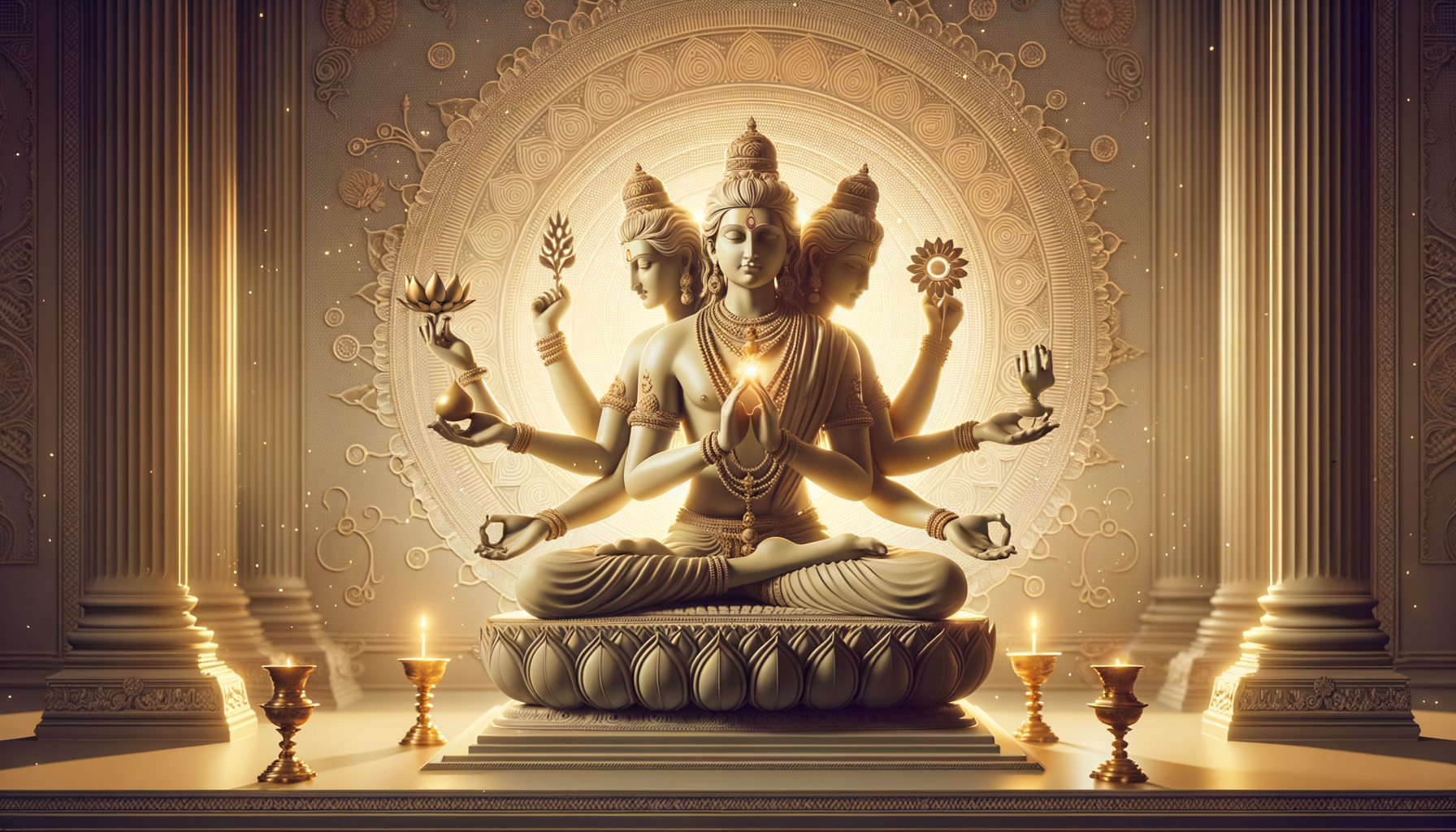
This article explains the classic Hinduism teaching that the Divine pervades the three guṇas—sattva, rajas, tamas—yet remains beyond them. Drawing on the Bhagavad Gita and Vedānta, it clarifies how Brahman is nirguṇa while Īśvara guides Prakṛti’s modes without being constrained. Readers gain a practical framework for recognizing and transcending the guṇas through bhakti, viveka, and…