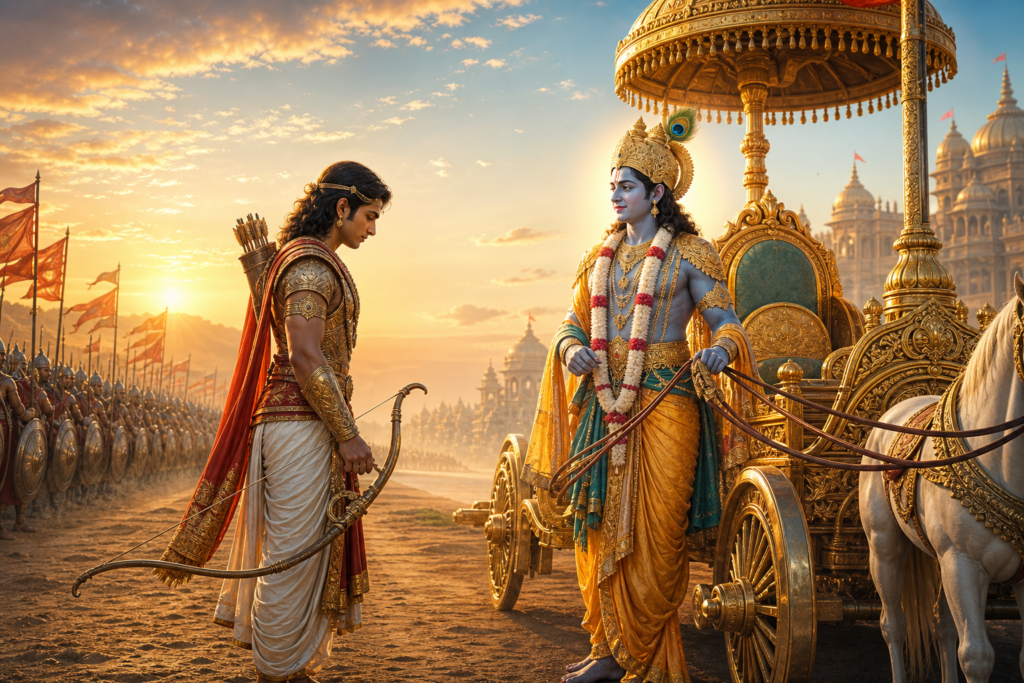
Within the sacred literature of Hinduism, Sri Krishna is repeatedly portrayed as Purna Purushathe Complete Being whose nature transcends reduction to any single attribute, role, or gender. Popular narratives often foreground the heroic strategist of Kurukshetra, the charioteer of Arjuna, and the irresistible beloved of the gopis. Yet a more comprehensive reading across the Bhagavad Gita, the Bhagavata Purana, and Vaishnava theological texts discloses a deeper dimension: Krishna embodies and harmonizes both the masculine and the feminine principles, thereby revealing divine wholeness that dissolves binary categories.
Bhagavad Gita 9.17 provides a clear scriptural anchor for this view: Krishna identifies as the “father of this world” and simultaneously as its “mother,” its sustainer, and its grandsire. Such self-description, framed within the Gita’s vibhuti discourse, invites a reorientation from rigid gender constructs toward the non-dual fullness of the Divine. In this perspective, gender markers are pedagogical and relational, not limiting; they indicate how the Divine relates to beings at varied levels of spiritual maturation.
The Purusha concept in the Vedas and the Upanishads, further crystallized in the Gita’s Purushottama doctrine (Bhagavad Gita 15.16–18), advances this transcendence. While Purusha is often translated as “cosmic person” or “spirit,” it does not connote maleness as a biological category. Rather, it denotes the ground of consciousness. Complementarily, Prakriti signifies the dynamic matrix of becoming. In Vaishnava thought, Krishna as the supreme Purusha is inseparable from His Shakti; the two are distinct for relational play (lila) yet non-different ontologicallya principle summarized as shakti-shaktiman abheda (the non-duality of energy and energetic).
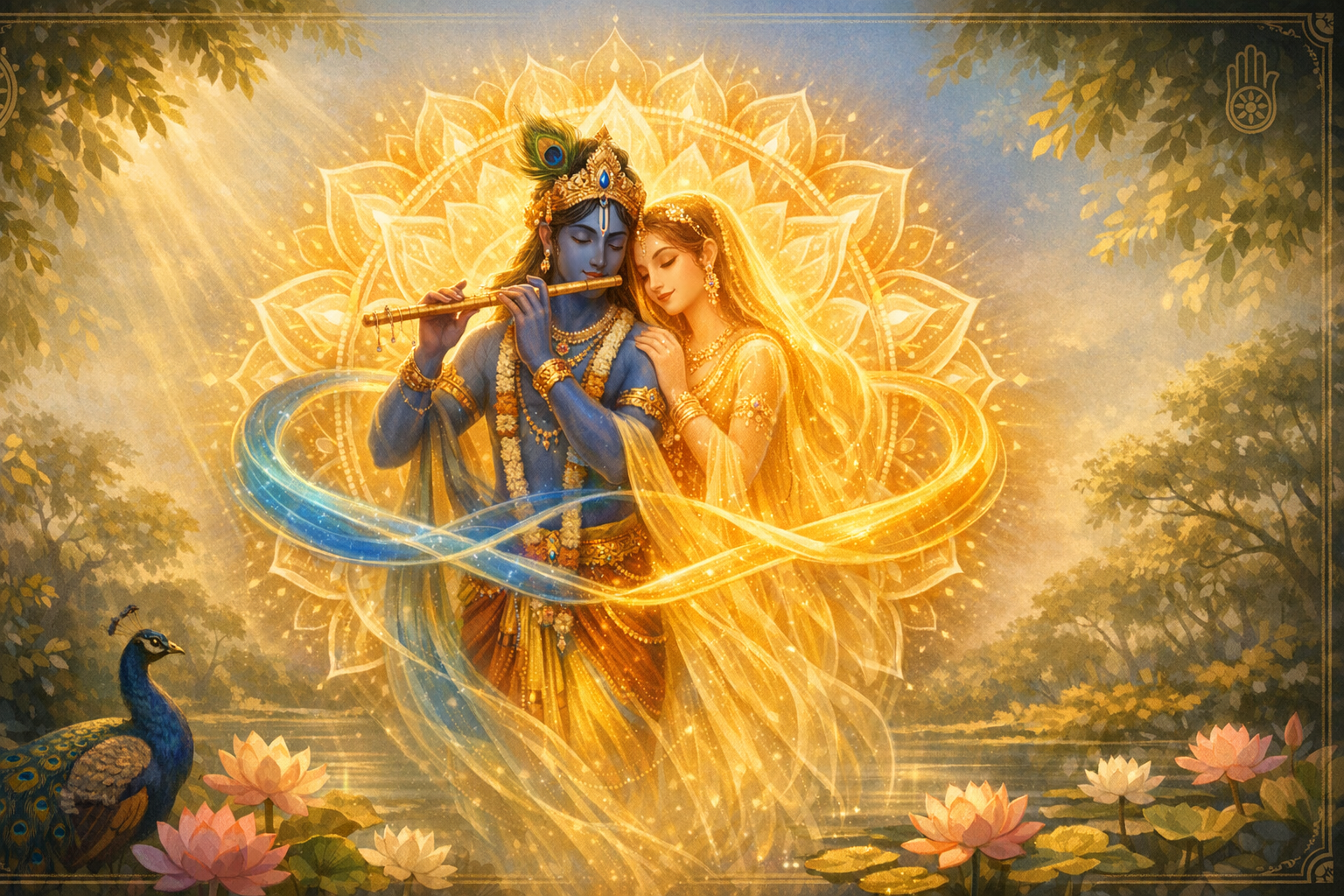
This unity is most influentially elaborated through Radha-Krishna theology. Radha is not merely a consort but Krishna’s Hladini Shaktithe bliss potency through which love is tasted and shared. Classic Gaudiya Vaishnava texts teach that Radha and Krishna are one reality manifest as two for the sake of love’s exchanges, and that their union discloses the summit of bhakti-rasa. The “two-in-one” vision is not an aesthetic flourish; it is a theological claim that the Divine contains and communicates both masculine and feminine perfections without division.
The Bhagavata Purana, which affirms “krishnas tu bhagavan svayam” (Krishna is the Supreme Lord), makes this theology experiential through the rasa-lila narratives (Bhagavata Purana 10.29–33). In these chapters, Krishna multiplies Himself to stand beside every gopi, mirroring the inner longing and fulfilling the highest devotional moods. Read theologically, such lila is not about gendered romance per se; it dramatizes how the Complete Being reciprocates the full spectrum of human affect, including the receptive, nurturing, tender, and relationalqualities culturally coded as feminine but, in this context, embraced as divine universals.
Historical Vaishnava practice deepens this synthesis. Many practitioners in the bhakti tradition adopt sakhi-bhavathe devotional identity of a handmaid or companion of Radhanot as a statement about their social gender but as a contemplative modality. This disciplined “feminine” positioning of the heart refines empathy, receptivity, and surrender, qualities at the core of God-realization. Far from erasing masculinity or femininity, the practice unites them in service of devotion, anchoring the devotee in a balanced self that is capable of universal love.
Krishna’s capacity to reveal the feminine divine also finds expression in the broader Vaishnava-Puranic corpus through the figure of Mohini, the enchanting female form of Vishnu. The Bhagavata Purana’s Samudra Manthana episodes (Bhagavata Purana 8.9–8.12) depict the Divine assuming a feminine embodiment to restore cosmic order. In many Vaishnava traditions where Krishna is understood as Svayam Bhagavanthe source of all avatarsMohini is read as a theologically consistent manifestation of that same complete divinity. Regional narratives, such as the Tamil tradition around Iravan (Aravan), further attest to cultural memories in which Krishna is associated with Mohini to uphold dharma and honor sacred vows, extending divine compassion across gendered experience.
Equally instructive is the Vaishnava–Shaiva synergy around Gopeshvara Mahadeva in Vrindavan, where Shiva is venerated as having assumed a gopi form to enter the rasa-lila. This inter-traditional motif, cherished by devotees, underscores a civilizational insight: the feminine principle is not peripheral but central to the highest theophany, and the great deities of the dharmic family mutually illuminate its depth. Such narratives foster unity rather than rivalry among lineages and show how the feminine sacred becomes a shared contemplative bridge.
Philosophically, this synthesis resonates with the Gita’s teaching that Purusha and Prakriti are co-present (Bhagavad Gita 13.20–23) and that true realization involves going “beyond the gunas” (Bhagavad Gita 14.20). In Gaudiya Vaishnavism, the doctrine of achintya-bheda-abheda (inconceivable oneness and difference) uniquely articulates how Krishna can be simultaneously the transcendent ground and the immanent relational presence. The feminine divine (Shakti) is thus neither an external adjunct nor a secondary principle; it is the primary power through which divinity is known and loved.
Iconographically, Vaishnava art often renders the inseparability of masculine and feminine through Lakshmi-Narayana and Radha-Krishna murtis, where placement, gesture, and ornamentation signal complementarity and unity. While the Ardhanarishvara icon belongs to Shaiva traditions, it works as a valuable comparative heuristic: it visually encodes a theological axiom common across dharmic systemsthat the ultimate surpasses exclusive gendering while honoring the full range of gendered symbolism as spiritually meaningful.
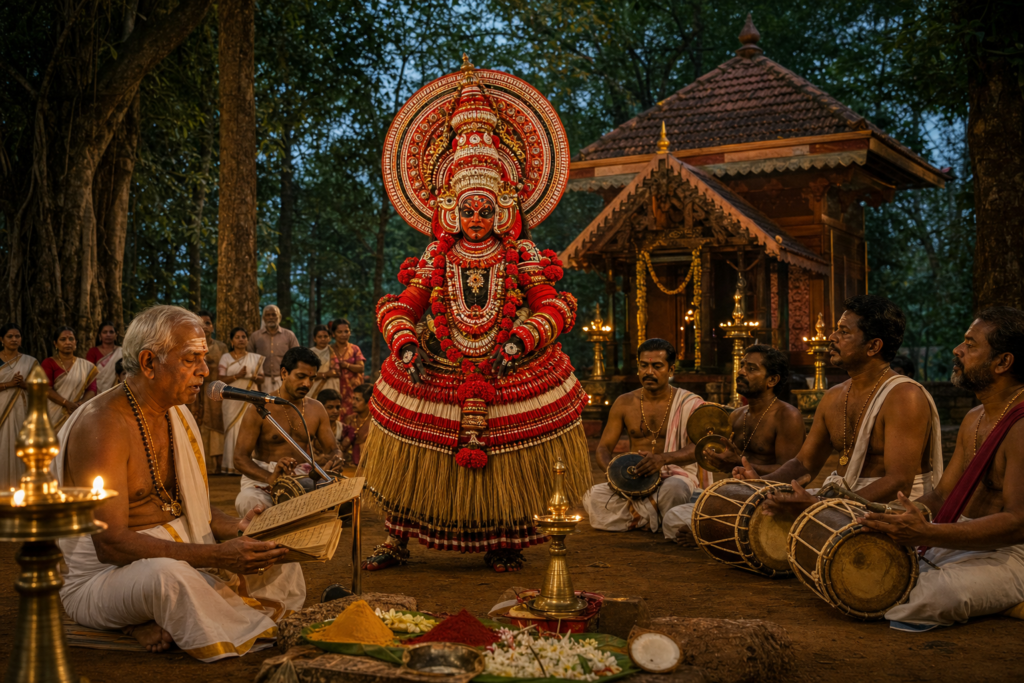
The social ripple effects of this theology are noteworthy. Communities inspired by Krishna’s completeness have historically provided sacred spaces for people whose lived experience of gender does not fit common binaries. The well-known Koovagam festival in Tamil Naduwhere transgender (aravani) communities participate in rituals recalling Mohini’s marriage to Aravanillustrates how mythic memory and living devotion can affirm dignity, belonging, and spiritual agency. While the forms and emphases vary by region, the underlying principle persists: the Divine’s embrace precedes human labels.
These insights also harmonize with sister dharmic traditions. In Mahayana Buddhism, the compassionate bodhisattva Avalokiteshvara appears in diverse genders across culturesfamously as Guanyin in a feminine form in East Asiaembodying upaya (skillful means) that meets beings where they are. The ultimate reality (śūnyatā) is beyond all dualities, including gender, yet compassion freely assumes forms for the sake of liberation.
Jain philosophy, with its detailed analysis of jiva (soul) and karma, affirms that the pure soul is inherently beyond gender. The Śvetāmbara tradition’s understanding of Mallinatha (Mallinath), the 19th Tirthankara, as female in that cosmic cycle underscores that liberation (moksha) is not gender-gated. This view dovetails with the broader dharmic insight that spiritual capacities are universal.
Sikh teachings present the One (Ik Onkar) as formless and beyond attributes, yet the Guru Granth Sahib employs richly gendered metaphorssuch as the “soul-bride” longing for the Divineto cultivate an intimate devotional sensibility. The line “So kio manda aakhiye jit jamme rajan” (Why call her inferior, from whom kings are born?) affirms reverence for womanhood while pointing beyond bodily identity to the universal light present in all beings.
Together, these convergences illuminate a civilizational ethos: unity in spiritual diversity. Hinduism, Buddhism, Jainism, and Sikhism, each in distinctive ways, affirm that the Divine or the ultimate truth cannot be confined to one gendered image. Krishna as Purna Purusha functions as a Vaishnava articulation of that shared wisdomhonoring the feminine divine not as an add-on, but as an intrinsic mode of divine self-revelation.
Devotional aesthetics (rasa-shastra) help explain how this works in practice. In madhurya-rasa (the mood of sweet intimacy), traditionally considered the highest in Gaudiya Vaishnavism, the heart is trained to receive, nurture, and tenderly serve. These are qualities culturally coded as feminine but understood theologically as universal virtues. As practitioners cultivate humility, empathy, and surrender, the “feminine” in every heart matures, and devotion becomes capacious enough to welcome the whole world.
Sadhana methods reflect this inclusivity. Kirtan, japa, seva, and contemplation on Krishna as both mother and father stabilize the mind and soften the heart. Some practitioners find it balancing to meditate alternately on Krishna’s protective, directive presence and on His nurturing, compassionate presence. This rhythm fosters emotional integrationwhat many would call heart-centred growthwithout departing from a rigorously scriptural framework.
Ishta-devata (chosen deity) principles further secure unity in diversity. The freedom to approach the Divine as Krishna, Rama, Shiva, Devi, or the formless Brahman reflects a mature spiritual ecology where different archetypal gateways lead toward the same summit of realization. In this ecology, Krishna’s embrace of the feminine divine serves not as a sectarian boundary but as a hospitable thresholdan assurance that no sincere bhava (devotional sentiment) is alien to God.
Ethically, the theology of the Complete Being prompts reverence for women and for all who locate themselves outside conventional gender norms. If the Supreme identifies as both mother and father, then social relations should mirror that reverence through inclusion, safety, and dignity. In practical terms, communities grounded in bhakti can cultivate compassionate dialogue, equitable participation, and responsive pastoral careexpressing in society the wholeness celebrated in scripture.
For students of philosophy, the Krishna–Radha synthesis offers a technically rich map. It demonstrates how metaphysical non-dualism can coexist with relational theism; how Purusha–Prakriti dynamics can be interpreted theistically without collapsing into monism; and how achintya-bheda-abheda preserves both God’s transcendence and immanence. These are not abstract puzzles but frameworks that stabilize devotional life in times of cultural change.
For historians and comparativists, the cross-pollinations are likewise significant. Interactions among Vaishnava, Shaiva, Shakta, Buddhist, Jain, and Sikh communities have created a shared reservoir of symbolsRadha-Krishna, Gopeshvara, Mohini, Avalokiteshvara/Guanyin, Mallinatha, and the soul-bridethat collectively witness to a subcontinental intuition: the sacred is generous with forms, and form is an ally of formless truth.
In congregational life, these insights translate into inclusive festivals and learning spaces. Celebrations that highlight Krishna’s lila with the gopis, or that honor feminine deities during Navaratri, can be framed as complementary rather than competitive. Youth education that pairs Bhagavad Gita study with stories of Radha’s compassion and fortitude enables a next generation to value strength and tenderness togetherKrishna’s heroic dharma and Radha’s boundless karuna held in one vision.
In summary, Krishna as Purna Purusha discloses a theologically rigorous and pastorally fertile pathway for embracing the feminine divine. The scriptural core (Bhagavad Gita and Bhagavata Purana), the Vaishnava doctrinal lattice (shakti-shaktiman abheda and achintya-bheda-abheda), and the living practices of bhakti converge to affirm that divine completeness is not an abstraction but an exacting spiritual invitation. It calls individuals and communities to become whole: intellectually nuanced, emotionally resonant, ethically compassionate, and hospitable to the many ways the One meets the many.
By receiving this invitation, seekers move beyond reductive binaries and into a unity that honors the breadth of dharmic traditionsHinduism, Buddhism, Jainism, and Sikhismeach contributing vital insights into a shared humane civilization. In this unity, Krishna’s masculine radiance and feminine tenderness are not opposites but facets of one inexhaustible light.
Inspired by this post on Hindu Blog.