Jnana Shasta, revered as the Silent Teacher, represents the distilled essence of divine wisdom, inner illumination, and contemplative serenity in the Hindu way of life. As a form of Śāstā (Dharmasastha/Ayyappa), this icon expresses knowledge not through proclamation but through poised presence, inviting seekers into maunaan interior stillness where insight dawns beyond words. The most evocative iconographic setting places Jnana Shasta beneath the banyan (vata) tree, a living emblem of sheltering knowledge, continuity of tradition, and the ever-renewing sap of dharma.
Philologically, Śāstā derives from the Sanskrit root śās, meaning to teach, guide, or enjoin. Jnana (jñāna) denotes liberating knowledgedirect insight into reality that severs ignorance (avidyā). Jnana Shasta therefore literally signifies the Teacher of Wisdom, an ontological and pedagogical synthesis where the guru, the teaching, and the realization converge. Within Hindu philosophy, this form resonates with Advaita Vedānta’s emphasis on self-revelation and also harmonizes with the broader dharmic intuitions of prajñā in Buddhism, kevala-jñāna in Jainism, and gyan illumined through shabad in Sikh traditions.
Iconographically, Jnana Shasta is typically portrayed as youthful and self-contained, seated in serene stillness beneath the banyan. The posture is most often padmāsana or sukhāsana on a simple āsana or dais, sometimes stabilized by a yogapaṭṭa across the knees, emphasizing disciplined contemplation. The right hand commonly forms jñāna-mudrā (chin-mudrā)the index finger returning to the thumbsymbolizing the union of the finite self with the infinite, while the left supports a pustaka (palm-leaf manuscript) or a kamandalu/akṣamālā, indexing both scriptural wisdom and meditative practice.
While the two-armed form centers on teaching gestures, certain śilpa-śāstra lineages preserve four-armed variants of Śāstā holding pāśa and aṅkuśa (self-mastery and guidance), paired with varada/abhaya (benevolence and fearlessness), integrating the grammar of Hindu iconography with the pedagogy of liberation. Agamic and śilpa manuals across South India admit multiple iconographic possibilities for Śāstā, yet all converge in Jnana Shasta on a single undertone: instruction through presence, steadiness, and inner luminosity.
The banyan itself functions as scripture in wood and leaf. Its prop roots suggest the unbroken lineage of teacher and student, while its canopy creates a sanctum of learning beyond wallsmirroring the ancient gurukula’s tree-shaded sabhā. In allied traditions, the ficus family also sanctifies awakening: the aśvattha (peepal, ficus religiosa) stands at the heart of the Buddha’s enlightenment, and Jaina contemplative spaces often valorize sacred trees as sites of tapas and insight. By situating Jnana Shasta beneath the banyan, the image weaves a civilizational metaphor: dharma shelters, nourishes, and renews the seeker across generations.
Traditional exegesis often places Jnana Shasta in a subtle dialogue with Dakṣiṇāmūrti, the youthful, south-facing Śiva who teaches through silence. The celebrated line “mauna-vyakhya-prakatita para-brahma-tattvaṁ” captures the shared grammar of instruction without utterance: when the mind’s clamor abates, the truth of the Self becomes self-evident. In this pedagogical horizon, Jnana Shasta and Dakṣiṇāmūrti are not rivals but resonancesdistinct iconographic currents flowing to the same ocean of realization.
The theology surrounding Śāstā in South India recognizes him as Harihara-putra in popular lore, and as Dharmasastha in temple tradition, especially in Kerala and Tamil Nadu. Jnana Shasta emphasizes Śāstā’s guru-bhāva, distilling his ethical (dharma) sovereignty into epistemic (jñāna) clarity. The mantra forms such as “Om Śrī Dharmasasthāya Namaḥ” and the devotional invocation “Swamiye Saranam Ayyappa” become contemplative gateways when practiced with interior silence, leading devotees from ritual performance to contemplative assimilation.
As a pedagogical image, Jnana Shasta integrates three axes of the Hindu darśanas: śruti-pramāṇa (Upaniṣadic testimony), yukti (reasoned reflection), and anubhava (realization). The pustaka invokes śāstra-pramāṇa; the jñāna-mudrā invites reason’s return to the Self; the seat of mauna points to direct experience. Within yogic anatomy, the posture and mudrā calm the prāṇa-vṛttis, allowing attention (ekāgratā) to stabilize in the heart of awareness (chit), consonant with the practical insights of Jnana Yoga and Rāja Yoga.
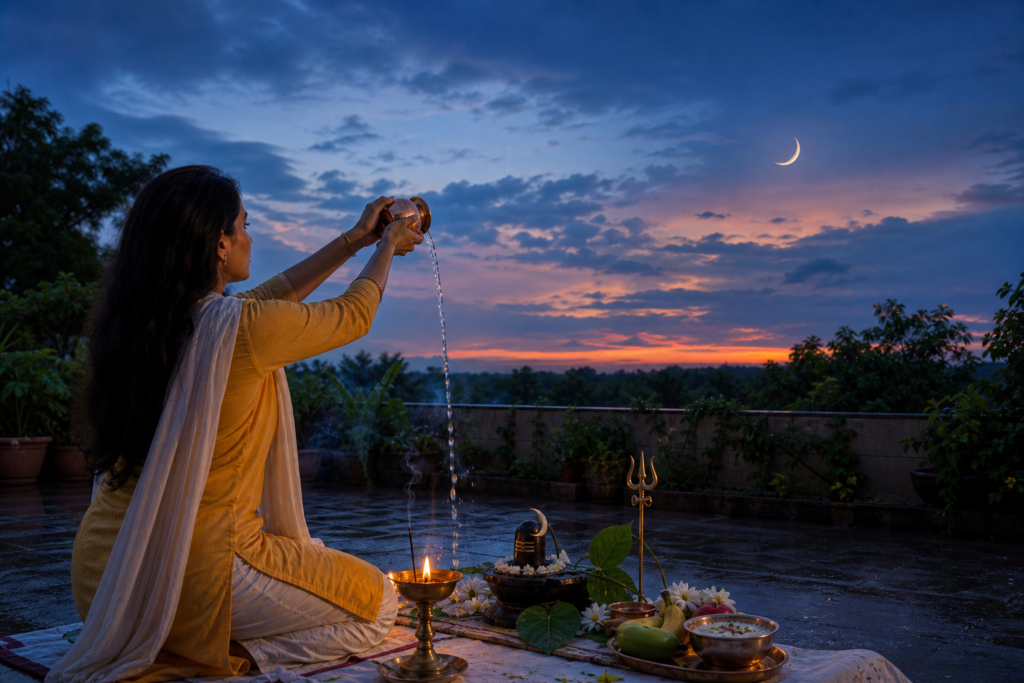
From a ritual standpoint, worship of Jnana Shasta may include dīpa (lamp) offerings that symbolize the light of discernment, along with recitation of stotras and meditative japa undertaken in deliberate quiet. Devotees often experience the grove-like calm of the shrine precinct as a teacher in its own right, where even the rustle of leaves suggests that knowledge, like breath, is already within. In many pilgrimage contexts related to Ayyappa, disciplines such as vrata, simple diet, and inward restraint prepare the mind for such silent learning.
Art-historically, Śāstā iconography appears across multiple mediastone, bronze, wood, muraldepending on region and period. While Dharmasastha is sometimes depicted with consorts (Pūrṇa and Puṣkalā) or in martial and protective aspects, Jnana Shasta is a contemplative specialization. South Indian śilpa canons, guided by tālamāna proportional systems, chisel this form with youthful features, a gently arched brow, and eyes lowered in atma-dṛṣṭi, balancing grammar (śāstra) with grace (saundarya).
Doctrinally, Jnana Shasta condenses the insight that liberation (mokṣa) is neither manufactured nor imported; it is uncovered when ignorance falls away. This aligns with the Upaniṣadic method of negation and discernmentneti neticulminating in akhaṇḍākāra-vṛtti, the nondual recognition that the Self is full, free, and ever luminous. In devotional settings, this insight complements bhakti: love steadies the mind; knowledge removes the veil; together, they fulfill dharma.
The banyan’s symbolism extends into ethics. Its sheltering presence reminds that wisdom must be compassionateknowledge without care is incomplete. Jnana Shasta as Dharmasastha thus unites epistemology and ethics: to know truly is to align with truth (satya), non-harm (ahiṁsā), and responsible action (dharma). The fruit of right knowledge is a right lifesteadfast, accommodating, and service-oriented.
Across dharmic traditions, this confluence is visible. Buddhism’s prajñā matures alongside karuṇā; Jainism’s anekāntavāda counsels humility in knowing, honoring many-sided truth; Sikh teachings uplift gyan as inseparable from seva and nām. Jnana Shasta stands as an image of that shared civilizational vow: unity in spiritual diversity, and diversity that ripens into unity.
Contemplative pedagogy provides a practical bridge from icon to inner craft. A simple sādhana inspired by Jnana Shasta may proceed in three movements: first, lit a dīpa and internalize its still flame; second, sit in a stable, comfortable āsana, bringing breath into a quiet, unforced rhythm; third, allow japawhether of “Om Śrī Dharmasasthāya Namaḥ” or “Swamiye Saranam Ayyappa”to soften into mauna, so the mind can rest in awareness itself. In this arc, the mantra becomes the oar, silence the shore.
Psychologically, silence is not emptiness but clarity. As agitation subsides, attention ceases to scatter, and working memory clears for insight. Contemporary contemplative research suggests that intentional quiet can reduce cognitive noise and heighten metacognitive awarenessobservations that traditional yoga articulates as pramāṇa-siddha: steadiness (sthira), ease (sukha), and lucidity (sattva) are the conditions in which jñāna becomes vivid.
In temple praxis, Jnana Shasta’s sannidhi often evokes a wood-grove atmosphere, even when the shrine is urbanthrough green courtyards, mural foliage, or ritual lamps arranged like constellations under a vault. The pradakṣiṇā path can be approached as a walking meditation, each step a verse in an unspoken Upaniṣad. For many devotees, the experience is quietly transformative: the world does not disappear; the heart learns to see it as permeated by presence.
Comparative theology clarifies that Jnana Shasta does not supplant Guru or Śāstra; rather, this icon mediates their unity. The teacher imparts method; the texts reveal vision; the deity’s silent grace confers assimilation. In pedagogical terms, this is the triad of śravaṇa (hearing), manana (reflection), and nididhyāsana (deep contemplation), architected in stone and shade.
A recurring misconception casts Ayyappa and Śāstā exclusively as ascetic or martial. The Jnana Shasta form corrects this partiality by foregrounding the guru-bhāva already implicit in the name Śāstā. Devotees across regions have long approached Śāstā for protection, ethical courage, and clarity of mind; the banyan-seated teacher shows that these aims meet most fruitfully in knowledge aligned with virtue.
From a hermeneutic perspective, Jnana Shasta endorses interpretive humility. Just as a banyan extends countless roots while remaining one tree, the tradition recognizes multiple valid approaches to the Real. This resonates with anekāntavāda’s many-sidedness and with the inclusivist tenor of Hindu philosophy of unity, where plurality of paths is not a concession but a strength intrinsic to dharma.
Devotional literature reinforces the centrality of the silent teacher. Verses invoked in the spirit of Jnana Shastadrawn from the Upaniṣads, Guru Gītā, or stotras honoring the guru-tattvacomplement the image beneath the banyan. Their aim is identical: to carry the mind from concept to contact, from learning about truth to resting as truth.
In educational and cultural settings, the image of teaching under a tree invites a return to first principles in pedagogy: simplicity, closeness to nature, a dialogical approach that values quiet reflection as much as debate, and a commitment to lived ethics over mere abstraction. Within contemporary life, where information is abundant but attention is frayed, Jnana Shasta offers a correctivewisdom requires depth, patience, and practice.
Theologically, the fruit of venerating Jnana Shasta is integration. Knowledge (jñāna) without love (bhakti) becomes dry; love without knowledge can become blind; action (karma) without either risks becoming restless. The banyan teacher integrates all three, shaping a life that is contemplative at its core and compassionate in its expressionthe hallmark of Sanātana Dharma and its sister traditions.
In sum, Jnana Shasta as the Silent Teacher is a civilizational emblem of profound reach: a youthful deity in contemplative equipoise, a tree that stands for time-tested transmission, and an icon whose very stillness educates. For seekers across the dharmic familyHindu, Buddhist, Jain, and Sikhthe image offers both recognition and invitation: the ground of unity is not uniformity but shared commitment to truth, compassion, and inward awakening.
To stand before Jnana Shasta under the banyan is to encounter an ancient promise renewed: when the mind grows quiet and the heart turns sincere, wisdom shines by itself. In that radiance, differences of method become complementary strengths, and the many voices of the tradition harmonize into a single, liberating silence.
Inspired by this post on Hindu Blog.