The age termed Kali Yuga is often portrayed as an era of distraction, division, and decline in attention. Yet precisely because of its turbulence, this period sharpens a timeless human need: a reliable bridge between the finite seeker and the Infinite Reality. Across Hinduism, Buddhism, Jainism, and Sikhism, that bridge is repeatedly described not as a distant structure but as a living principle available within consciousness itselfcommonly articulated in the Hindu tradition as the Inner Guru or antaryāmin, in Buddhism as direct insight into the nature of mind, in Jainism as the awakening of the jīva’s inherent luminosity through right vision, and in Sikhism as attunement to the Shabad Guru through Naam Simran. This shared insight anchors an integrative, practical path for modern spiritual life.
Human experience begins with finitude: a body born into time, a mind shaped by memory, and a personality buffeted by desire and fear. Nevertheless, there persists a deep, almost pre-conceptual longing to encounter that which outlives change, loss, and death. In classical terms, this is a yearning for moksha (liberation), for abiding clarity beyond suffering. The Bhagavad Gita, Upanishads, Buddhist suttas, Jain agamas, and Sikh scripture converge on a sober claim: the way back to the Infinite proceeds not through escape from the world but through a lucid transformation of attention, intent, and conduct within it.
Kali Yuga intensifies the challenge. Information overload fragments the capacity to sustain attention; algorithmic persuasion amplifies craving and aversion; and accelerated change fosters anxiety. These features thicken the mind’s rajas (agitation) and tamas (inertia) while attenuating sattva (clarity). The practical implication is unmistakable: building the bridge to the Infinite requires cultivating stable attention, ethical steadiness, and contemplative depth that counter-program the prevailing forces of distraction and reactivity.
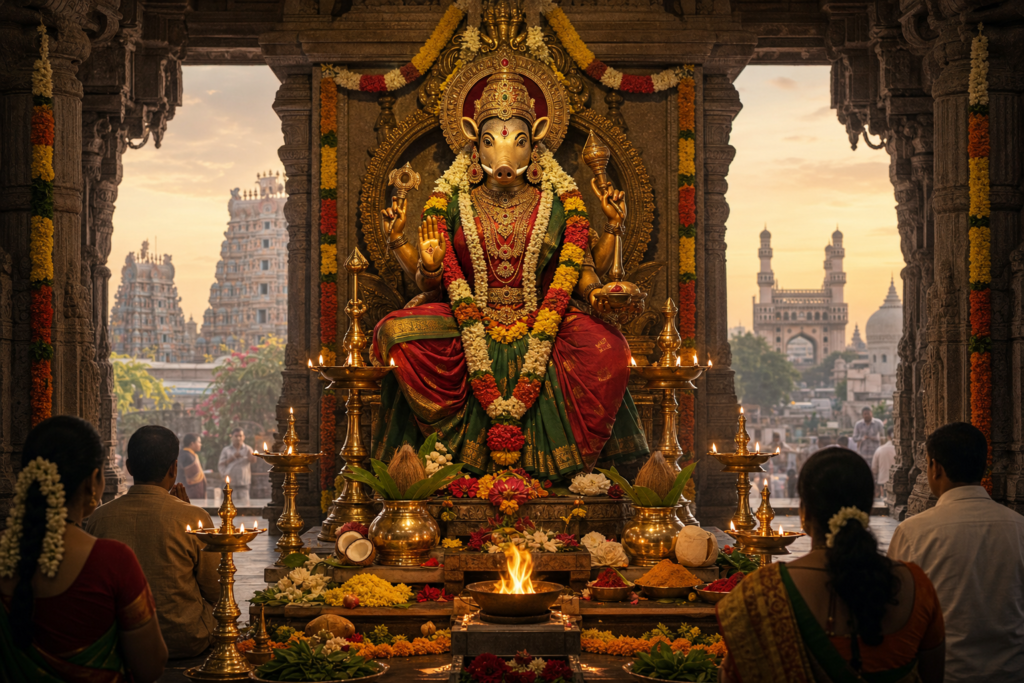
Hindu sources describe the bridge as Guru-tattvathe illuminating principle that dispels avidyā (misapprehension). The Bhagavad Gita affirms an interior axis of guidance in the famous declaration, “sarvasya cāham hṛdi sanniviṣṭo; mattaḥ smṛtir jñānam apohanaṁ ca” (Bhagavad Gita 15.15): the Divine presence is seated in the heart of all beings, as the source of memory, knowledge, and even forgetfulness. The Upanishads expand this insight in the antaryāmin teachings, pointing to a witness-like awareness that pervades yet transcends all physical and mental processes. In practical terms, Guru-tattva functions through both outer guidance (upadeśa) and inner recognition (aparokṣa-anubhava).
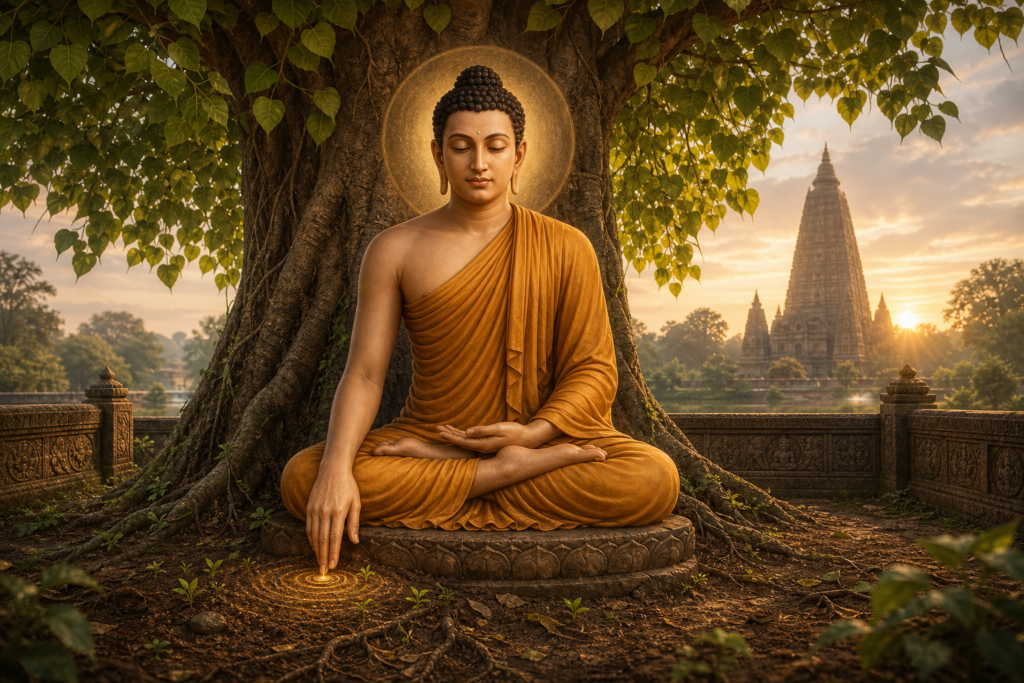
Buddhist contemplative traditions, while not positing a permanent ātman, converge experientially on the transformative value of stable attention and insight (vipassanā) into impermanence, unsatisfactoriness, and non-self. References to the luminous mind (pabhassara citta) in Theravāda commentary underscore that when defilements subside, a clarity reveals itself that is self-validating in experience, even as doctrinal mappings differ. In Jainism, the jīva’s innate capacity for kevala-jñāna (full knowledge) is unveiled through right faith, right knowledge, and right conductfortified by contemplations such as the 12 bhavana that cultivate dispassion and clarity. Sikhism equally centers the bridge in interior alignment: the Shabad Guru is the living, guiding vibration realized through Naam Simran, dissolving egoic tendencies into the truth of Ik Onkar. Divergent metaphysics, shared praxis: sustained ethical discipline, attention training, and surrender to truth reveal a common horizon.
Given Kali Yuga’s conditions, the synergy between outer and inner guidance deserves emphasis. Competent teachers, communities (satsang, sangat), and scriptures provide orientation, guardrails, and methods. Yet real verification is interior: the Inner Guru is recognized when cognition grows less reactive, compassion widens, and discernment stabilizes under stress. Classical Indian epistemology (pramāṇa) clarifies this dynamic: śabda (authoritative testimony) and anumana (reason) guide practice; pratyakṣa (direct contemplative seeing) confirms it. The three do not compete; they interlock.
The Bhagavad Gita prescribes four interoperable engines of transformationKarma Yoga, Bhakti Yoga, Jñāna Yoga, and Rāja Yogaeach robust enough to serve as a primary bridge, and strongest when harmonized. Karma Yoga consecrates action by relinquishing attachment to outcomes; Bhakti Yoga dissolves separation through devotion and gratitude; Jñāna Yoga interrogates the nature of self and reality; Rāja Yoga stabilizes attention and purifies the mind through systematic meditation (dhyāna) and ethical foundations (yama-niyama).
Personalization through Ishta (Ishta Devata and Ishta mārga) ensures the bridge fits the seeker’s temperament. This is not sectarianism but applied psychology: devotionally inclined persons mature swiftly with mantra-japa and kirtan; analytical minds deepen through vicāra (inquiry) and śravaṇa-manana-nididhyāsana; service-oriented individuals transmute ego through seva; contemplatives refine stability via pranayama and meditation techniques grounded in a clear ethical scaffold. Ishta protects unity in spiritual diversity by inviting many valid entries into the same sanctum of realization.
A classical prerequisite set, sādhanā chatuṣṭaya, outlines the inner architecture of this bridge. Viveka (discrimination between the changing and the changeless) orients attention; Vairāgya (dispassion) weakens compulsion; the Śat-sampat (six virtuesśama, dama, uparati, titikṣā, śraddhā, samādhāna) stabilize mind and senses; and Mumukṣutva (intense longing for liberation) sustains momentum. Parallel commitments appear across the dharmic family: in Buddhism as sīla-samādhi-paññā; in Jainism as right faith/knowledge/conduct and anuvrata; and in Sikhism as the Rehat discipline anchored by remembrance of Naam.
Ethics is not an optional preface but a structural member of the bridge. In the Gita, yama and niyama ensure sattvic clarity; in Buddhism, the precepts calm remorse and enable samādhi; in Jainism, ahimsa is absolute, refining perception; in Sikhism, truthful living aligns action and insight. The Inner Guru shines when conduct ceases to fracture attention with guilt, concealment, or agitation.
Contemporary research on attention and autonomic regulation helps explain why traditional methods work so reliably. Slow, extended exhalations in pranayama engage vagal pathways, increasing heart-rate variability (HRV) and down-regulating limbic overactivation. As parasympathetic tone rises, prefrontal networks responsible for executive control and meta-awareness come online more consistently. The subjective correlate is a felt sense of space and composure, the very condition in which insight, devotion, and equanimity flourish.
Meditation (dhyāna) then becomes both microscope and mirror. Focused-attention practices cultivate attentional stability; open-monitoring practices reveal the constructed, transient nature of thoughts and moods; loving-kindness and compassion practices recondition the affective tone of perception. In Hindu idiom, the witness-consciousness (sākṣin) becomes evident; in Buddhist idiom, non-clinging and non-identification become natural; in Jain idiom, the jīva’s knowing function brightens as karman-matter attenuates; in Sikh idiom, remembrance of Naam saturates experience with guidance and warmth.
Mantra-japa, whether voiced or silent, adds a rhythmic anchor that steadies the field of mind. Its efficacy in Kali Yuga is repeatedly celebrated because it is resilient under noisy, complex conditions. In the Gita’s devotional arc, nāma-saṅkīrtana concentrates love; in Sikhism, continuous Naam Simran is itself communion with the Shabad Guru; in Jainism and Buddhism, protective recitations focus intention and recall vows. The Inner Guru becomes easier to trust when attention learns to return to a sacred sound without force or fatigue.
Self-inquiry (ātma-vichāra) and contemplative study (svādhyāya) provide the bridge’s intellectual trusses. Shravana (exposure to teachings), manana (reflective reasoning), and nididhyāsana (deep assimilation) convert ideas into seeing. This triad has clear cousins: Buddhist dharma study integrated with personal investigation; Jain scriptural contemplation joined to the 12 bhavana; and Sikh vichaar (reflective engagement with Gurbani) woven together with lived Naam.
To measure progress without self-absorption, classical markers are practical. Reactivity reduces in frequency, intensity, and duration; ethical lapses decline; gratitude and compassion arise spontaneously; equanimity persists through gain and loss; and a quiet confidence replaces anxious striving. The Gita refracts these shifts through the lens of guṇas: tamas yields to rajas, rajas refines into sattva, and even sattva is finally transcended in steady abidance.
Contemporary obstacles can be translated into actionable constraints on the bridge. Doomscrolling degrades attentional span; outrage cycles bias memory; frictionless convenience dulls diligence. The remedy is structural rather than merely aspirational: device-free windows before dawn, time-bounded media use, one-task work blocks, and brief but non-negotiable practice anchors (for example, six minutes of alternate-nostril pranayama followed by six minutes of mantra-japa and six minutes of quiet sitting). Small, repeatable investments in clarity compound faster than occasional marathons.
Community is a load-bearing arch. Satsang and sangat regulate aspiration, normalize disciplined joy, and correct individual blind spots. Seva (selfless service) protects practice from narcissism by weaving it into the welfare of others. In all four dharmic streams, service is not an add-on but a means of refining the heart and making insights durable in real-world pressures.
Because Kali Yuga strains attention, it also democratizes access to grace. Kirtan, congregational remembrance, and shared study create synchrony; the mind’s scattered vectors align, and the Inner Guru’s suggestions become audibleoften as a calm, self-evident next step rather than a dramatic revelation. When action, devotion, insight, and meditation cohere, life’s ordinary scenes (a conversation with a colleague, a difficult decision, a moment of grief) become classrooms for the Infinite.
Unity across Hinduism, Buddhism, Jainism, and Sikhism is not a call to erase distinctions but to honor a family resemblance in how realization matures: ethical steadiness, trained attention, contemplative insight, and compassionate engagement. Anekāntavāda in Jain thought, with its emphasis on many-sided truth, provides a philosophical assurance that different doctrinal framings can still converge in liberative efficacy. This unity is practical: it allows seekers to respect another’s Ishta and method while remaining rooted in their chosen path.
For many, the Bhagavad Gita remains a compact guide to building and walking this bridge. Karma Yoga addresses modern complexity by redeeming work as worship without clinging; Bhakti Yoga melts loneliness with relational warmth toward the Divine; Jñāna Yoga clears cognitive distortions; Rāja Yoga engineers the nervous system toward steadiness. These are not parallel tracks for separate people but interlocking gears applicable in different proportions across a single day.
Physiologically informed practice accelerates integration. During stress spikes, a two-minute protocol of slow nasal inhalation and longer nasal exhalation, followed by a minute of gentle mantra-japa, can meaningfully improve vagal tone and executive control. Before high-stakes conversations, brief metta (loving-kindness) phrases soften adversarial reflexes. After complex tasks, a minute of open-monitoring helps the mind release residual activation. These micro-bridges stitch the day to the Inner Guru’s guidance.
Scriptural engagement anchors discernment. Regular exposure to the Bhagavad Gita, Upanishads, Dhammapada, Jain agamas, and Guru Granth Sahib grounds intuition in time-tested maps. Such study is not an intellectual diversion but a safeguard against error. It equips reason (anumana) and invites direct verification (pratyakṣa) in meditation and ethical life, aligning the inner compass with proven wayfinding.
Humility protects the bridge from collapse. In every tradition, pride is flagged as a subtle corrosion that converts spiritual capital into conceit. Guarding against this entails honest feedback, continuous learning, and remembering that the Inner Guru is not a personal possession but the light by which the person is seen at all. When mistakes occur, transparent correction restores structural integrity more effectively than defensiveness.
Finally, the fruit of this bridge is not an esoteric escape but freedom-in-engagement. A person becomes more capable of sustained attention, less captive to reactive cycles, more reliable in commitments, and more available to the suffering of others. The Infinite Reality is not experienced as a distant summit but as the unbroken context in which action, love, insight, and stillness find their rightful places.
In Kali Yuga, the Inner Guru remains the most accessible, ecumenical, and dependable bridge. With the Bhagavad Gita’s integrality, the Upanishads’ depth, Buddhism’s precision, Jainism’s ethical rigor, and Sikhism’s devotion to the Shabad Guru, the dharmic traditions collectively offer a comprehensive, compassionate blueprint. The work is incremental yet profound; the means are many yet convergent; and the promise is that the finite seeker, step by humble step, discovers the Infinite already shining at the heart.
Inspired by this post on Hindu Blog.