The assertion “Nothing can be wiped out; but nothing remains same” distills a central intuition of Hindu philosophy and the broader dharmic familyBuddhism, Jainism, and Sikhismabout reality’s structure: persistence without stasis, transformation without annihilation. This aphorism captures how existence unfolds as continuity and change, a view that is metaphysical, ethical, and experiential at once.
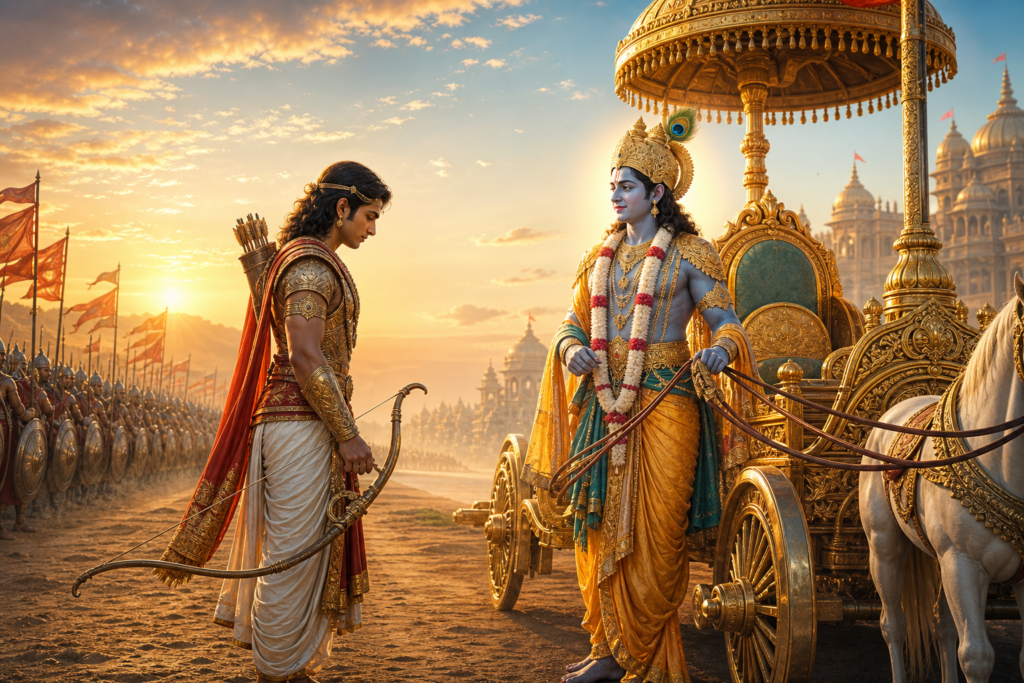
Hindu thought often frames this dual insight through a layered understanding of reality. At the highest register, Brahman is timeless, non-dual, and undiminished; at the empirical register, names and forms arise, evolve, and pass away. This is rendered succinctly in the Upanishadic intuition sarvam khalvidam brahma, while the Bhagavad Gita states na sato vidyate bhavo na bhavo vidyate satah (2.16): the Real does not cease to be, and the unreal does not come into full being. In short, being is conserved; configurations vary.
A simple observation illuminates the point: a river remains recognizably “that river,” even as the waters flowing through it never stand still. Identity, in this perspective, is a continuity of pattern, function, and relationnot a rigid fixation of parts. This everyday experience resonates with classical Indian reflections on sat (enduring being) and anitya (impermanence), yielding a sophisticated philosophy of change and continuity.
Advaita Vedanta articulates the most radical form of metaphysical continuity: Brahman alone is ultimately real; the world’s multiplicity is vivarta (appearance through superimposition). The self (Atman) is not born and does not die; Gita 2.20 emphasizes this unchanging essence. Thus, “nothing can be wiped out” expresses the indestructibility of pure consciousness, while “nothing remains same” registers the ceaseless flux of appearance (maya) within time and causality. A classical adage captures this: brahman satyam jagan mithyaBrahman is real; the world is provisionally real as appearance.
Vishishtadvaita and Dvaita Vedanta nuance this insight. In Vishishtadvaita, Brahman (as Vishnu-Narayana) is the indwelling whole whose modes (cit and acit, conscious and non-conscious realities) undergo parinama (real transformation). Dvaita emphasizes genuine difference and the permanence of plural entities. Yet both uphold continuity: substance or principle persists even as states and relations shift, affirming that transformation is ordered rather than nihilistic.
Samkhya-Yoga makes the mechanism of change explicit. Prakriti (primordial nature) evolves by parinama under the play of the three gunas (sattva, rajas, tamas), while Purusha (conscious witness) remains untouched. As satkaryavada, Samkhya holds that the effect pre-exists in the causenothing emerges from absolute nothingness and nothing is entirely erased; change is a reconfiguration of what is already implicit.
Nyaya-Vaisheshika renders continuity analytically through categories (padarthas) such as dravya (substance), guna (quality), karma (motion), samanya (universal), vishesha (particular), and samavaya (inherence). Substances persist while qualities and motions change; causal processes (like clay becoming a pot) demonstrate that transformation neither produces being from non-being nor annihilates being into non-being. The system thereby underwrites a realistic view of both endurance and alteration.
Mimamsa extends the continuity thesis to ethics and ritual efficacy. The doctrine of apurva (an unseen potency generated by action) ensures that well-ordered change links intention, rite, and outcome across time. Here, “nothing can be wiped out” becomes an ethical axiom: deeds imprint the causal fabric; responsibility is conserved even when effects unfold gradually.
The broader dharmic family reinforces and complements these motifs. Buddhism emphasizes impermanence (anicca), non-self (anatta), and dependent arising (pratityasamutpada). The doctrine of momentariness (ksana-bhanga) underscores that all compounded phenomena change instant by instant. Yet Buddhist analysis does not entail annihilationism; continuity appears as causal flowa stream without a fixed, independent coreensuring that karmic patterns persist without positing a permanent substance.
Jain philosophy crystallizes the paradox in technical terms: utpada (origination), vyaya (cessation), and dhrauvya (persistence) characterize every real entity. Anekantavada (many-sidedness) and syadvada (the sevenfold predication) show that reality is simultaneously enduring and changing, depending on the standpoint. Nothing disappears without trace; nothing persists without modification. Jainism thereby provides a logic for navigating complexity without collapsing into absolutism.
Sikh thought harmonizes unity and flux through Ik Onkar (one reality) and Hukam (cosmic order). All forms arise and subside within the One, and living in alignment with Hukam integrates spiritual insight with ethical responsibility. The nirgun–sargun polarity (formless–with form) expresses how the unconditioned grounds the conditioned without being limited by itagain, continuity without stasis.
Cosmic time in Hindu cosmology encodes this rhythm of renewal: srishti–sthiti–laya (emanation, maintenance, reabsorption) within yugas and kalpas frames history as cyclical transformation. The icon of Shiva Natarajadancing within a ring of fire while sounding the damaruembodies process cosmology: creativity, preservation, dissolution, concealment, and grace co-present in an eternal dance.
Karma and samskara explain continuity at the level of experience. Actions leave imprints (vasanas) that shape tendencies across lifetimes. These imprints do not vanish arbitrarily; they mature by law-like causation until exhausted or transformed by knowledge (jnana), devotion (bhakti), or disciplined practice (yoga). Thus, moral order is neither punitive nor random; it is a calculus of continuity in change.
Strikingly, this dharmic intuition resonates with several scientific principles (without claiming identity). The first law of thermodynamics (conservation of energy) mirrors “nothing can be wiped out,” while the second law (entropy increase in isolated systems) reflects “nothing remains same.” In quantum information theory, no-deleting constraints suggest that information cannot be simply erased; it can only move or transform. Ecologically, nutrient cycles and energy flows show reconfiguration rather than obliteration. These parallels are heuristic echoes, not historical predictions, yet they help articulate how ancient insights map onto modern explanatory frames.
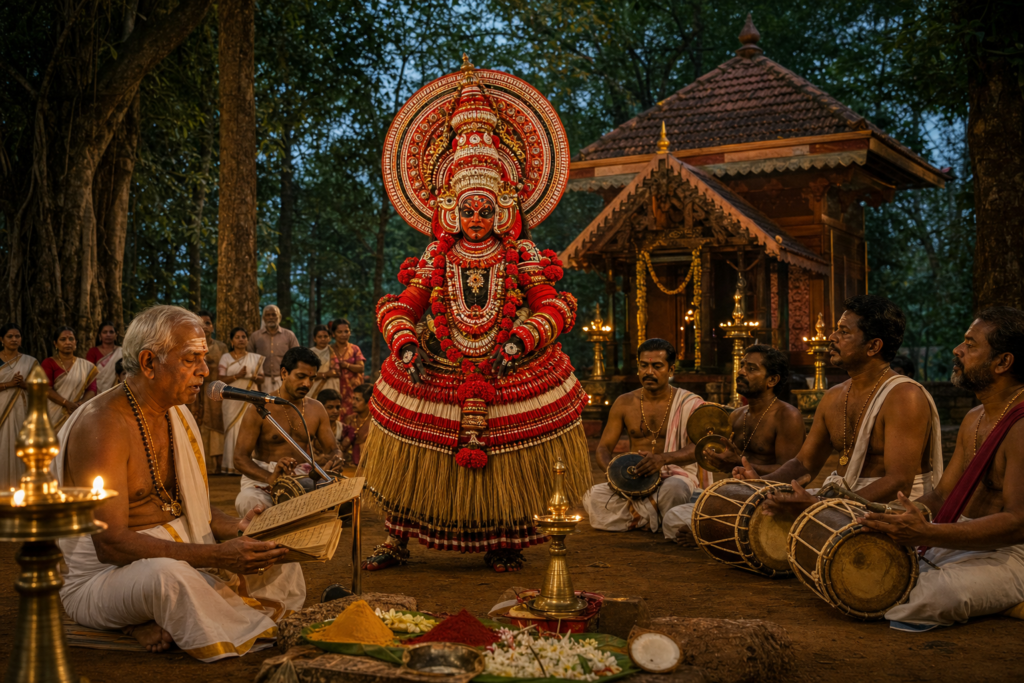
Ritual and practice translate metaphysics into lived understanding. Fire offerings (homa) and cremation rites acknowledge transformation of the panchabhutas (five elements): forms dissolve, but constituents re-enter wider cycles. Breath practices (pranayama) and meditation (dhyana) train attention to notice changesensations, thoughts, moodswhile recognizing a stable witnessing awareness that is not reducible to any single fluctuation. Over time, such nairantarya abhyase (uninterrupted practice) fosters equanimity.
Ethically, the paradox sustains humility and responsibility. If nothing is ever truly wiped out, harmful actions cannot be casually dismissed; if nothing remains the same, redemption and reform are always possible. This balance encourages forgiveness coupled with accountability, social repair alongside personal transformation, and stewardship of culture and environment rather than extractive consumption.
In daily life, the insight is remarkably relatable. Anyone who has returned to a childhood home senses both presence and difference: the street is “the same,” yet everything has subtly changedtrees older, voices new, memories layered. The dharmic view teaches how to meet this feeling wisely: honor the thread of continuity, engage the necessity of change, and orient both toward liberation (moksha) and compassionate action (dharma).
Across Hinduism, Buddhism, Jainism, and Sikhism, the shared commitment is to a reality that holds together permanence and flux without contradiction. Whether in Advaita’s non-dual clarity, Samkhya’s causal realism, Buddhism’s dependent arising, Jainism’s many-sided logic, or Sikhism’s hukam-centered harmony, the message is consistent: life is neither static nor nihilistic. Continuity gives meaning to memory, responsibility, and purpose; change enables growth, creativity, and release.
Seen thus, “Nothing can be wiped out; but nothing remains same” is not a riddle to be solved but a compass to be followed. It guides inward toward knowledge of the unchanging ground and outward toward wise participation in the changing world. In this synthesis of being and becoming lies a practical philosophy for resilience, ecological care, cultural pluralism, and spiritual freedomvasudhaiva kutumbakam as lived reality.
Inspired by this post on Hindu Blog.