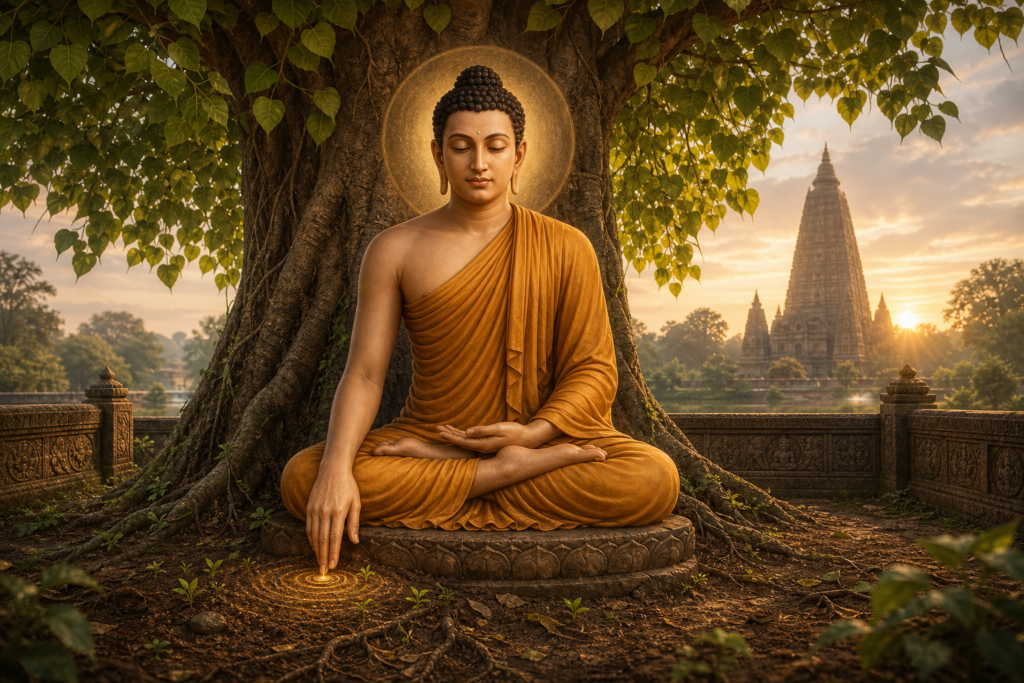
“Wisdom Emerges From Moments Of Deep, Insightful Stillness” captures a foundational insight of ancient Hindu wisdom: true understanding dawns when the mind becomes quiet, attentive, and inwardly poised. In Hindu philosophy, stillness is not mere physical immobility but a cultivated mental and spiritual composure that allows awareness to see clearly. This reflective silence opens inner space for discernment (viveka), enabling right understanding and responsible action in the world.
Classical sources anchor this vision. The Upanishads describe wisdom arising when attention turns from the noise of sense-objects to the subtle presence of the Self (atman). Yoga philosophy clarifies the method: through dhyana and pratyahara, mental fluctuations settle, and the mind becomes a lucid instrument rather than a restless field. Such stillness does not negate life; it refines perception, steadies emotion, and reveals what is essential for dharma-aligned choices.
The Bhagavad Gita presents this inner stillness as both a path and a fruit. In dhyana-yoga, disciplined attention stabilizes awareness; in the ideal of sthita-prajna (steady wisdom), equanimity and clarity coexist with compassionate engagement. The Gita’s synthesis shows that silence is not withdrawal from responsibility but the source of lucid judgment, fearlessness, and ethical actionqualities needed to navigate complexity without agitation.
Importantly, this contemplative ideal resonates across the dharmic traditions. Buddhism cultivates mindful presence through vipassana to see phenomena as they are; Jainism honors samayik and inner equanimity as foundations of ahimsa; Sikh tradition emphasizes simran and sehajan effortless equipoise born of remembrance. These kindred practices affirm a shared civilizational insight: interior quietude is not an escape but a pathway to clarity, empathy, and social harmony.
Consider familiar, everyday moments that illustrate the principle. A few minutes of breath awareness before dawn, a silent walk beneath trees, or a pause between tasks can reset attention and soften reactivity. Gentle pranayama steadies the nervous system; brief periods of japa or silent japa invite steady focus; journaling after meditation integrates insight into daily decisions. Small, consistent practices build the capacity for stillness even amid a demanding schedule.
Contemporary research on mindfulness aligns with these teachings: regular contemplative practice enhances attention, emotional regulation, and compassion. The ancient language of dhyana and the modern vocabulary of cognitive clarity both describe the same transformationmental noise recedes, and a balanced, discerning awareness emerges. This inner balance supports resilience, reduces impulsivity, and strengthens the ability to respond rather than react.
From an ethical standpoint, insightful stillness nurtures responsibility. When the mind is unhurried and lucid, speech becomes measured, choices align with values, and relationships benefit from patient listening. In this way, inner quietude becomes a public good: personal equanimity contributes to communal trust, interfaith respect, and a culture of dialogue across differences.
Taken together, ancient Hindu teachingsand their dharmic counterparts in Buddhism, Jainism, and Sikhismaffirm that wisdom blossoms where silence, attention, and compassion meet. Deep, insightful stillness clarifies perception, kindles courage, and guides constructive action. Practiced with humility and consistency, it becomes a shared bridge across traditions, strengthening unity while honoring the diverse paths that lead to Inner peace and understanding.
Inspired by this post on Hindu Blog.