Hindu iconography is frequently approached through categories that emerged in Abrahamic contexts, leading to the persistent label of ‘idolatry’. A closer, comparative reading shows that Hindu images are not mere anthropomorphism but a rigorous symbolic language encoding metaphysics, ethics, and contemplative practice. Understanding this languageits grammar, canons, and aimsclarifies why multi-armed Devīs, elephant-headed Gaṇeśa, or the liminal figure of Narasiṁha puzzled many early observers yet remain coherent within the Hindu way of life and the broader family of Dharmic philosophies.
Historical encounters help explain the misunderstanding. When medieval travelers and early modern missionaries from Abrahamic lands first visited Hindu temples, they encountered forms their own theological frameworks (often marked by aniconism or strict anthropomorphism) had not prepared them to interpret. Some accounts collapsed this complexity into the blanket term ‘idolatry’, even as more careful observers such as al-Bīrūnī acknowledged the philosophical sophistication underlying Hindu practices. The challenge, then and now, is interpretive: symbols must be read within the systems that generate them.
At the conceptual core lies the distinction between theomorphic and anthropomorphic images. Hindu icons are not attempts to reduce the divine to human shape; rather, they give concrete form to the attributes (guṇa), powers (śakti), and functions (dharma) of the sacred so that mind, senses, and ethics can be harmonized in practice. In this view, form is pedagogy and soteriology, not mere representation.
Technically, a mūrti becomes a locus of presence through prāṇa-pratiṣṭhā (ritual enlivening), according to āgamic and śilpa-śāstra traditions. This distinction between a crafted object and a consecrated presence is essential. It prevents conflation of symbol and noumenon, a confusion that often fuels the critique of ‘idol worship’. The symbol is a bridge, not the destination; it directs attention to Brahman, Īśvara, or the chosen ishta-devatā while providing a stable anchor for contemplative attention (dhyāna) and ethical orientation.
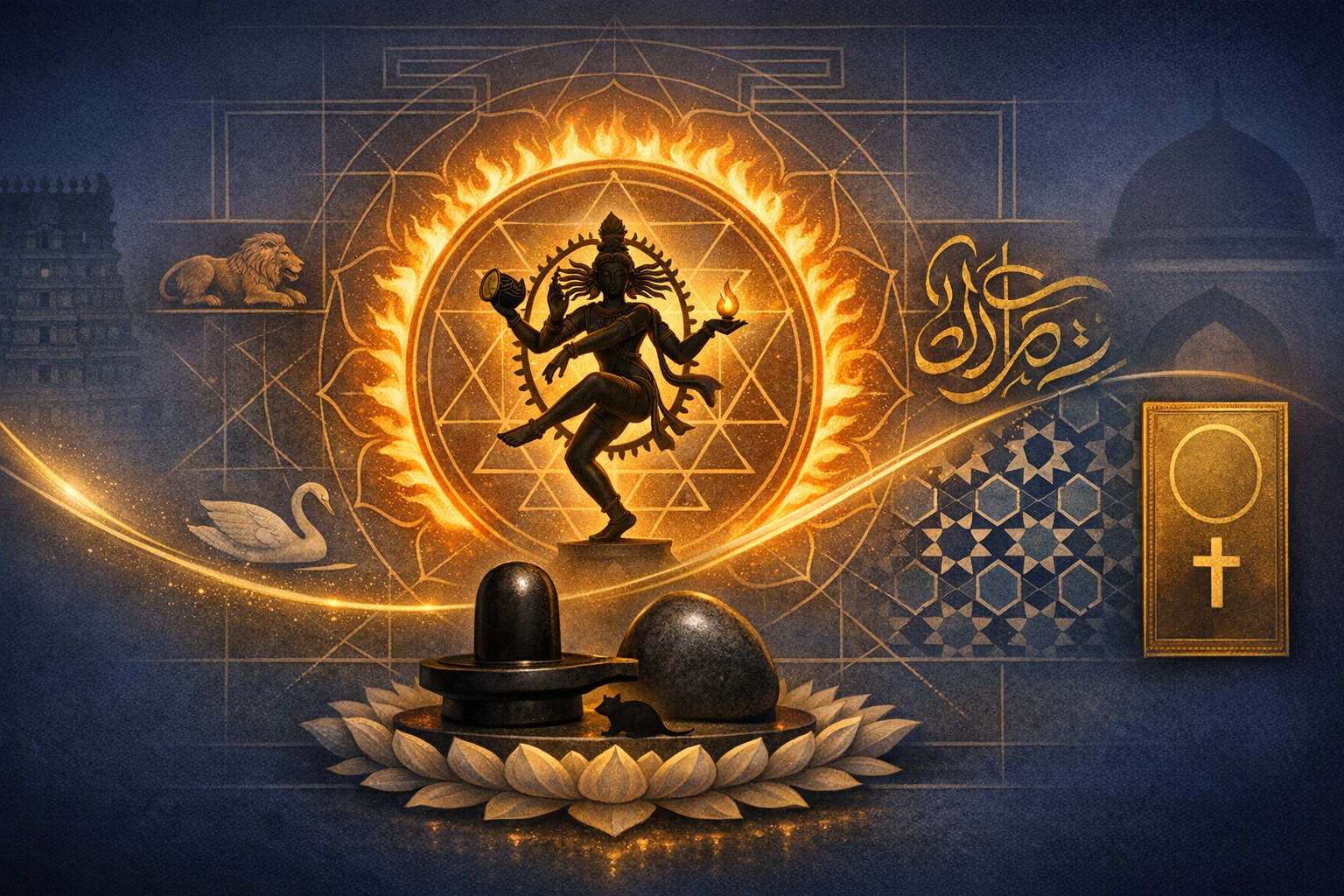
The semiotic grammar of Hindu iconography is systematic. Multiple arms do not suggest a monstrous physiology; they signify simultaneous capacitiescompassion, protection, destruction of ignorance, bestowal of wisdom. Multiple heads indicate omniscience or the integration of diverse viewpoints. Specific hand gestures (mudrā) such as abhaya (fearlessness) and varada (boon-giving) communicate ethical assurances. Vāhanas, the animals that accompany deities, are moral-psychological allegories: the mouse with Gaṇeśa, the lion with Durgā, the swan with Sarasvatīeach encoding discernment over impulse, sovereignty over fear, and wisdom over mere skill.
These symbols are constrained by canons. Proportion systems (tāla-māna), iconometric rules, and textual prescriptions from śilpa-śāstras and āgamas determine posture, gaze, hand position, ornaments, and even the number of petals on lotuses. Far from arbitrary, these canons create a consistent visual lexicon recognizable across regions and centuries, uniting aesthetics with metaphysics.
Plurality in form does not imply metaphysical fragmentation. The Vedic intuition ekaṁ sat viprā bahudhā vadantitruth is one, the wise speak of it in many waysunderwrites the diversity of images and names without sacrificing unity. Ishta-devatā (chosen form of the divine) operationalizes religious pluralism within a single civilization, allowing temperament, community, and stage of life to guide practice. This same pluralism is a shared inheritance across Hinduism, Buddhism, Jainism, and Sikhism, reinforcing unity-in-diversity among Dharmic traditions.
Equally important are aniconic forms. The śiva-liṅga, śālagrāma-śilā, and various yantras translate the formless (nirguṇa) into contemplative focus without figurative depiction. In this respect, Hindu practice resonates with apophatic strands in Judaism, Christianity, and Islam that emphasize divine transcendence. Hinduism, however, sustains a spectrum from nirguṇa to saguṇa, inviting the practitioner to move fluidly between formless awareness and embodied symbol.
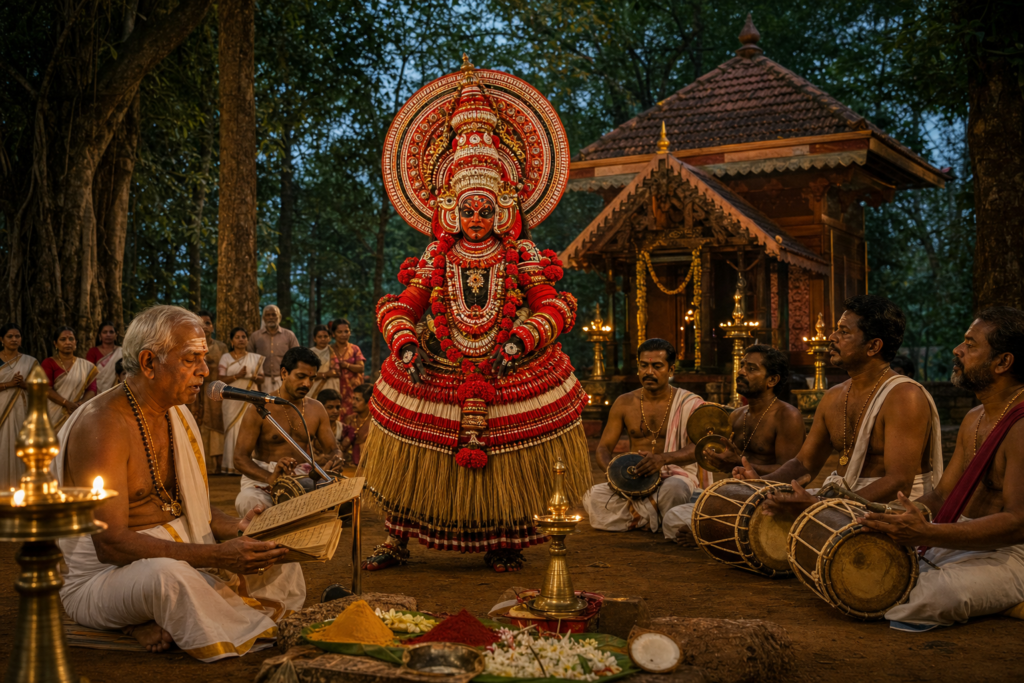
Ritual completes the picture. Darśan (reciprocal seeing), mantra (sacral sound), gandha (fragrance), dīpa (flame), and prasāda (sanctified offering) orchestrate multiple senses to align attention, emotion, and cognition. In modern cognitive terms, icons function as external scaffolds that stabilize attention and strengthen intention through embodied, rhythmic practice; communities often report heightened meaning and ethical resolve as outcomes of this integrated ritual ecology.
Consider Śiva Naṭarāja, a Chola-era masterwork of semiotic density. The ring of fire (prabhāmaṇḍala) is cosmic process; the drum (ḍamaru) beats creation and time; the fire in the other hand signifies dissolution; abhaya-mudrā confers fearlessness; the lifted foot offers refuge; and apasmāra, the dwarf of forgetfulness underfoot, depicts the subjugation of ignorance. One icon integrates cosmology, ontology, ethics, and soteriologyan entire treatise in bronze.
Gaṇeśa encodes a complementary pedagogy. The elephant head stands for buddhi (intelligence) and smṛti (memory); the large ears for attentive listening; the broken tusk for sacrifice in service of knowledge; the trunk’s versatility for adaptive skill; the mouse-vāhana for mastery over restlessness; and the modaka for the inward sweetness of sādhana. Many arms and implements simply map diverse competencies required for dharma in worldly life.
Durgā Mahīṣāsuramardinī, often shown with multiple arms wielding the devas’ weapons, dramatizes the collective victory of sattva over tamas, order over chaos. The vivid martial imagery is not a call to external violence but a psychospiritual allegory of courage and moral clarity, themes celebrated every Navarātri across regions and lineages.
Narasiṁha, neither man nor lion in totality, demonstrates liminality as theological precision. The form preserves the integrity of a boon and exemplifies the divine capacity to transcend categorical limits. Hence the icon speaks to assurance and protection (ugra, yet compassionate), and in yogic forms, to interior stillness.
Unity across Dharmic traditions becomes evident through comparative iconographies. Buddhist bodhisattvas such as Avalokiteśvara appear with multiple arms or heads to symbolize boundless compassion. Jain tīrthaṅkaras maintain serene, aniconic poise that signals inner conquest and ethical radicality. Sikh tradition emphasizes aniconic affirmation (Ik Oṅkār) and sonic form (Gurbāṇī), privileging word and remembrance while honoring shared ethical principles. These variations articulate a common pursuit: liberation grounded in dharma, compassion, and disciplined awareness.
Abrahamic traditions provide fruitful points of comparison when read carefully. Jewish and Islamic aniconism elevates calligraphy, geometry, and recitation; Christian traditions range from iconoclastic movements to rich icon veneration, especially in Eastern Orthodoxy, where the distinction between veneration and worship is emphasized. In comparative religion, these approaches align with apophatic (via negativa) and cataphatic (via positiva) theologies. Hinduism’s spectrum from nirguṇa to saguṇa offers a parallel yet distinct solution, sustaining devotional intimacy without losing metaphysical transcendence.
Cognitive and affective science help render the experiential logic intelligible across cultures. Visual symbols act as ‘material anchors’ for abstract thought; rhythmic chant and coordinated gesture entrain attention; scent and flame mark salience; shared ritual time strengthens trust and prosocial behavior. The measured layering of sensory cues makes the temple a laboratory of meaning, where contemplation becomes actionable habit.
Temple architecture situates this pedagogy in space. The garbhagṛha (sanctum) concentrates presence; mandapas structure communal attention; circumambulation (pradakṣiṇā) rehearses cosmic order; and the temple plan mirrors a maṇḍala. Vāstu-śāstra ensures that the built form is a cosmograman inhabited map of the inner and outer universeso that learning is not only seen but walked.
Interpretive guidelines can foster interfaith literacy. Ask what each attribute denotes rather than whether it is ‘realistic’. Distinguish aniconic from iconic forms and learn their contemplative uses. Note mudrās and vāhanas as ethical signposts. Recognize consecration as the turning point from object to presence. Above all, read icons as visual theologiesconcise, rule-bound, and purpose-built for transformation.
Seen on its own terms, Hindu iconography transcends the charge of idolatry and becomes legible as a disciplined semiotic tradition. Engaging it alongside the aniconic strengths of Judaism and Islam and the iconographic depths of Christianity enriches comparative religion and advances mutual respect. Within the Dharmic familyHinduism, Buddhism, Jainism, and Sikhismthis shared commitment to symbol, sound, ethics, and interiority provides common ground for unity in diversity. With hermeneutic humility and historical care, the many hands, faces, and forms reveal one purpose: the cultivation of wisdom, compassion, and liberation.
Inspired by this post on Hindu Blog.