The insight that true wisdom is to see oneself as not different from the Supreme Being stands at the heart of Advaita Vedanta and reverberates across the wider dharmic familyHinduism, Buddhism, Jainism, and Sikhism. Framed within a rigorous philosophical and meditative tradition, this vision of non-duality (Advaita) claims that the ultimate reality is one without a second, and that realizing this unity dissolves existential fear and sorrow at their root.
Advaita Vedanta maintains that Brahman, the infinite, formless consciousness, is the sole, non-dual reality. The individual self (Atman), properly understood, is not other than Brahmanan identity affirmed in mahavakyas such as “tat tvam asi” (That thou art) and “aham brahmasmi” (I am Brahman) from the Upanishads. The claim is not a numerical equation but a metaphysical recognition: consciousness, the very light of awareness in which thoughts, sensations, and the world appear, is indivisible and foundational.
This understanding is distinguished from pantheism or a simplistic assertion that “everything is God.” Rather, Advaita articulates layered understandings of reality: vyavaharika-satya (empirical or transactional truth) and paramarthika-satya (ultimate truth). In empirical life, multiplicity operates; in the ultimate sense, the ground of that multiplicity is the one consciousness that never divides into parts.
The chief obstacle to recognizing this non-dual reality is avidya (ignorance), expressed as adhyasa (superimposition)mistaking the not-self for the Self. Classical texts illustrate this with the rope-snake analogy: in dim light, a rope is misperceived as a snake; fear arises from a projection rather than from what truly is. Likewise, identifying exclusively with body, senses, and mind obscures the luminous witness (sakshi) that quietly knows all states without itself changing.
Advaita carefully distinguishes between Brahman as nirguna (without attributes) and Ishvara as saguna (with attributes) for the sake of devout contemplation and ethical order. The Mandukya Upanishad maps consciousness across waking, dream, and deep sleep, pointing to turiyathe ever-present, non-dual awareness underlying all states. Contemplative recognition of turiya removes the root-confusion that births bondage.
In this framework, liberation (moksha) is not the acquisition of a new condition but the removal of ignorance; it is knowledge (jnana) that frees. The liberated one (jivanmukta) continues to act within the empirical worldguided by compassion and claritywhile resting in the unshakable understanding that all experience appears in, and as, awareness.
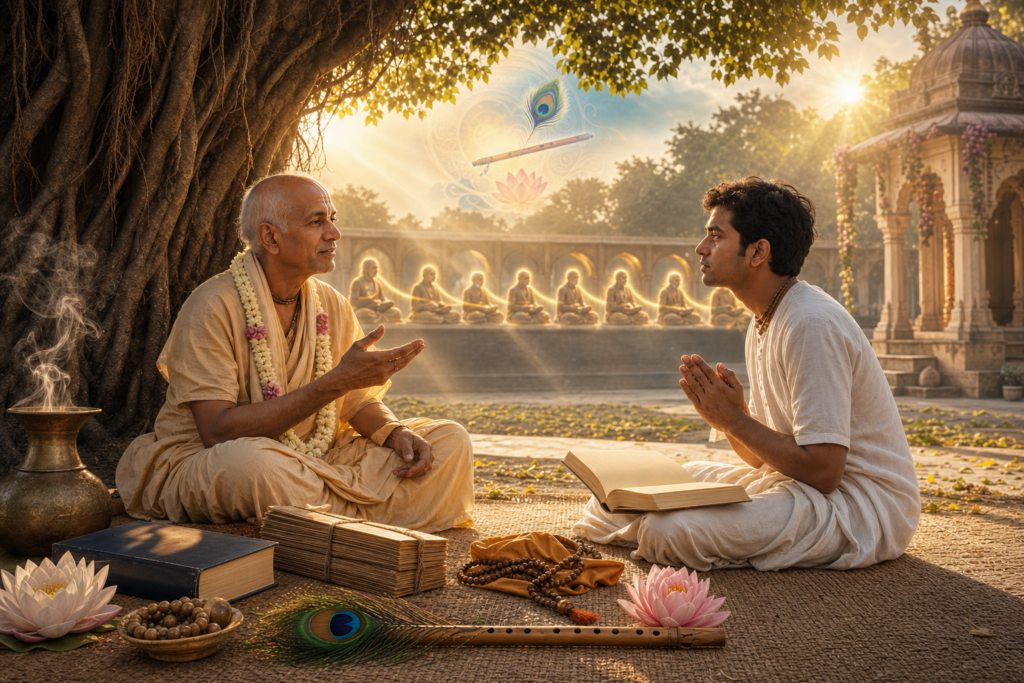
Advaita’s method is as exacting as its claim. Its epistemology recognizes valid means of knowledge (pramana)especially shruti (revelation in the Upanishads), yukti (reasoning), and anubhava (direct realization). The classical triad of practicesravana (systematic study of Vedanta), manana (rational reflection on its meaning), and nididhyasana (deep contemplative assimilation)comprises a precise pedagogy for internalizing the non-dual vision.
Preparation is essential. Sadhana-chatushtayafourfold qualificationslays the ethical and psychological groundwork: viveka (discernment of the eternal from the transient), vairagya (dispassion), shatsampatti (six-fold virtues such as shama, dama, uparati, titiksha, shraddha, samadhana), and mumukshutva (an intense desire for liberation). Karma Yoga (selfless action) and Bhakti (devotion) refine the mind (chitta-shuddhi), stabilizing attention for subtle inquiry.
Advaita’s analytic tools are incisive. Neti neti (not this, not this) negates all that is non-selfbody, prana, mind, and even the subtlest object of awareness. Drg-drishya-viveka (seer-seen discrimination) clarifies that all that is seen changes, while the seer remains changeless. Panchakosha-viveka (discernment through the five sheaths) from the Taittiriya Upanishad helps disidentify from anna-, prana-, mano-, vijnana-, and ananda-maya-kosha, revealing Atman as the invariable witness.
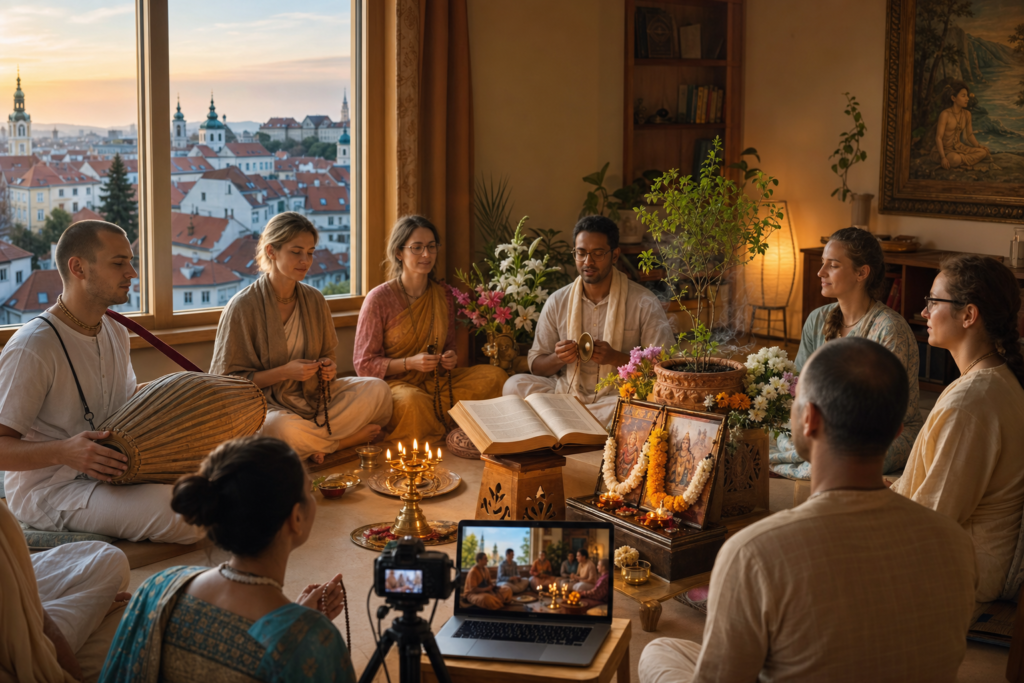
Contemplative practice (nididhyasana) then stabilizes insight: resting as the witness of thoughts, emotions, and sensations; observing their arising and passing without grasping or aversion. Breath awareness and basic pranayama can aid steadiness, while mantra-japa quiets mental fluctuation so that Vedantic reasoning can penetrate without distraction.
Ethical flowering follows insight. When the “I” is recognized as not confined to body-mind, compassion ceases to be a mere ideal and becomes an intuitive response. The Bhagavad Gita’s vijnana-bhava matures into sama-darshana (equal vision), seeing the one consciousness in all beings (Gita 5.18). Action continues as lokasangraha (the welfare of the world), free from possessiveness and fear.
This non-dual vision resonates, with different emphases, in sibling dharmic traditions. Buddhism’s teaching of anatta (non-self) and pratityasamutpada (dependent origination) cautions against reifying an essence and points to the emptiness (shunyata) of all phenomena. While Advaita articulates Brahman as the non-dual ground and many Buddhist schools articulate emptiness as the absence of intrinsic nature, both converge experientially in de-centering egoic fixation and cultivating compassion and insight.
Jainism’s anekantavada (many-sidedness) and syadvada (conditional predication) refine philosophical humilityreminding that truth is vast and perspectives are partial. Jain soteriology recognizes innumerable jivas refining karma toward kevala-jnana (perfect knowledge), and its uncompromising ahimsa provides an ethical cornerstone shared across dharmic paths. Anekantavada offers a powerful philosophical basis for pluralism, aligning with the Vedantic appreciation of diverse upaya (skillful means) for different temperaments.
Sikh thought affirms Ik Onkarthe oneness of the Divineand invites living in harmony with Hukam (Divine Order) through Naam Simran (remembrance). The dissolution of haumai (ego) in favor of seeing the One Light in all beings aligns with the Advaitic recognition of a single, universal reality, while retaining Sikhism’s distinct devotional and social commitments to seva (service) and justice. The interplay of nirgun and sargun in Sikh scripture echoes the Vedantic language of nirguna and saguna as complementary modes of devotion and realization.
Across these traditions, unity does not erase difference; it illumines it. The dharmic ecosystem embodies “Unity in Diversity,” encouraging multiple valid gatewaysjnana, bhakti, karma, and raja yoga; meditative insight; vow-based ethical discipline; or remembrance of the Divine Namewhile converging on freedom from suffering, the quieting of self-centeredness, and the flowering of compassion.
Relatable glimpses of non-dual awareness surface in ordinary life. In the brief pause between an exhale and inhale, awareness stands unoccupied yet unmistakably present. When a name momentarily slips the mind, the knowing that “not remembering is happening” remains luminous. These micro-moments, recognized and cultivated, orient attention from mental content to the ever-present contextawareness itself.
Contemporary research in contemplative science suggests that non-dual awareness correlates with reduced cognitive reactivity, lower stress markers, and improved affect regulation. While neuroscience cannot adjudicate metaphysics, empirical findings increasingly support the pragmatic claim central to Advaita and its dharmic siblings: training attention and loosening identification with transient mental content yield resilience, clarity, and ethical responsiveness.
Common misconceptions deserve careful correction. Non-duality does not deny the empirical world; it reframes it as an appearance within consciousness, preserved at the transactional level even as its ultimate status is reinterpreted. Nor is Advaita nihilistic or solipsistic; it affirms responsibility, humility, and reverence, grounding ethics in the recognition that harming another is, in a deep sense, a wound to oneself.
A practical approach integrates insight with life: first, cultivate ethical steadiness through ahimsa, satya, and seva; second, study the Upanishads, Bhagavad Gita, and classical commentaries (notably by Adi Sankara); third, engage in sravana–manana–nididhyasana under guidance to avoid subtle errors; fourth, adopt stabilizing practicespranayama, mantra-japa, and meditationwithout losing sight of the central inquiry into the witness; fifth, serve through Karma Yoga so that insight matures as compassion in action.
Indicators of maturation include decreased reactivity, effortless equanimity (samatva), a spontaneous sense of kinship with others, and freedom from compulsive grasping. Pitfalls include spiritual bypassing (using lofty ideas to avoid necessary psychological work), quietism (retreating from rightful responsibilities), or premature certainty (clinging to conceptual Advaita without contemplative assimilation). Ongoing reflection, community, and guidance help align insight with humility.
Textual anchors remain indispensable. The Chandogya and Brihadaranyaka Upanishads articulate the identity of Atman and Brahman; the Mandukya distills the map of consciousness; the Taittiriya refines discernment through the sheaths; and the Bhagavad Gita integrates wisdom with engaged living. Later pedagogical texts such as Drg-Drishya Viveka aid modern practitioners in translating subtle metaphysics into clear contemplative exercises.
Seen in this light, the dictum “to see oneself as not different from the Supreme Being is wisdom” is neither poetic hyperbole nor abstract speculation. It is a precise, testable claim about consciousness and identity, supported by reason, scripture, and contemplative verification. Realization confers a practical boon: freedom from fundamental fear and sorrow, and a life naturally dedicated to the welfare of all.
Crucially, this vision strengthens unity across dharmic traditions. Advaita’s non-dual clarity, Buddhism’s analytic deconstruction of ego, Jainism’s many-sidedness, and Sikhism’s affirmation of the One weave a shared tapestry that honors difference while revealing a common horizonliberation, compassion, and wisdom. Such convergence safeguards pluralism and offers a mature antidote to sectarianism.
Living this wisdom is a continuing refinement: discerning the changeless witness amid change, serving selflessly in the world without being bound by it, and honoring the diverse devotional, contemplative, and ethical paths that lead to the same non-dual summit. In this way, non-duality becomes not only a metaphysical truth but a civilizational ethican anchor for inner freedom and a compass for shared flourishing.
Inspired by this post on Hindu Blog.