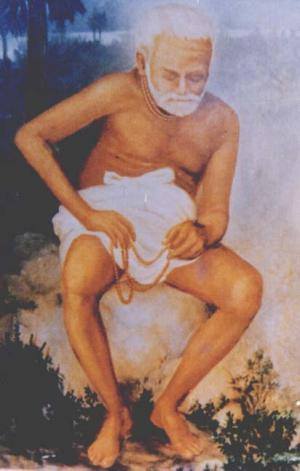
The Holy Disappearance Day of Srila Jagannatha Dasa Babaji invites a reflective engagement with Gaudiya Vaishnava history, sacred geography, and the living practice of bhakti. Commemoration of this tirobhava tithi focuses not on loss, but on the enduring presence of his teachings and example. As a revered renunciate and guiding light for nineteenth-century devotional revival, his legacy continues to shape how communities honor Sri Caitanya Mahaprabhu, particularly in relation to the sanctity of Mayapur (Navadvipa) and the Yoga Pitha.
Within Gaudiya Vaishnava memory, the honorific Vaisnava Sarvabhauma“chief among Vaisnavas”encapsulates the extraordinary regard extended to Srila Jagannatha Dasa Babaji. Traditional sources consistently describe his unwavering humility, rigorous discipline, and unequivocal dedication to nama-sankirtana. Even among highly esteemed saints, his place is singular: those who encountered him recognized both a strict guardian of standards and a deeply compassionate well-wisher of all practitioners.
Hagiographical and historical accounts converge on a portrait of an exceptionally long-lived renunciate whose years spanned significant phases of devotional resurgence in Bengal and Braj. Accounts situate his ascetic life between Vrindavan and Navadvipa, with a later period of residence in the sacred lands associated with Sri Caitanya Mahaprabhu. While exact biographical dates vary across sources, the consistent thread is the moral and spiritual authority he carried among scholars, pilgrims, and householders alike.
The most widely retold episode associated with Srila Jagannatha Dasa Babaji concerns the identification of Sri Caitanya Mahaprabhu’s birthplace in Mayapur. As preserved in Sri Navadwipa Dhama Mahatmya and related Gaudiya narratives, the episode records how the saint was broughtblind and in advanced ageto a mound long suspected to be the Yoga Pitha. Upon reaching the site, he is said to have exhibited extraordinary joy, affirming the sacredness of the spot with unmistakable devotional ecstasy.
From a historical perspective, the rediscovery of the Yoga Pitha in the late nineteenth century reflects an uncommon synthesis of textual study, local memory, and the topographical realities of a riverine landscape shaped by the shifting Ganga. Scholars of Gaudiya Vaishnava history often note how scriptural descriptions, oral testimony, and regional mapping practices converged with saintly insight. In this sense, the account stands as a methodological case study in sacred geography: the alignment of shastra, parampara, and place-based evidence.
The epithet Vaisnava Sarvabhauma underscores a broader theological point: spiritual authority in the bhakti tradition is qualified by character, surrender, and service to the Holy Name rather than by institutional position alone. Traditional remembrances of Srila Jagannatha Dasa Babaji repeatedly highlight his austerity, fearlessness in upholding standards, and tenderness toward sincere seekersqualities that, together, express the guru-tattva ideal in Gaudiya Vaishnavism.
In Vaishnava theology, disappearance days are not framed as endings. The term tirobhava conveys the conviction that the acharya continues to guide aspirants through teachings, example, and the ongoing current of grace. Observing the Holy Disappearance Day therefore becomes an act of reenlivening that connectionthrough kirtan, scriptural reflection, and deepened commitment to sadhanarather than an exercise in nostalgia.
Traditional accounts preserved by disciples and later biographers portray Srila Jagannatha Dasa Babaji as uncompromising in matters of conduct and devotional focus. He is remembered for insisting on the primacy of nama-sankirtana, for modeling extreme simplicity, and for demonstrating profound reverence toward maha-prasada. He is equally remembered for encouraging integrity in the Guru-Shishya Tradition, cautioning against superficial renunciation and urging practitioners to anchor external vows in inner transformation and truthfulness.
Commemoration practices associated with this day typically include attentive japa, congregational kirtan, and the study of key Gaudiya works, with particular attention to Sri Navadwipa Dhama Mahatmya for its narrative of the Yoga Pitha. Many communities also undertake parikrama in and around Navadvipa during the Gaura Purnima season, aligning personal practice with the sacred landscape that Srila Jagannatha Dasa Babaji helped to safeguard. Offerings of simple vegetarian prasada and community service that honors all beings reflect the heart of the Bhakti Tradition.
There is a valuable, unifying message here for the broader family of dharmic pathsHinduism, Buddhism, Jainism, and Sikhismeach of which venerates teachers, upholds disciplined practice, and values compassion and truthful living. Remembering Srila Jagannatha Dasa Babaji through the lens of shared dharmic ethics encourages inter-tradition respect, an appreciation of plural forms of sadhana, and collaboration in preserving sacred heritage for future generations. Unity in diversity, a hallmark of India’s spiritual tapestry, is strengthened when communities celebrate exemplars of humility and service.
The saint’s influence reached far beyond a single episode of sacred-site identification. By reinforcing the centrality of the Holy Name, he fortified the practices that would animate later Gaudiya Vaishnava institutions and pilgrimages. His invisible yet palpable presence continues to inform how devotees relate to Mayapur as a living center of devotion and learning, and how the Yoga Pitha is approached not merely as a monument but as a gateway to Sri Caitanya Mahaprabhu’s mercy.
From the standpoint of cultural heritage, his role highlights a sophisticated indigenous approach to safeguarding sacred geography. The careful alignment of textual sources, oral lineages, and physical markers points to an ethical model for heritage work todayone that honors both community memory and critical inquiry. In contemporary terms, it resonates with sustainable pilgrimage: protecting riverbanks, respecting local ecologies, and approaching temple precincts with restraint and reverence.
For practitioners and researchers alike, the Holy Disappearance Day offers an occasion to revisit first principles: humility over self-promotion, substance over display, and constancy over novelty. Srila Jagannatha Dasa Babaji’s life illustrates that spiritual authority is inseparable from accountability to tradition and compassion for seekers. These are not romantic ideals; they are operational guidelines for how communities teach, learn, and serve.
In devotional circles, lived practice often carries more persuasive force than abstract instruction. The persuasive power of Srila Jagannatha Dasa Babaji’s example lies in its consistencyan unbroken alignment of inner aspiration and outer conduct. When communities foreground that consistency, they foster trust, strengthen the Guru-Shishya Tradition, and ensure that devotional standards remain pathways to grace rather than measures of exclusion.
Ultimately, the Holy Disappearance Day is a call to interiorize the qualities that made the saint universally respected: steadiness in nama-sankirtana, tenderness to all living beings, and loyalty to the sanctity of places like Mayapur’s Yoga Pitha. In honoring Srila Jagannatha Dasa Babaji as Vaisnava Sarvabhauma, communities do more than remember a past; they renew a living commitment to the ideals he carriedideals that bind together the diverse streams of India’s dharmic traditions in shared reverence and service.
Inspired by this post on Dandavats.